Translate PDF to Bosnian: OCR Scans First, Review Diacritics and Mixed Regional Terms, and Export a Clean Final PDF
To translate a PDF to Bosnian, upload a text-based PDF to LifetimePDF's Translate PDF tool, choose Bosnian, then review names, dates, labels, and Bosnian diacritics before you export or rebuild the final file.
If the PDF is scanned, run OCR first; that step usually matters more than any translation setting for clean Bosnian output.
Most people searching for this are not trying to produce perfect literary Bosnian on the first pass. They need a document they can understand, forward to a colleague, send to a supplier, use in travel or property paperwork, share with a customer, or turn into a cleaner final version without spending extra time fixing predictable formatting problems. In practice, the biggest wins come from starting with real text instead of page images, checking whether regional or branded terms should stay untouched, and reviewing the short parts of the document that carry the most risk.
Fastest practical path: translate readable PDFs directly, OCR scanned files first, then do a short review for names, dates, labels, Bosnian diacritics, and mixed regional terms before sending the final file.
In a hurry? Jump to the quick answer and workflow.
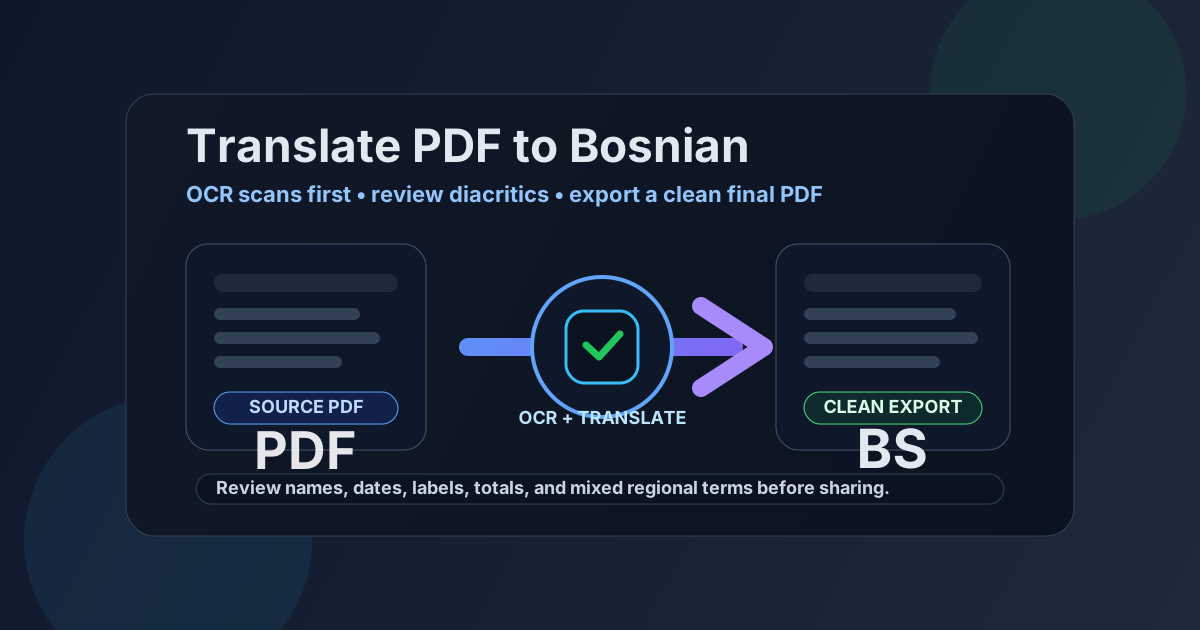
Table of contents
- Quick answer: the cleanest way to translate PDF to Bosnian
- When direct PDF translation works well
- Why Bosnian needs a careful review pass
- Scanned PDFs: why OCR comes first
- Step-by-step workflow with LifetimePDF
- How to create a clean final Bosnian PDF
- Before you share: privacy and final checks
- Helpful tools and related Bosnian pages
- FAQ
Quick answer: the cleanest way to translate PDF to Bosnian
If the PDF already contains selectable text, the fastest reliable workflow is simple:
- Open Translate PDF.
- Choose Bosnian as the target language.
- Upload the PDF.
- Review names, dates, headings, totals, labels, and letters such as č, ć, đ, š, and ž.
- Copy the output, export it, or rebuild a cleaner final Bosnian PDF if presentation matters.
When direct PDF translation works well
Direct translation works best when the source PDF is text-heavy and structurally simple. Contracts, invoices, onboarding packs, support notes, tourism documents, logistics paperwork, internal reports, and property or procurement files usually translate more cleanly than dense brochures or heavily designed forms.
Good candidates for a quick Bosnian translation
- Letters and notices: mostly paragraphs, headings, and short lists.
- Invoices and supplier documents: readable text plus a short review of totals, dates, and company names.
- Manuals and support content: especially if the source file uses plain language and a simple page structure.
- Travel, hospitality, and regional operations files: useful when the goal is understanding and sharing rather than pixel-perfect preservation of the original layout.
Where people usually get stuck
- Scanned PDFs: bad OCR creates bad translation inputs.
- Tables and forms: translated Bosnian text can become longer and wrap differently.
- Mixed-language files: English, Croatian, Serbian, German, or Turkish terms may appear beside Bosnian wording and should not always be forced into one style.
- Formal wording: legal, HR, school, customs, and compliance language often needs a fast human review.
Why Bosnian needs a careful review pass
Bosnian translation is usually easy to understand when the source text is clear, but small details still matter. A document can be broadly correct while still feeling unready because of a few awkward labels, regional wording mismatches, or missing diacritics in the places readers notice first.
What to review first
- Names and places: customer names, street names, company names, and city names should match the real-world record you are working from.
- Dates and numbers: invoice dates, contract dates, reference numbers, totals, and IDs need exact accuracy, not approximate meaning.
- Headings and short labels: these are where awkward phrasing feels most obvious to readers.
- Mixed regional terms: product names, software labels, tourism phrases, and cross-border wording may read better when a familiar original term stays visible.
- Diacritics quality: quickly scan letters such as č, ć, đ, š, and ž in prominent headings, instructions, and action steps.
This does not mean every translated Bosnian PDF needs a professional linguist. It means the final two or three minutes of review often matter more than another tool setting. If the document is customer-facing, legal, financial, educational, or operational, that short review is the difference between "good enough to understand" and "safe to send."
Scanned PDFs: why OCR comes first
If your PDF behaves like a stack of page photos, the translator cannot do much with it until the text becomes searchable. OCR adds that text layer. Once the source is readable, Bosnian translation quality improves immediately.
Two quick tests
- Selection test: try to highlight a sentence. If you cannot select words, the page may just be an image.
- Search test: use
Ctrl + ForCmd + Fand search for a visible word. If nothing is found, OCR is probably required.
Use OCR PDF first, then send the extracted text into Translate PDF. If the scan is crooked, low-contrast, or full of stamps, signatures, or handwritten notes, expect a little extra cleanup afterward.
Step-by-step workflow with LifetimePDF
1) Start with the smallest useful file
If the original PDF has appendices, blank pages, duplicate pages, signatures, or sections that do not need translation, trim it first. Smaller source files usually mean faster processing and less clutter in the Bosnian result.
- Extract Pages for only the relevant section
- Split PDF for large files
- Compress PDF if upload size is the real problem
2) Translate into Bosnian
Open Translate PDF, choose Bosnian, and upload the source file. If it is scanned, OCR first. If it already has searchable text, translate directly.
3) Review the output where mistakes matter most
Do not reread every sentence equally. Start with the pieces that readers actually act on: names, dates, totals, field labels, section headings, instructions, short warnings, and formal statements. Those are the places where a small mismatch causes outsized confusion.
4) Decide whether plain output is enough
If your goal is understanding, an extracted translation may already be enough. If the document needs to be forwarded, archived, printed, or shared externally, rebuild it into a cleaner PDF instead of forcing a messy export to carry the whole job.
5) Protect the final file if the content is sensitive
Once the Bosnian version is ready, use PDF Protect if the file contains private, HR, financial, legal, medical, or operational information.
How to create a clean final Bosnian PDF
Many people do not actually need the original formatting preserved line for line. They need a Bosnian PDF that is easy to read and presentable enough to send. Rebuilding from translated text is often the cleanest route.
Use the rebuild path that matches the job
- Text to PDF for quick clean documents from translated text.
- Word to PDF if you want better control over spacing, headings, lists, or tables.
- HTML to PDF if you are assembling a more structured or styled Bosnian handout.
This approach is especially useful for brochures, application packs, worksheets, forms, multi-column layouts, and anything with captions or dense tables. Once the meaning is correct, a deliberate rebuild gives you a cleaner Bosnian deliverable than a rough auto-preserved layout usually can.
Before you share: privacy and final checks
Before sending a translated Bosnian PDF to a customer, partner, colleague, school office, vendor, or family member, do one short review focused on risk rather than style.
- Confirm names, addresses, dates, totals, and identifiers.
- Check that mixed regional or branded terms were not translated into something confusing.
- Review short warnings, payment instructions, customs notes, or action steps.
- Make sure no irrelevant appendix pages or notes slipped into the final export.
- Protect the PDF if the contents are sensitive.
That final pass is boring, but it prevents the most expensive mistakes. Most Bosnian PDF translation problems are not dramatic machine-translation failures; they are ordinary human oversights in the last minute before a file gets shared.
Helpful tools and related Bosnian pages
If you are building a repeatable workflow rather than solving a one-off document, these pages and tools are the most relevant next stops:
- Translate PDF for the main translation step
- OCR PDF for scanned files
- Text to PDF for a quick clean Bosnian export
- PDF Protect before sharing sensitive files
- Translate PDF to Bosnian Online for the broader browser-based workflow
- Translate PDF to Bosnian Without Monthly Fees for the pay-once angle
- Translate PDF to Croatian for a closely related regional workflow
- Translate PDF to Serbian for another exact-match translation guide
Ready to do it now? Start with the translator, OCR first if needed, then rebuild or protect the final file only if the document actually needs it.
FAQ
How do I translate a PDF to Bosnian?
Upload a text-based PDF to a translation tool, choose Bosnian, review names, dates, labels, mixed regional terms, and Bosnian diacritics, then export or rebuild the final file. If the source is scanned, OCR it first so the translation runs on real text.
Can I translate a scanned PDF to Bosnian?
Yes. OCR should come first. Once the scan becomes searchable text, Bosnian translation is much cleaner and easier to review.
Why does Bosnian translation still need a review pass?
Because short labels, names, totals, dates, formal wording, and diacritics can still look off even when the overall meaning is correct. A quick review catches the issues readers notice first.
Will the translated Bosnian PDF keep the original formatting?
Sometimes partly, but not perfectly. Text-heavy PDFs often stay readable, while forms, brochures, tables, and multi-column layouts usually need a rebuild step for a clean final Bosnian PDF.
What should I review before sharing a Bosnian PDF externally?
Check names, dates, totals, addresses, headings, action steps, product terms, and any mixed regional wording. Then protect the file if the contents are private or high-stakes.