Convert PDF to PowerPoint: Make an Editable Deck Without Rebuilding Every Slide
Yes — you can convert PDF to PowerPoint by uploading a clean PDF to a PDF-to-PPT tool, running OCR first if the file is scanned, then reviewing the finished PPTX once for fonts, spacing, charts, and images.
This works best for digital reports, slide exports, proposals, and other PDFs that already contain selectable text instead of flat page images.
Most people searching for this are trying to rescue useful work, not just swap one file extension for another. Maybe a slide deck only survived as PDF, maybe a client sent a locked presentation snapshot, or maybe a report now needs to become something editable before a meeting. The real win is getting to a usable deck quickly without rebuilding every slide from scratch.
Fastest path: use LifetimePDF's PDF to PowerPoint tool for clean digital PDFs, and run OCR first only when the file behaves like scanned images instead of real text.
In a hurry? Jump to the quick answer and step-by-step workflow.
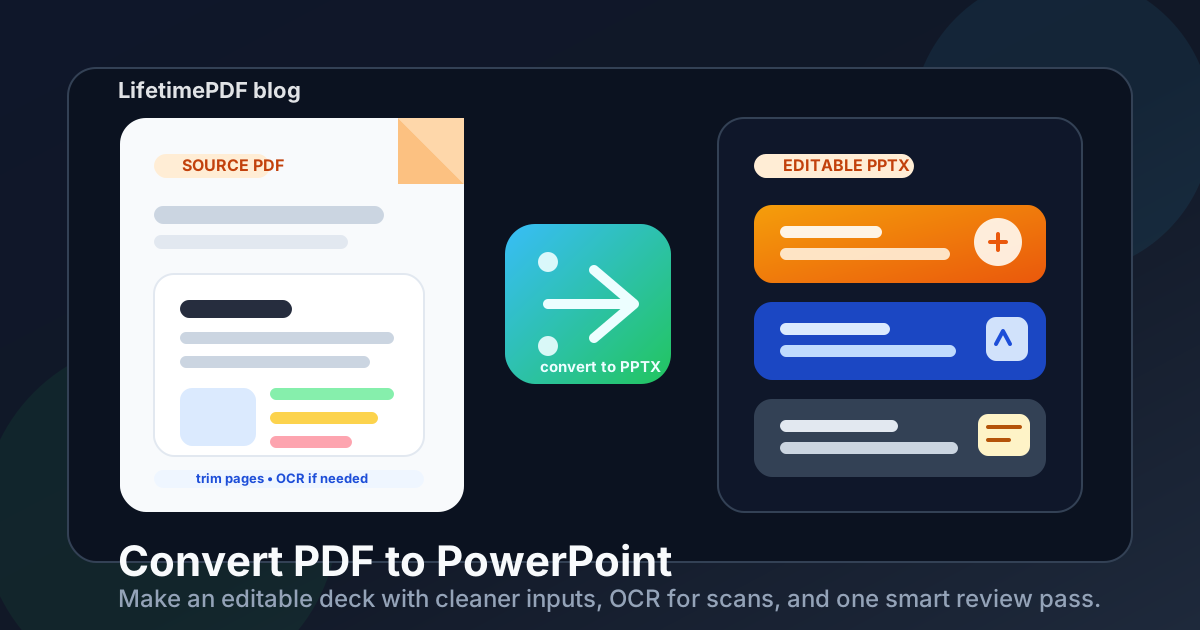
Table of contents
- Quick answer: the simplest way to convert PDF to PowerPoint
- When PDF to PowerPoint works well
- What to do before you convert
- Step-by-step: convert PDF to PowerPoint with less cleanup
- Scanned PDFs and OCR: what changes
- Common problems and the fastest fixes
- When PDF to Image is the smarter move
- Related LifetimePDF tools and useful reading
- FAQ (People Also Ask)
Quick answer: the simplest way to convert PDF to PowerPoint
If your PDF already contains selectable text and came from normal office software, the basic workflow is straightforward:
- Open PDF to PowerPoint.
- Upload the cleanest version of the PDF you have.
- If you only need part of the document, use Extract Pages first.
- If the PDF is scanned and the text is not selectable, run OCR PDF before converting.
- Convert and download the .pptx file.
- Open it in PowerPoint, Google Slides, or LibreOffice Impress and review the important slides once.
When PDF to PowerPoint works well
PDF to PowerPoint works best when the file already behaves like a real digital document. If the source started life as a slide deck, a report, or a proposal with proper text and layout objects, conversion is often good enough to save a lot of time.
Common situations where converting PDF to PowerPoint makes sense
- An old presentation only exists as PDF: you need editable slides again.
- A report needs to become a meeting deck: you want to reuse headings, tables, charts, or summaries.
- A client sent a frozen presentation: you need a workable starting point instead of rebuilding the layout from zero.
- You only need a few pages in slide form: convert selected pages and repurpose them faster.
- Your team needs to revise the content: editable slides are easier to collaborate on than static PDF pages.
Best default workflow: keep the source small, convert once, then clean only the slides that people will actually see.
What to do before you convert
The biggest quality jump usually happens before the conversion itself. Cleaner inputs tend to produce cleaner slides.
| PDF type | What usually happens | Best first move |
|---|---|---|
| Exported slide decks | Usually convert well because the layout already behaves like presentation content | Convert directly to PPTX |
| Reports with headings, charts, and tables | Often convert well enough, though spacing or chart labels may need cleanup | Trim to the useful pages, then convert |
| Scanned PDFs or photographed pages | Often turn into screenshot-like slides unless OCR happens first | Run OCR before conversion |
| Brochures, posters, or highly designed layouts | May become messy editable objects that take more time to fix than to reuse | Consider PDF to Image instead |
| Long document packets | Usually create too many low-value slides and extra cleanup | Extract only the pages you need |
If you remember just one thing, remember this: converting the right five pages is usually smarter than converting the wrong sixty.
Step-by-step: convert PDF to PowerPoint with less cleanup
1) Start with the cleanest PDF you can get
If possible, use the original exported PDF rather than a printed, scanned, or repeatedly re-saved copy. Cleaner digital files preserve text, hierarchy, and page objects better, which gives the PowerPoint output a much better chance of being meaningfully editable.
2) Remove the pages you do not need
Do not send a converter through dozens of irrelevant pages if the final deck only needs a handful. Use Extract Pages or Split PDF first. Smaller inputs often convert faster and with fewer ugly surprises.
3) Convert the PDF to PPTX
Open LifetimePDF's PDF to PowerPoint tool, upload the file, run the conversion, and download the resulting PowerPoint file. For normal office PDFs, this is often the step that recovers most of the useful structure in one shot.
4) Open the deck in the editor you actually use
PowerPoint is usually the easiest place to review and finish the file, but Google Slides and LibreOffice Impress work for many teams too. Focus on what people will notice: line breaks, shifted charts, missing fonts, awkward bullet spacing, and pages that became overcrowded slides.
5) Fix only the slides that matter
Not every converted page deserves perfection. If the deck is internal, tighten only the slides that carry the real message. If it is client-facing, prioritize readability, visual alignment, and whether the deck tells the story cleanly.
Scanned PDFs and OCR: what changes
Scanned PDFs are where expectations go sideways. People assume the converter failed, but the real problem is often the source: the PDF is just a stack of page images.
When the converter sees only images, the PPTX may end up as slide-sized screenshots rather than editable text boxes. That is why OCR PDF matters. OCR adds a searchable text layer so the converter has something usable to rebuild.
Signs you should OCR first
- You cannot highlight or copy the text in the PDF.
- Search inside the PDF does not work properly.
- The file came from a scanner, copier, or phone camera.
- Each page behaves like a single flat image.
Best sequence for scanned files: OCR first, confirm the text is searchable, then convert the cleaned PDF to PowerPoint.
Common problems and the fastest fixes
Text boxes look broken
This usually comes from unusual fonts, narrow columns, or pages that were never really designed as slides. Replace fonts, simplify bullet spacing, and tighten the content instead of fighting every single line break.
Charts or visuals shifted
Re-align the visual once and move on. If a chart is business-critical and still looks wrong, pull a clean page image with PDF to Image and drop that into the slide instead of forcing a messy editable version.
One page became an unreadable slide
Reports are written for pages, not always for presentations. Split that material across two slides, shorten the copy, or go back and convert a tighter page range. Often the fix is editorial, not technical.
The output is basically screenshots
That is the classic sign of a scanned or image-only PDF. Go back, run OCR, and then convert the OCR-processed file.
The final deck is fine, but sharing it is annoying
If you need a static version for email or upload, export it with PPT to PDF and then run Compress PDF on the final file if it needs to fit under a size limit.
When PDF to Image is the smarter move
Sometimes the real goal is not editability. It is preserving the visual appearance exactly as it already looks. In those cases, PDF to Image can be the better workflow.
- Use PDF to PowerPoint when you need editable text, movable objects, or a deck your team can revise.
- Use PDF to Image when you need exact page snapshots, delicate layouts, or static visuals that should not reflow.
Many practical workflows use both. Convert text-heavy pages into editable slides, then preserve the most fragile visuals as images when appearance matters more than editability.
Related LifetimePDF tools and useful reading
PDF to PowerPoint usually works best as part of a wider cleanup and sharing workflow. These tools pair naturally with it:
- PDF to PowerPoint - turn PDF pages into editable PPTX slides
- OCR PDF - recover searchable text from scans before conversion
- Extract Pages - isolate the exact pages you want to reuse
- Split PDF - break large packets into cleaner parts
- PDF to Image - preserve exact visuals when editability is not the goal
- PPT to PDF - export the finished deck back into a shareable PDF
- Compress PDF - shrink the final exported PDF for easier sending
Suggested internal reading
- Convert PDF to PowerPoint Online
- Convert PDF to PowerPoint Online Free
- Convert PDF to PowerPoint Online Without Monthly Fees
- Convert PDF to PowerPoint Without Monthly Fees
- Convert PDF to PowerPoint: Maintaining Layout & Design
- Convert PDF to Image Online Free
- Browse all LifetimePDF articles
Ready to turn a PDF into an editable deck?
Best workflow: clean PDF - trim unnecessary pages - OCR only if needed - convert - review the important slides once.
FAQ (People Also Ask)
How do I convert PDF to PowerPoint?
Upload the PDF to a PDF to PowerPoint converter, download the PPTX, and review fonts, spacing, charts, and images once. If the source PDF is scanned, run OCR first so the converter works from searchable text instead of page snapshots.
Can I convert a scanned PDF to PowerPoint?
Yes, but scanned PDFs usually need OCR first. Without OCR, many converters produce screenshot-like slides instead of properly editable text boxes and elements.
Will converting PDF to PowerPoint preserve formatting?
Often for clean digital PDFs, slide exports, and structured reports, but not perfectly for every file. Dense brochures, unusual fonts, layered graphics, and scanned pages usually need cleanup after conversion.
Should I convert the whole PDF or only selected pages?
If you only need a section, extract those pages first. Smaller inputs convert faster, create less clutter, and reduce the amount of slide cleanup afterward.
When is PDF to Image better than PDF to PowerPoint?
Use PDF to Image when exact visual appearance matters more than editability, such as brochure pages, complex layouts, or pages you only want to place as static visuals in a deck.
Published by LifetimePDF - Pay once. Use forever.