Compress PDF for Whatagraph: Keep Marketing Reports, Dashboard Snapshots, and Client PDFs Small Without Losing the Details
To compress a PDF for Whatagraph, export the report, upload it to LifetimePDF's Compress PDF tool, start with Medium compression, and keep the smaller copy only if KPI tiles, chart labels, legends, summary notes, and branded sections still look clear.
For most Whatagraph PDFs, under 2MB is a strong target for short dashboard snapshots, while monthly client reports, white-label agency packs, and multi-channel review files usually work best around 2MB to 5MB.
Whatagraph exports usually become the fixed version people actually send around. They stop being a live dashboard and become a client recap, an executive summary, an internal proof pack, a monthly performance handoff, or an archive copy. Smaller PDFs help because they move more easily through all of those workflows. The goal is not to make every file tiny. The goal is to make it light enough to send, upload, and reopen comfortably without flattening the details that still matter when someone is checking channel performance, campaign notes, date ranges, KPI callouts, or branded commentary.
Fastest path: run the Whatagraph export through LifetimePDF's Compress PDF tool on Medium, then do one quick readability check before you send, present, or archive the smaller copy.
Need the short version? Jump to Quick start: compress a Whatagraph PDF in under 2 minutes.
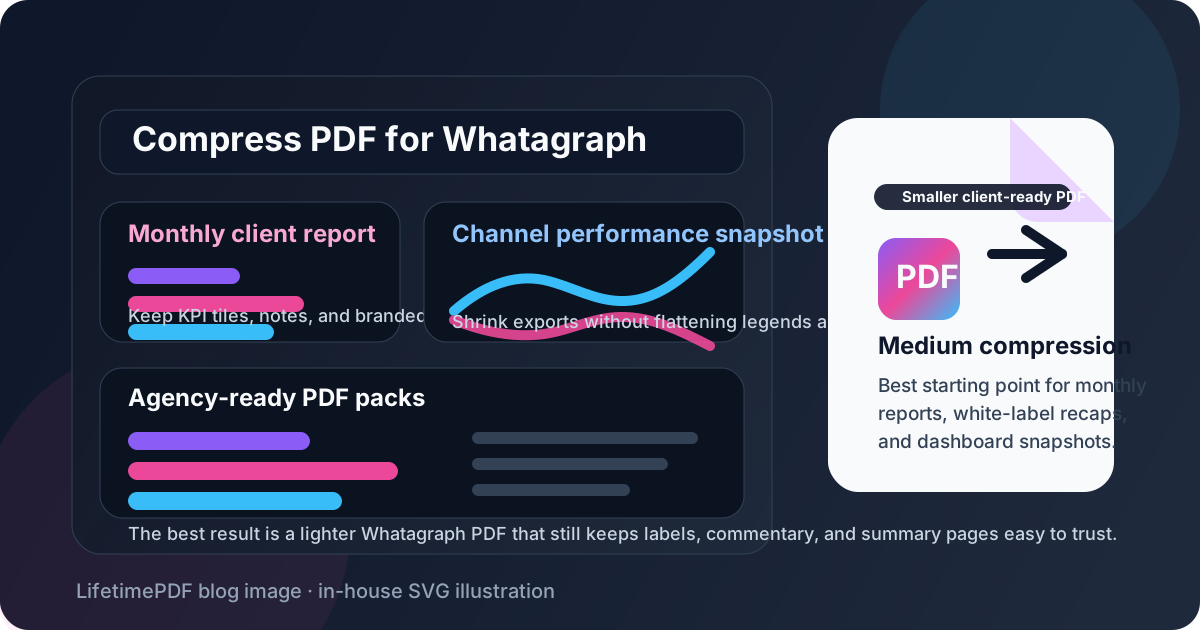
Table of contents
- Quick start: compress a Whatagraph PDF in under 2 minutes
- Why Whatagraph PDFs get heavy so quickly
- What file size should you aim for?
- Which compression level should you choose?
- Step-by-step: shrink a Whatagraph PDF with LifetimePDF
- Best strategy for common Whatagraph PDF types
- What if the PDF is still too large?
- How to protect chart, table, and note readability
- Workflow habits that keep Whatagraph exports cleaner
- Related LifetimePDF tools and useful reading
- FAQ (People Also Ask)
Quick start: compress a Whatagraph PDF in under 2 minutes
If your real goal is simply make this Whatagraph PDF smaller so it is easier to share and review, this workflow is usually enough:
- Open Compress PDF.
- Upload the monthly report, dashboard snapshot, channel recap, white-label client pack, or executive summary you actually plan to send.
- Choose Medium compression first.
- Download the smaller result and compare the size difference.
- Open it once and check the weak spots: KPI tiles, chart labels, legends, spend totals, section headers, notes, branded covers, and narrow tables.
- If the file is still bulkier than it should be, split the appendix, extract only the needed pages, or crop wasted margins before trying stronger compression.
Why Whatagraph PDFs get heavy so quickly
Whatagraph PDFs often become larger than necessary because one exported file is trying to serve several audiences at once. The same report might be a client summary, an internal proof pack, an executive update, a white-label deliverable, and an archive copy all in one. Compression helps, but the real size problem is often that the final PDF carries more pages, charts, screenshots, appendices, and commentary than the next reader actually needs.
Reporting exports also get heavy because they mix visual and structural weight. KPI tiles, chart snapshots, logo-heavy cover pages, screenshot annotations, notes, tables, and scanned sign-off pages do not all compress the same way. A PDF with mostly clean charts behaves differently from a packet full of pasted screenshots, wide margins, or repeated appendix sections. That is why the best result usually comes from balanced compression plus a little cleanup instead of simply forcing the strongest setting.
What usually adds weight
- Multi-channel packs: one file combines SEO, PPC, social, email, and web analytics views that not every reader needs.
- Screenshot-heavy proof pages: image-based sections inflate size faster than cleaner chart pages.
- White-label extras: custom covers, branded dividers, and agency summary pages add polish but also add weight.
- Appendix sprawl: backup data, detailed tables, and duplicated snapshots quietly bloat the export.
- Scanned approvals or notes: image-based pages are often bulkier than the report itself.
What file size should you aim for?
There is no single perfect size for every Whatagraph PDF, but a few practical ranges keep you from compressing harder than necessary:
| PDF type | Good target | Why it helps |
|---|---|---|
| Short dashboard snapshots and focused client summaries | Under 2MB | Great for quick sharing, smoother email handoffs, and easier phone review |
| Most monthly reports, channel recaps, and agency review files | 2MB to 5MB | Usually the best balance between readability and convenience |
| White-label or appendix-heavy reporting packs | 5MB to 8MB if needed | Still workable, but often worth splitting or trimming if several people need to open it repeatedly |
| Over 8MB | Compress again or clean the structure | Often a sign the packet carries more pages or image weight than the next reader really needs |
These are comfort targets, not hard limits. If the PDF will be shared with clients, attached to a project system, sent to leadership, or reopened during a meeting, lighter usually feels better. But smaller is only better as long as the smallest useful detail still reads clearly.
Which compression level should you choose?
LifetimePDF keeps the choice simple: Low, Medium, or High. For Whatagraph, most people are not trying to squeeze every byte out of the file. They are trying to make the report easier to move around without damaging KPI tiles, chart legends, section notes, branded headers, or narrow tables.
Low compression
- Best when a report is already close to the size you want.
- Useful for polished executive summaries, client-facing decks, or files with especially small chart labels.
- Usually not the best first pass if the file is obviously bulkier than it should be.
Medium compression
- Best starting point for most Whatagraph workflows.
- Reduces size meaningfully while keeping KPI tiles, date ranges, spend figures, section labels, notes, and normal tables readable.
- Good for recurring monthly reports, channel recaps, white-label agency packs, and stakeholder updates.
High compression
- Useful when the file is still too heavy after cleanup.
- More likely to soften small chart labels, footnotes, thin table text, or screenshot detail.
- Best used after you have already removed unnecessary appendix pages or large image-based sections.
Step-by-step: shrink a Whatagraph PDF with LifetimePDF
Here is the workflow that works well for most dashboard exports and client reporting packets:
- Open Compress PDF.
- Upload the final Whatagraph PDF you actually plan to store, attach, or send.
- Choose Medium compression.
- Download the smaller result and compare the size reduction.
- Review the most fragile details once at normal zoom.
- If the file is still too large, use Extract Pages, Split PDF, Delete Pages, or Crop PDF before compressing harder.
That last step matters more than it sounds. Many oversized Whatagraph PDFs do not need harsher compression as much as they need less dead weight. If half the file is support material, duplicate pages, or oversized screenshots, removing that bulk usually works better than degrading every page equally.
Best strategy for common Whatagraph PDF types
Monthly client reports
These usually need to feel polished and easy to scan. Medium compression is normally the safest start. Watch the KPI cards, channel headers, period comparisons, and commentary blocks because those are the details that quickly stop being useful when quality drops too far.
Single-channel recaps
SEO, PPC, paid social, or email updates often compress well because the file is more focused. These are good candidates for a smaller target size, especially if the real audience only needs the summary pages and not a huge backup appendix.
Executive dashboard snapshots
These should usually stay light without losing clarity. They exist to communicate performance quickly. If a snapshot is getting heavy, it is often because the PDF includes extra pages that belong in a support pack rather than the main summary.
White-label agency packs
This is where file bloat usually becomes obvious. One packet may contain cover pages, branded dividers, summary commentary, channel sections, screenshots, and backup tables all at once. Compression helps, but the bigger win often comes from creating one cleaner main file and one backup appendix.
Screenshot-heavy proof sections or scanned notes
These pages often behave more like images than normal documents. Use OCR PDF if you also want searchable text, and trim blank scanner borders before relying on stronger compression.
What if the PDF is still too large?
If one pass of compression is not enough, do not immediately jump to the harshest setting. Usually the better fix is structural:
- Extract only the useful pages: ideal when different readers only need part of the report.
- Split the appendix: keep the main summary light and move backup evidence into a second PDF.
- Delete repeated pages: duplicate covers, old revisions, and stale appendix material add weight fast.
- Crop screenshot and scan waste: large white borders add bulk without adding meaning.
- Merge with intention: if you need one packet, combine only the supporting documents that actually belong together.
When compression alone is not enough: use a cleanup step before you try High compression.
How to protect chart, table, and note readability
The file is only better if it still works. Before you replace the original export, check the details most likely to break:
- KPI tiles and headline metric cards
- chart labels, legends, and comparison markers
- date ranges and period-over-period callouts
- campaign names, table headers, and row labels
- agency notes, recommendations, and commentary blocks
- white-label cover text and branded section headers
- the busiest screenshot or appendix page in the packet
A quick review at ordinary laptop zoom is usually enough. If the smallest important detail is still easy to trust, the file is probably compressed enough.
Workflow habits that keep Whatagraph exports cleaner
The best long-term fix is not only better compression. It is fewer bloated exports entering the workflow in the first place.
- Export only what the audience needs.
- Separate summary pages from backup evidence when different readers need different depth.
- Avoid repeated screenshots when one good page proves the point.
- Trim duplicate revisions before archiving the final file.
- Default to Medium compression for recurring client reports.
- Think about the next person opening the file on a normal laptop or phone, not just a large monitor.
These habits matter because compression works best as final polish, not as the rescue plan for a report packet that tried to do too many jobs at once.
Related LifetimePDF tools and useful reading
If Whatagraph reporting is part of your normal workflow, these tools and guides pair well with this article:
- Compress PDF for the first size reduction pass.
- Extract Pages when only part of the report needs to be shared.
- Split PDF for long packets with summaries and appendices.
- Delete Pages to remove repeated covers or outdated support sections.
- Crop PDF to trim screenshot or scanner waste.
- Compare PDF Versions if you want a quick before-and-after review.
- Compress PDF for Whatagraph: Share Smaller Marketing Reports, Dashboard Snapshots, and Client PDFs Faster for the broader companion guide.
- Compress PDF for Whatagraph Without Monthly Fees if pricing model is part of the search.
- Compress PDF for Databox, Compress PDF for Looker Studio, Compress PDF for Google Analytics, and Compress PDF for Adobe Analytics if your reporting stack crosses more than one analytics platform.
Bottom line: for most Whatagraph PDFs, start with Medium compression, review the smallest useful details once, and trim page weight before you use stronger compression.
FAQ (People Also Ask)
How do I compress a PDF for Whatagraph?
Export the Whatagraph report to PDF, upload it to a compressor, start with Medium compression, and keep the smaller copy only if KPI tiles, chart labels, legends, notes, branded sections, and tables still read clearly. Medium compression is usually the safest first pass because it lowers file size without making client review annoying.
What file size should I aim for with Whatagraph PDFs?
Under 2MB works well for short dashboard snapshots and focused client summaries. Multi-page monthly reports, white-label agency packs, and appendix-heavy exports usually land best around 2MB to 5MB as long as the smallest useful details still read clearly.
Will compression make Whatagraph charts or KPI widgets blurry?
It can if you compress too aggressively. That is why Medium compression is usually the best starting point. Always review chart labels, KPI tiles, legends, tables, date ranges, notes, and branded headers before you keep the smaller file.
Should I split a large Whatagraph report instead of compressing it harder?
Often, yes. If one PDF combines the executive summary, multiple channel sections, screenshot-heavy proof pages, appendix tables, and internal notes, splitting it usually works better than forcing stronger compression across the whole packet.
Which LifetimePDF tools pair best with Whatagraph workflows?
Compress PDF is the main starting point. Split PDF, Extract Pages, Delete Pages, Crop PDF, OCR PDF, and Compare PDF Versions are especially useful when you want smaller, cleaner reporting packets without sending the whole backup pack every time.