Compress PDF for TopicMojo: Share Smaller Topic Research Reports, Question Maps, and Client PDFs Faster
To compress a PDF for TopicMojo, export or print the report as PDF, upload it to Compress PDF, start with Medium compression, and keep the smaller copy only if question branches, labels, screenshots, and notes still look clean.
For most TopicMojo PDFs, under 2MB works well for short topic summaries and focused question reports, while larger question maps, screenshot-backed research packs, and client-ready recaps usually work best around 2MB to 4MB.
If the file is still heavy, split appendix pages, remove repeated screenshots, or crop oversized captures before trying stronger compression.
TopicMojo PDFs usually get created because someone needs the research outside the tool. Maybe you are sending a question map to a writer, sharing a topic report with a strategist, or packaging a cleaner summary for a client who only needs the practical takeaway. In those moments, smaller PDFs help. They open faster, upload more easily, and create less friction when the real job is finding useful content opportunities, not wrestling with a bloated attachment. The goal is not the tiniest possible file. The goal is a smaller PDF that still feels dependable when someone zooms in on branch labels, screenshot evidence, export tables, and action notes.
Fastest path: Run the TopicMojo export through LifetimePDF's Compress PDF tool at Medium, then do one quick readability check before you email, upload, or archive the smaller copy.
Short on time? Jump to Quick start: compress a PDF for TopicMojo in under a minute.
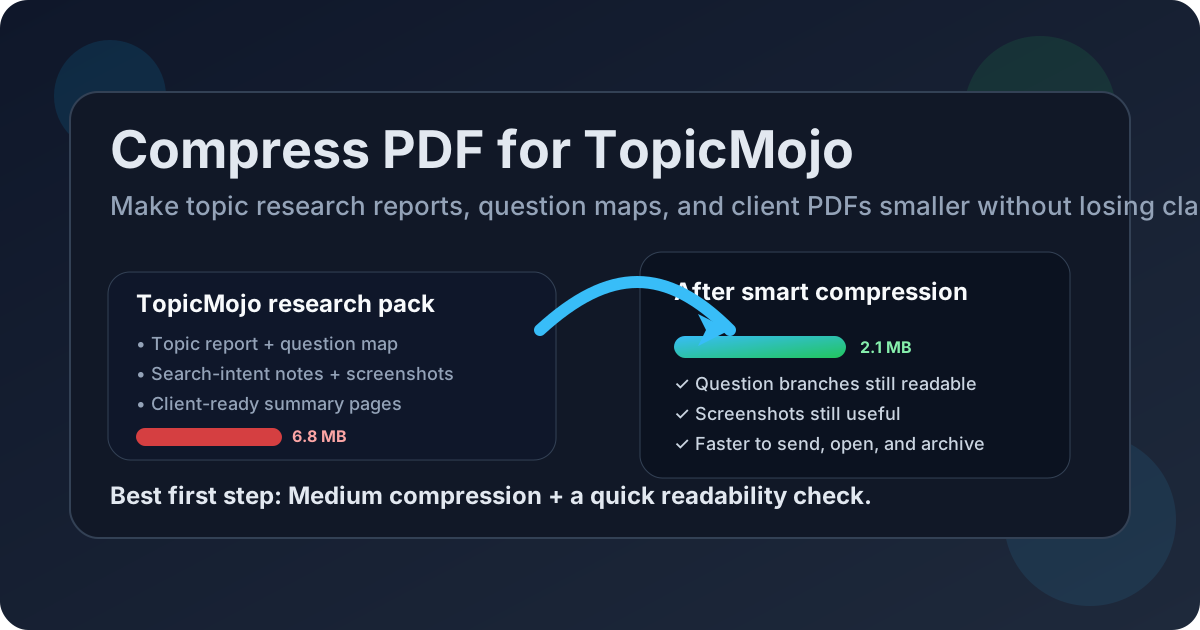
Table of contents
- Quick start: compress a PDF for TopicMojo in under a minute
- Why smaller PDFs help in TopicMojo workflows
- What file size should you aim for?
- Which compression level should you choose?
- Step-by-step: shrink a PDF with LifetimePDF
- Best strategy for topic reports, question maps, and client handoffs
- What if the PDF is still too large?
- How to keep branches, screenshots, and notes readable
- Workflow habits that reduce PDF bloat
- Related LifetimePDF tools and internal links
- FAQ (People Also Ask)
Quick start: compress a PDF for TopicMojo in under a minute
If your real goal is simply make this TopicMojo PDF smaller so it is easier to send, review, and save, this is the shortest reliable workflow:
- Open Compress PDF.
- Upload the topic research report, question map, search-intent summary, content planning export, or client-ready PDF you want to shrink.
- Choose Medium compression first.
- Download the smaller file and compare the new size with the original.
- Open it once to check question branches, topic labels, screenshots, headings, and summary notes.
- If the file is long, use Split PDF or Extract Pages to keep only the pages the next reader actually needs.
- If the pack includes repeated screenshots, duplicate appendix pages, or oversized captures, trim that weight before trying a stronger compression level.
Why smaller PDFs help in TopicMojo workflows
TopicMojo PDFs usually exist because someone needs a fixed version of the research: a topic report, a question map, a search-intent summary, or a planning recap that is easier to circulate than a live workspace. That is where file size starts to matter.
Heavy PDFs are slower to upload, more annoying to forward, and easier for busy readers to postpone. In practice, the extra weight often comes from repeated screenshots, wide exports, long appendix sections, or one oversized document trying to answer every possible question at once. Good compression is not about forcing the file to the smallest possible number. It is about trimming waste while keeping the details people still rely on, such as branch labels, topic clusters, screenshots, notes, and next-step guidance.
Why compression usually helps
- Faster writer handoffs: smaller briefs and research summaries are easier to send in email, chat, and project-management tools.
- Smoother strategy review: lighter PDFs open faster when a teammate only needs the main content opportunities and supporting evidence.
- Cleaner client delivery: stakeholders are more likely to read a tight recap than a bulky export with every exploratory branch left in.
- Better archives: topic libraries are easier to store and revisit when they are not bloated with duplicate captures.
- Less rework: compressing once is usually easier than rebuilding and resending a PDF that turned out too large to use comfortably.
What file size should you aim for?
There is no single perfect number because a short topic summary behaves differently from a screenshot-heavy question map or a longer research appendix. Still, practical targets make it much easier to decide whether a file already feels shareable or still needs cleanup.
| TopicMojo PDF type | Practical target | Why it works |
|---|---|---|
| Single topic summary or writer handoff | < 2MB | Usually keeps the file quick to send while preserving headings, notes, and the main structure |
| Question map or topic research recap | 2MB-3MB | Leaves room for branches, labels, and a few screenshots without feeling bulky |
| Screenshot-backed research pack or client recap | 3MB-4MB | More realistic when the PDF includes evidence, examples, or appendix pages |
| Over 4MB | Compress again or split the pack | Often means the PDF contains more pages or images than the next reader actually needs |
These ranges are not strict rules. They are practical thresholds that help you decide when to stop. If the PDF opens quickly, sends easily, and still looks trustworthy at 125% or 150% zoom, you are usually in good shape.
Which compression level should you choose?
LifetimePDF keeps this simple with Low, Medium, and High compression. You do not need twenty knobs when the real question is: Will this file be easier to share without becoming annoying to read?
Low compression
- Best when visual sharpness matters more than aggressive file-size reduction.
- Useful for screenshot-heavy research packs, wide exports, or PDFs with tiny branch labels.
- Usually not the best first choice unless the file is already close to the size you want.
Medium compression
- The best starting point for most TopicMojo exports.
- Good for topic reports, question maps, content planning recaps, and client-ready PDFs.
- Usually gives a meaningful size drop without making branch labels, headings, or screenshots frustratingly soft.
High compression
- Best when smaller size matters more than perfect visual fidelity.
- Helpful for long research packs, image-heavy exports, or PDFs that remain awkward after a Medium pass.
- Always preview the smallest important text before you replace the original.
Quick win: if only part of the report matters, extract those pages first and then compress the shorter file.
Step-by-step: shrink a PDF with LifetimePDF
Here is a reliable workflow if you want a smaller TopicMojo-ready document without overcomplicating it.
- Export the PDF you actually plan to share: use the final recap, final summary, or client-facing version instead of an earlier draft with extra baggage.
- Open Compress PDF: drag in the file or choose it manually.
- Choose Medium compression: it is the safest first pass for most TopicMojo use cases.
- Download the result: save the smaller version with a clear name so you can keep the original if needed.
- Open and review: check question branches, topic labels, screenshots, tables, and action items.
- Only then send it: ten seconds of review is better than learning later that the smallest labels became too fuzzy for the person reading it.
If the original PDF feels strangely large, the cause is often structural rather than technical. Maybe the pack contains repeated screenshots, several appendix pages nobody asked for, or multiple sections that should have been separate files in the first place. Compression still helps, but the best result usually comes from combining compression with a little cleanup.
Best strategy for topic reports, question maps, and client handoffs
Not every TopicMojo PDF should be treated the same way. The smartest compression approach depends on what kind of document you are sharing and who it is for.
Topic research reports
These files often include several related themes, supporting questions, and summary tables. Medium compression is usually fine, but zoom in on the smallest labels and table columns once before sending the final file.
Question maps
Question maps are usually where clarity matters most. The branching structure is useful only if a reader can still follow it quickly. If the PDF becomes too soft at normal zoom, it is better to split the map or keep a slightly larger file than to force stronger compression.
Topic summaries and planning recaps
These are usually more text-heavy, which makes them easier to compress cleanly. They often become heavier than necessary only when screenshots, examples, or long appendices get bundled in.
Client-ready PDFs
Client documents benefit most from being light and deliberate. A smaller file feels easier to open, easier to forward, and easier to review in the few minutes a stakeholder is willing to give it. That does not mean stripping out the value. It means sending the right pages in the cleanest possible package.
Internal strategy handoffs
Internal handoffs are where repeated friction really adds up. If every research pack is a few megabytes heavier than it needs to be, the annoyance compounds across many projects. A tighter PDF library simply makes the whole content workflow smoother.
What if the PDF is still too large?
If you already compressed the file once and it is still awkward, do not keep squeezing the same bloated document and hope for magic. In most cases, the smarter answer is to reduce the document itself.
Split long packs into smaller parts
If one PDF contains the main summary, question trees, screenshots, and appendices all together, use Split PDF. Separate files for writers, strategists, and clients often work better than one giant bundle.
Extract only the pages people actually need
Use Extract Pages when the shared decision only depends on a handful of pages. In many TopicMojo workflows, that is more effective than keeping the entire research trail in the same file.
Remove dead weight before another pass
Delete duplicate appendix pages with Delete Pages and trim wide margins or oversized captures with Crop PDF. Those changes often save more space than one more aggressive round of compression.
How to keep branches, screenshots, and notes readable
The main fear behind “compress PDF for TopicMojo” is simple: I do not want the useful parts of the research to become too blurry to trust. Fair concern. Text-heavy pages usually compress well. The real risk shows up when the PDF depends on tiny branch labels, screenshot detail, wide exports, or dense notes.
Usually safe to compress
- Short summaries: mostly text, usually shrink cleanly.
- Main recap pages: top-line opportunities and recommendations are often low-risk.
- Outline-driven planning docs: these usually survive Medium compression very well.
Be more careful with
- Dense question maps: the smallest branch labels can get soft first.
- Wide exports: narrow columns and tiny labels need a quick zoom check.
- SERP or tool screenshots: small UI text can lose clarity before body text does.
- Client-facing evidence pages: if you expect someone to trust the screenshot, make sure it still looks credible.
A simple habit helps a lot: after compressing, zoom into the smallest important detail on the page. If that still looks clear, the rest of the PDF is usually fine.
Workflow habits that reduce PDF bloat
Compressing a PDF for TopicMojo works best when it becomes part of a better file habit. Research libraries get messy when every export is saved forever at full weight, especially when topic reports, question maps, and client recaps collect multiple versions.
- Keep a master and a shared copy: the heavier original can stay in your archive while the leaner version does the day-to-day work.
- Split by audience: writers, strategists, and clients often need different slices of the same research.
- Name files clearly: labels like
shared,brief-only, orclient-copyreduce confusion. - Clean metadata before delivery: use PDF Metadata Editor if the file should look polished when someone checks document properties.
- Compare revisions when needed: use Compare PDFs if several recaps are circulating and you want a cleaner review process.
A good lightweight workflow is often: Extract or Split → Compress → Review → Clean Metadata → Share. That is simple, repeatable, and much less frustrating than trying to rescue an oversized PDF at the last second.
Related LifetimePDF tools and internal links
Compressing a PDF for TopicMojo is often one step in a broader workflow. These tools pair especially well with it:
- Compress PDF - shrink file size for easier sharing and quicker review
- Split PDF - break oversized research packs into audience-specific files
- Extract Pages - keep only the pages the next reader actually needs
- Delete Pages - remove duplicate, blank, or unnecessary appendix pages
- Crop PDF - trim oversized captures and empty margins
- PDF Metadata Editor - clean document properties before client delivery
- Compare PDFs - review revisions of research summaries more easily
Suggested internal reading
- Compress PDF for AnswerThePublic
- Compress PDF for AlsoAsked
- Compress PDF for Keyword Insights
- Compress PDF for WriterZen
- Compress PDF for Frase
- Compress PDF for Content Harmony
- Browse all LifetimePDF articles
Ready to make your TopicMojo PDF lighter? Start with compression, then trim pages or metadata only if you actually need to.
FAQ (People Also Ask)
How do I compress a PDF for TopicMojo?
Export the TopicMojo report as a PDF, upload it to an online PDF compressor, start with Medium compression, and preview the smaller result before you send it or archive it. Medium is usually the safest first pass because it cuts file size while keeping question branches, labels, screenshots, and notes readable.
What file size should I aim for before sharing a TopicMojo PDF?
A practical target is under 2MB for a short topic summary, focused question report, or internal planning document. For broader question maps, screenshot-backed research packs, and client-ready recaps, 2MB to 4MB is usually more realistic.
Will compression make TopicMojo question maps or screenshots blurry?
It can if you compress too aggressively. That is why Medium compression is usually the safest default. Always check branch labels, small table text, screenshots, and summary notes before you keep the compressed copy.
Should I split a large TopicMojo research pack instead of compressing it harder?
Often, yes. If one PDF combines the main summary, question trees, screenshots, appendix pages, and client commentary for different readers, splitting it usually works better than forcing stronger compression across the whole document.
Which LifetimePDF tools pair best with TopicMojo PDFs?
Compress PDF is the main starting point. Split PDF, Extract Pages, Delete Pages, Crop PDF, and PDF Metadata Editor all help create cleaner, smaller, share-ready research PDFs.
Need a smaller TopicMojo-ready PDF right now?
Published by LifetimePDF - Pay once. Use forever.