Compress PDF for Tableau: Keep Dashboard Exports, Story PDFs, and Board Packs Small Without Losing the Details
To compress a PDF for Tableau, export the file you actually plan to share, upload it to LifetimePDF's Compress PDF tool, start with Medium compression, and keep the smaller copy only if legends, filter captions, worksheet labels, story headings, and notes still look clear.
For most Tableau PDFs, under 2MB works well for short dashboard snapshots, while story exports, board packs, and appendix-heavy files usually land best around 2MB to 5MB.
Tableau PDFs are often the version people trust after the live dashboard is no longer in front of them. They get attached to board agendas, dropped into client updates, saved with monthly reporting, and forwarded to people who will never open Tableau itself. That is why the goal is not extreme shrinking. The goal is a smaller file that still feels dependable when someone zooms in on a legend, a date range, a worksheet row label, or one small annotation during a meeting.
Fastest path: run the Tableau export through LifetimePDF's Compress PDF tool on Medium, then do one quick readability check before you send, archive, or replace the lighter copy.
Need the short version? Jump to Quick start: compress a Tableau PDF in about 2 minutes.
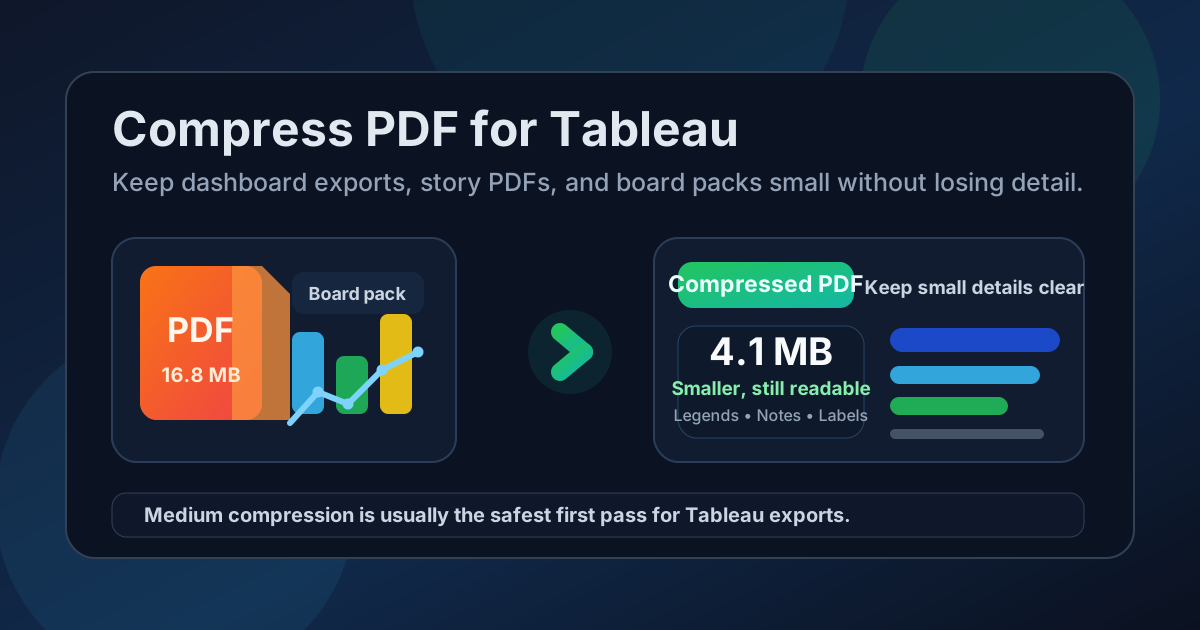
Table of contents
- Quick start: compress a Tableau PDF in about 2 minutes
- Why Tableau PDFs get heavy so quickly
- What file size should you aim for?
- Which compression level should you choose?
- Step-by-step: shrink a Tableau PDF with LifetimePDF
- Best strategy for common Tableau PDF types
- What if the export is still too large?
- How to protect chart and table readability
- Export habits that keep Tableau PDFs lighter
- Related LifetimePDF tools and internal links
- FAQ (People Also Ask)
Quick start: compress a Tableau PDF in about 2 minutes
If your real goal is simply make this Tableau PDF smaller without making it annoying to review, this workflow is usually enough:
- Open Compress PDF.
- Upload the Tableau file you actually plan to share, such as a dashboard export, story PDF, worksheet packet, client update, or board pack.
- Choose Medium compression first.
- Download the smaller result and compare the new size with the original.
- Preview the weakest details once: legends, filter captions, axis labels, story point headings, worksheet row names, dates, and notes.
- If the file still feels bulky, extract only the needed pages or split the appendix instead of immediately pushing compression harder.
- If the export includes scans, screenshots, or repeated support pages, trim that weight before you run a second pass.
Why Tableau PDFs get heavy so quickly
Tableau exports often become larger than expected because they try to do several jobs at once. One PDF may need to satisfy an executive who wants the summary, a manager who wants the dashboard context, and an analyst who wants worksheet detail or backup evidence. Once story pages, appendix tabs, screenshots, and sign-off pages get bundled together, the export starts carrying far more weight than the next reader actually needs.
Compression helps, but it works best when you understand what made the file heavy in the first place. In Tableau workflows, the biggest contributors are usually not the headline dashboard itself. They are the extra pages around it: detailed worksheet exports, repeated story states, scan-heavy attachments, oversized white margins, and support material that belongs in a second PDF instead of the main packet.
What usually adds weight
- Multi-page board packs: several dashboards, notes pages, and backup tables rolled into one file.
- Story exports: repeated headers, duplicated context, and several similar slides in one packet.
- Worksheet detail: long table pages with many rows, tiny labels, and dense footnotes.
- Scan-heavy appendices: approvals, snapshots, or supporting evidence added after the Tableau export.
- Mixed audiences: one PDF trying to be a board summary, analyst backup, and archive copy all at once.
What file size should you aim for?
There is no single perfect number for every Tableau PDF, but these ranges are practical enough to keep you from over-compressing:
| Tableau PDF type | Good target | Details you should protect |
|---|---|---|
| Single dashboard snapshot or short KPI update | Under 2MB | Legends, labels, filters, dates, and annotations |
| Story PDF or client review deck | 2MB to 4MB | Story headings, callouts, transitions in the narrative, and dashboard context |
| Board pack or monthly reporting packet | 3MB to 5MB | Executive summary pages, worksheet detail, appendix references, and footnotes |
| Scan-heavy appendix or evidence bundle | Split if possible | Searchability, signatures, approval marks, and readable text on every scan page |
The best target is the smallest size that still feels normal to review at standard zoom. If a board packet ends up at 3.8MB but opens quickly and keeps the chart legends and notes intact, that is usually a better outcome than forcing it under 2MB and making the packet harder to trust.
Which compression level should you choose?
The right compression level depends on what the next reader needs to inspect:
- Light compression: best for text-heavy worksheet exports, thin line charts, or review files where tiny row labels matter.
- Medium compression: the best default for most Tableau PDFs because it lowers file size without sacrificing too much clarity.
- Stronger compression: useful for quick previews, internal reference copies, or archives where convenience matters more than tiny visual detail.
Step-by-step: shrink a Tableau PDF with LifetimePDF
- Export the final version first. Use the Tableau PDF you actually plan to share, not an older draft with extra pages you already know you will remove.
- Open Compress PDF. Upload the story export, dashboard packet, or worksheet bundle.
- Start with Medium compression. This usually gives the best balance for dashboards, notes, legends, and worksheet detail.
- Download and compare. Check how much size you saved before you do anything else.
- Review the weakest details once. Zoom in on legends, axis labels, worksheet row names, notes, and dates instead of only checking the cover page.
- Only then decide whether it needs cleanup. If the packet is still too large, remove unnecessary pages or split the appendix before trying a stronger setting.
That order matters. Many people go straight from one compression pass to a harsher one when the real issue is that the PDF contains more pages than the next reader actually needs.
Best strategy for common Tableau PDF types
Dashboard exports
These are usually the easiest to compress because the main goal is keeping the visual story clear. Focus on legends, filters, date ranges, and callouts. If those still read cleanly after Medium compression, you are usually done.
Story PDFs
Story exports often carry several pages that feel similar but still matter to the narrative. Compress them, but do not judge the result from the first page alone. Check later story points too, especially where captions, comparisons, and annotations get smaller.
Board packs and monthly review packets
These benefit the most from splitting. If one PDF includes the executive summary, detailed worksheets, appendix evidence, and scan-heavy sign-off pages, make a lighter board packet for the main audience and keep the backup material in a second file. That usually works better than trying to crush everything into one all-purpose document.
Worksheet detail and appendix pages
Dense tables are where over-compression becomes obvious. Small row labels, percentages, and notes can get annoying quickly. Use lighter compression here, or keep those pages separate from the main summary packet if only a few readers actually need them.
What if the export is still too large?
If the compressed Tableau PDF still feels bulky, stronger compression is only one option. Often it is not the best one.
- Use Extract Pages to keep only the decision-ready section.
- Use Split PDF to separate the appendix from the main report.
- Use Delete Pages to remove repeated support pages, blank separators, or outdated exports.
- Use Crop PDF if oversized margins or whitespace make each page heavier than it needs to be.
- Use OCR PDF if a scan-heavy appendix also needs better searchability later.
How to protect chart and table readability
A compressed Tableau PDF is only useful if the next person can still trust what they are seeing. That means checking the details most likely to fail first:
- Chart legends and color labels
- Axis labels and small percentage markers
- Filter captions, date ranges, and parameter notes
- Worksheet row names and totals
- Story point headings and transition notes
- Annotations, commentary, and footnotes
If those weak points still look normal at the zoom level people actually use during review, the compression is probably good enough. If they feel shaky, keep the original, use a lighter setting, or reduce the page count instead.
Export habits that keep Tableau PDFs lighter
The cleanest compression result usually starts before compression. A few small export habits reduce PDF bloat without any extra work later:
- Export only the pages you need: do not include every worksheet if only the dashboard summary matters.
- Separate summary from backup: board readers usually do not need the analyst appendix in the same file.
- Avoid repeated story states: keep only the versions that add meaning to the narrative.
- Remove scan-heavy support pages from the main packet: keep them in a second file when possible.
- Review margins and whitespace: oversized empty areas add bulk without improving the report.
Those habits matter because compression works best when the PDF already has a clear purpose. A focused export compresses better, reads better, and travels better.
Related LifetimePDF tools and internal links
If you are cleaning up Tableau exports regularly, these tools and companion guides usually help the most:
- Compress PDF for the main size reduction step.
- Split PDF for separating the executive packet from the appendix.
- Extract Pages for decision-ready summaries.
- Delete Pages for removing duplicate or outdated sections.
- Crop PDF for trimming wasted margins.
- Compare PDFs if you want a quick before-and-after review.
- Compress PDF for Tableau Without Monthly Fees if the main objection is another recurring tool bill.
- Compress PDF for Tableau: Share Smaller Dashboard Exports, Stories, and Report PDFs Faster for an adjacent Tableau workflow guide.
Practical takeaway: start with compression, then reduce page count only if the file is still heavier than the next reader needs.
FAQ (People Also Ask)
How do I compress a PDF for Tableau?
Export the Tableau file as a PDF, upload it to a PDF compressor, start with Medium compression, and keep the smaller copy only if legends, worksheet labels, notes, and story headings still look clear. Medium compression is usually the safest first pass because it reduces file size without making charts and tables annoying to review.
What file size should I aim for with a Tableau PDF?
Under 2MB is a strong target for short dashboard snapshots and lightweight updates. Story PDFs, board packs, and appendix-heavy exports usually feel best around 2MB to 5MB as long as the smallest useful labels and notes still look clear.
Will compression make Tableau charts or legends blurry?
It can if you compress too aggressively. That is why Medium compression is usually the best starting point. Always check legends, axis labels, filter captions, worksheet row labels, story point titles, and notes before you replace the original export.
Should I split a large Tableau board pack instead of compressing harder?
Often, yes. If one PDF includes the executive summary, dashboard exports, worksheet detail, screenshots, and sign-off pages for different audiences, splitting it usually works better than forcing stronger compression across the whole packet.
Which LifetimePDF tools pair best with Tableau workflows?
Compress PDF is the main starting point. Split PDF, Extract Pages, Delete Pages, Crop PDF, OCR PDF, Compare PDFs, and PDF Metadata Editor are especially useful when you want smaller, cleaner Tableau handoff files without sending more PDF than the next reader actually needs.