Compress PDF for Sphinx: Keep Technical Manuals, API Docs, and Downloadable Guides Lighter
To compress a PDF for Sphinx, upload the final technical manual, API guide, printable handbook, onboarding packet, or downloadable docs export to LifetimePDF's Compress PDF tool, start with Medium compression, and keep the smaller copy only if code blocks, tables, diagrams, and screenshots still read clearly when you reopen it from the exact Sphinx page where it will actually be downloaded.
For most Sphinx workflows, aim for under 4MB for text-heavy guides and roughly 4MB to 10MB for diagram-rich tutorials, screenshot-heavy how-tos, and scan-heavier reference files that still need to feel dependable.
Sphinx docs usually work best when the answer feels close at hand. Heavy PDFs quietly pull in the opposite direction. A clear docs page can still feel clumsy when it points to an oversized manual, a bloated appendix, or a downloadable guide that takes longer to reopen than the surrounding explanation took to understand. The goal is not to squash every file into a blurry little attachment. The goal is to remove wasted weight while keeping the details people still need.
Fastest path: compress the final Sphinx PDF on Medium, reopen the smaller copy from the real docs page where it belongs, then split, crop, extract, or OCR only if the file is still heavier than the documentation workflow needs.
Need the short version? Jump to Quick start: compress a Sphinx PDF in under 2 minutes.
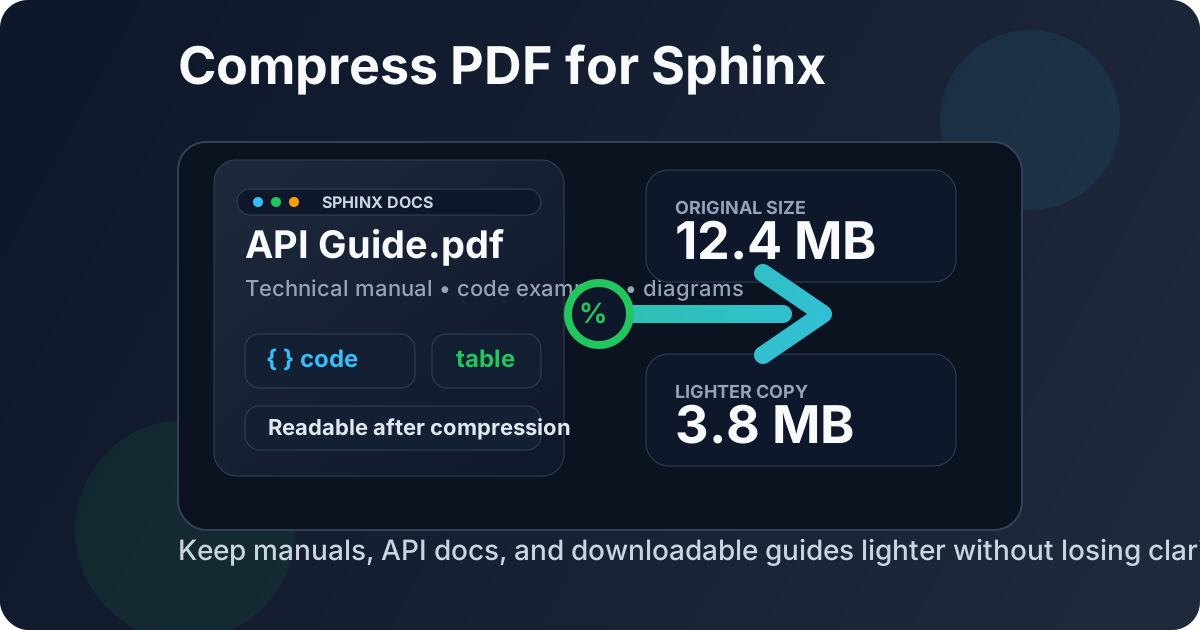
Table of contents
- Quick start: compress a Sphinx PDF in under 2 minutes
- Why smaller PDFs help in Sphinx
- What makes a good Sphinx PDF download
- What file size should you aim for?
- Which compression level should you choose?
- Step-by-step: shrink a Sphinx PDF with LifetimePDF
- Best strategy for common Sphinx PDF types
- What if the PDF is still too large?
- Documentation habits that prevent Sphinx PDF bloat
- Related LifetimePDF tools and useful internal links
- FAQ
Quick start: compress a Sphinx PDF in under 2 minutes
If your real goal is simply make this downloadable guide lighter before people open it from Sphinx docs, this workflow is usually enough:
- Open Compress PDF.
- Upload the exact manual, API appendix, architecture handout, setup guide, onboarding PDF, or printable docs export you actually plan to publish.
- Choose Medium compression first.
- Download the smaller copy and compare the new size with the original.
- Put it in the real Sphinx workflow, not just a local test folder.
- Reopen it once from the exact page where readers will use it.
- If the file is still too heavy, use Extract Pages, Split PDF, or Crop PDF before trying stronger compression.
Why smaller PDFs help in Sphinx
Sphinx pages usually work best when the answer is easy to scan and the next step is easy to trust. Heavy PDFs quietly work against both. A clean docs page can still feel awkward if it points to a giant install manual, a bloated architecture appendix, or a scan-heavy printable guide that becomes the slowest part of the whole experience. The PDF may contain good information, but if it feels cumbersome to open, people will still experience it as friction.
Why lighter downloadable docs usually fit better
- Cleaner reading flow: smaller files are easier to reopen when someone only needs one command example, one diagram, one table, or one troubleshooting section.
- Better support sharing: lighter manuals and appendices are easier to drop into tickets, chats, and onboarding notes.
- Friendlier mobile use: smaller PDFs are less annoying when someone opens docs from a phone or tablet.
- Less maintenance drag: teams are more likely to keep a compact document current than a giant file everyone avoids touching.
- Better perceived polish: quick, readable downloads make technical docs feel intentional instead of patched together.
- Less duplicate clutter: if you trim or split files before publishing, readers are less likely to dig through unrelated appendix material just to find one answer.
Compression is not only about storage. It helps the documentation stay usable. A right-sized PDF is easier to trust, easier to revisit, and less likely to become the heaviest part of an otherwise tidy Sphinx workflow.
What makes a good Sphinx PDF download
A good Sphinx PDF is not simply tiny. It is readable, well-scoped, and still useful later when someone opens it with less context than the author had.
- One clear purpose per file: an install guide, API appendix, architecture note, printable handbook, release handout, or onboarding PDF should each support one clear workflow.
- Readable details: code samples, diagram labels, table headers, screenshot callouts, footnotes, and small UI labels should still hold up after compression.
- Only the useful pages: duplicate covers, archived chapters, outdated release notes, and irrelevant appendices are just dead weight.
- Searchable text when possible: if the PDF is scan-heavy, OCR PDF may help more than brute-force compression.
- Clean metadata and filenames: a tidy final title makes the download feel more deliberate when people save it outside the docs site.
What file size should you aim for?
There is no single perfect number because a short API appendix behaves very differently from a screenshot-rich tutorial, an architecture handbook, or a scan-based legacy manual. Still, practical ranges help. The right goal is not the smallest possible PDF. It is the smallest file that still feels dependable.
| Sphinx PDF type | Comfortable target | What to check before keeping it |
|---|---|---|
| Text-heavy API references, setup guides, and short technical manuals | Under 4MB | Paragraph sharpness, table headers, inline code, and footnotes |
| Diagram-rich tutorials, screenshot-heavy walkthroughs, and onboarding PDFs | 4MB to 10MB | Diagram labels, screenshot notes, code snippets inside images, and dense table columns |
| Scan-heavy compliance attachments, signed procedures, and legacy manuals | As small as practical without hurting readability | Faint text, pen marks, crop quality, and OCR usefulness |
| Large mixed-topic documentation bundles | Often split first | Whether the file should really become several smaller downloads |
If the lighter copy saves a few megabytes but makes code examples, small labels, diagram notes, or table details harder to trust, the compression was too aggressive. A dependable documentation download is usually worth more than a prettier file-size number.
Which compression level should you choose?
Most Sphinx users do not need a complicated decision tree. Start with Medium and only go more aggressive if the file is still clearly too heavy for the role it plays on the page.
Low compression
Use Low when the PDF already looks clean and you only want a modest size drop without risking tiny labels, fine print, or subtle diagram detail.
Medium compression
Medium is the best default for most Sphinx workflows. It usually cuts enough size to matter while keeping ordinary reading, setup, implementation, and support work comfortable.
High compression
Use High only when the PDF is still annoyingly bulky after smarter cleanup or when the file is more of a convenience download than a close-reading source. If the document matters, test it before you trust it.
Step-by-step: shrink a Sphinx PDF with LifetimePDF
- Start with the final file. Use the exact manual, appendix, install guide, release handout, architecture packet, or printable docs export you actually want readers to open.
- Open Compress PDF.
- Choose Medium compression first. This is usually the safest balance for technical documentation downloads.
- Download the smaller copy. Compare the new size with the original so you know the reduction was worth it.
- Put it in the real workflow. Reopen the lighter file from the exact Sphinx page or download path where it will live.
- Check one difficult page. Review a page with dense tables, code examples, diagram notes, signatures, or screenshot callouts.
- Run one trust test. Scroll the document once and confirm the parts people actually depend on still hold up.
- Fix structure only if needed. If the file is still too heavy, split it, crop wasted margins, remove junk pages, or OCR the scan before trying harsher compression.
Best strategy for common Sphinx PDF types
Not every download deserves the same treatment. The best workflow depends on what the PDF is doing inside the docs.
API references and appendices
These need careful review. Dense tables, parameter lists, authentication details, and code examples inside screenshots can become frustrating long before the whole page looks obviously damaged. Medium is usually the safest stopping point.
Installation guides and quickstarts
These usually compress well. Protect screenshot text, command examples, environment names, and callout boxes because those are the details readers most often need when they are already trying to get unstuck.
Architecture notes and diagram-heavy manuals
These benefit from restraint. If compression makes labels, sequence notes, or decision trees harder to read, keep more quality and trim the structure instead.
Printable handbooks and internal guides
These often carry more dead weight than people expect. Remove outdated sections, repeated front matter, and archive material before you push image quality lower.
Scanned legacy procedures
These are usually the troublemakers. Compression helps, but the bigger win often comes from cropping scanner waste and using OCR PDF so the file is easier to search and reuse later.
What if the PDF is still too large?
If one compression pass did not get you where you want, do not assume the next answer is maximum compression. Very often the real answer is better cleanup.
- Use Extract Pages when you only need one appendix, one chapter, or one signed section.
- Use Delete Pages to remove covers, blanks, repeated inserts, or irrelevant release history.
- Use Split PDF when one giant document would work better as several topic-specific downloads.
- Use Crop PDF if empty margins and scanner waste are inflating the file.
- Use OCR PDF if the real problem is that the scan is hard to search, not just large.
- Use PDF Metadata Editor when the final download needs a cleaner, more reusable title and document identity.
In most documentation workflows, a cleaner PDF beats a more aggressively compressed PDF. Better structure is usually worth more than one more round of quality loss.
Documentation habits that prevent Sphinx PDF bloat
Compression only counts as a win if the docs feel easier to use afterward. A few habits make that much more likely.
- Export from the final build: compress the PDF you are actually going to link, not an earlier draft that will be replaced anyway.
- Keep each download focused: one Sphinx page usually works better with one clear PDF than with one giant mixed-topic bundle.
- Trim archive clutter: if older sections are no longer useful, remove them instead of compressing them forever.
- Verify from the real docs page: the file should be tested where readers will actually click it, not just from your desktop.
- Preserve the source until the replacement proves itself: do not delete the original immediately if the document matters.
- Split archives instead of overcompressing them: a smaller focused PDF is usually more useful than one giant bundle with softer text.
The goal is not to win a file-size contest. The goal is to keep the docs readable, useful, and light enough that people still want to use them.
Related LifetimePDF tools and useful internal links
If you want a smoother Sphinx workflow, these are the most useful companion tools and guides:
- Compress PDF for the main size-reduction step.
- Extract Pages when only part of a document belongs in the docs.
- Split PDF for large mixed-topic bundles.
- OCR PDF for scan-heavy files you still want to search.
- Crop PDF to trim wasted margins before compressing.
- PDF Metadata Editor when you want a cleaner final download.
If your workflow overlaps with other documentation platforms, these companion guides may help too: Compress PDF for Read the Docs, Compress PDF for MkDocs, Compress PDF for Docusaurus, and Compress PDF for Redocly.
Bottom line: shrink the PDF just enough that the Sphinx page feels lighter, then stop. If the file is still awkward, improve the structure of the download instead of endlessly squeezing it.
FAQ: Compress PDF for Sphinx
How do I compress a PDF for Sphinx?
Upload the final PDF to a compressor, start with Medium compression, and keep the smaller copy only if code blocks, diagrams, tables, and screenshots still look clear when you reopen it from the Sphinx page where it belongs. Medium is usually the safest first step because it removes wasted weight without making the document frustrating to trust later.
What file size should I aim for in Sphinx docs?
Under 4MB is a strong target for many text-heavy technical guides, API references, and installation manuals. Diagram-rich tutorials, screenshot-heavy walkthroughs, and scan-heavier documentation often land best around 4MB to 10MB if the important details remain readable.
Will compression hurt code blocks, diagrams, or screenshots?
Usually not if you begin with Medium compression and the source file is already clean. Problems usually show up first in tiny labels, dense tables, code examples inside images, and diagram notes, so those are the places worth checking before you replace the original.
Should I split a large Sphinx manual instead of compressing harder?
Usually yes. If one PDF contains several unrelated sections, archived versions, or bulky appendices, splitting it is usually better than pushing compression harder. Sphinx downloads work better when each linked file has one clear purpose and readers do not have to dig through a giant bundle.
Which LifetimePDF tools pair best with Sphinx?
Compress PDF is the main starting point. Extract Pages, Split PDF, Delete Pages, Crop PDF, OCR PDF, and PDF Metadata Editor are the most useful companion workflows when you want lighter, cleaner technical manuals and downloadable documentation PDFs.
Published by LifetimePDF - Pay once. Use forever.