Compress PDF for Serprobot: Keep Rank Tracking Reports, Keyword Snapshots, and Client PDFs Small Without Losing the Details
To compress a PDF for Serprobot, export the finished file, upload it to LifetimePDF's Compress PDF tool, start with Medium compression, and keep the smaller copy only if keyword positions, date ranges, chart labels, and notes still read clearly.
For most Serprobot workflows, under 2MB is a strong target for short updates, while recurring rank tracking reports, client recaps, and broader keyword packs usually sit best around 2MB to 5MB after light cleanup.
Serprobot exports get awkward when one report quietly becomes the file everyone uses. It starts as a quick rankings snapshot, then turns into the client check-in, the internal proof pack, and the archive copy for later comparison. Good compression helps because it removes waste from that handoff without removing the ranking story itself.
Fastest path: run the finished Serprobot PDF through LifetimePDF's Compress PDF tool at Medium, then do one quick readability check before you email, upload, archive, or present it.
In a hurry? Jump to Quick start: compress a Serprobot PDF in under 2 minutes.
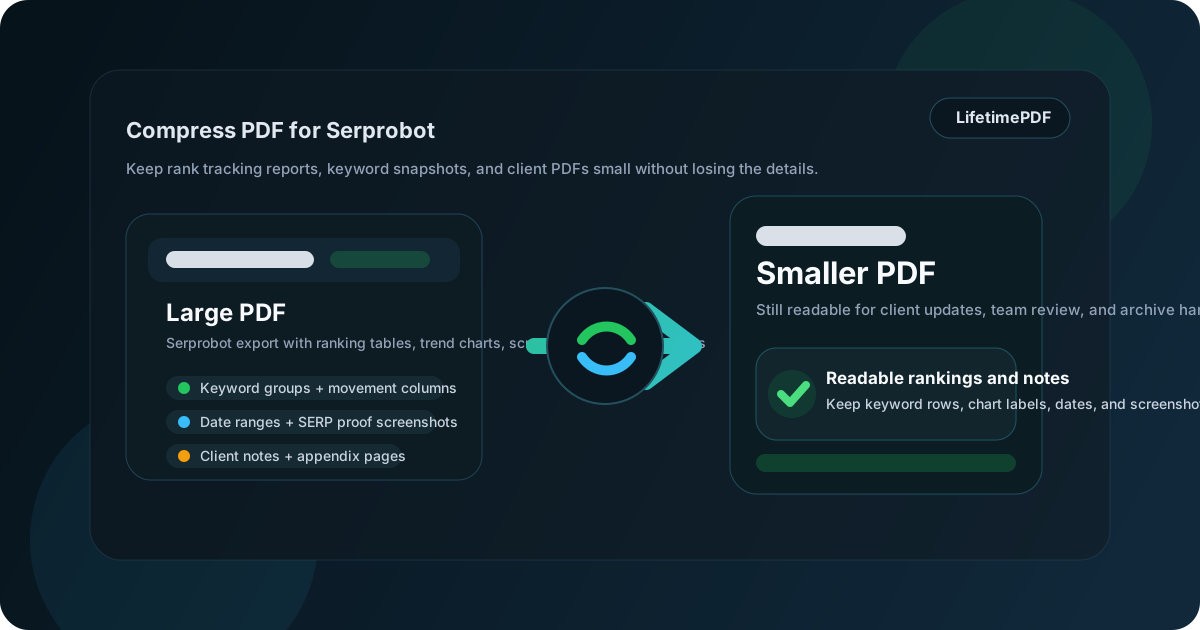
Table of contents
- Quick start: compress a Serprobot PDF in under 2 minutes
- Why Serprobot PDFs get bulky
- What file size should you aim for?
- Which compression level should you choose?
- Step-by-step: shrink a Serprobot PDF with LifetimePDF
- Best approach for common Serprobot PDF types
- What to trim before compressing harder
- How to keep rankings, dates, and notes readable
- Workflow habits that reduce PDF bloat
- Related LifetimePDF tools and useful reading
- FAQ (People Also Ask)
Quick start: compress a Serprobot PDF in under 2 minutes
If your real goal is simply make this Serprobot PDF smaller so it is easier to send and easier to open, this workflow is usually enough:
- Open Compress PDF.
- Upload the Serprobot PDF you actually plan to share, such as a keyword snapshot, recurring rank tracking report, SERP proof export, competitor comparison, or client recap.
- Choose Medium compression first.
- Download the smaller copy and compare the new size with the original.
- Check the weakest details once: keyword positions, movement indicators, chart legends, date ranges, screenshot callouts, and notes.
- If the file is still bulky, use Split PDF, Extract Pages, or Delete Pages before forcing a stronger setting across the whole report.
Why Serprobot PDFs get bulky
Serprobot is useful because it turns ranking movement into something people can review outside the dashboard. The bloat usually appears after export. Once the PDF leaves the tool, it often has to work for several readers at the same time: the stakeholder who wants the answer, the strategist who wants proof, and the client who wants a clean update without another login.
That means one file often carries grouped keyword sections, ranking movement columns, chart screenshots, date comparisons, notes, cover pages, and appendix material. None of that is automatically waste. It just means the report can become heavier than the next handoff requires. Compression matters when it removes that friction while preserving the small details that explain what changed.
Why smaller PDFs help
- Faster delivery: lighter files are easier to email, upload into client portals, and attach to recurring SEO updates.
- Smoother review: smaller PDFs open more quickly during meetings and shared-screen walkthroughs.
- Cleaner archives: weekly and monthly reporting stacks add up quickly, so smaller copies stay easier to store and revisit.
- Less resend friction: compressing once is simpler than rebuilding a report pack because the original felt awkwardly heavy.
- Better presentation flow: when everyone can open the same file quickly, the conversation stays on rankings and next steps instead of the attachment itself.
What file size should you aim for?
There is no universal perfect number because a two-page keyword snapshot behaves differently from a weekly report that mixes charts, comments, screenshots, and grouped keyword sections. Still, practical targets make decisions easier.
| Serprobot PDF type | Recommended target | Why it works |
|---|---|---|
| Quick keyword snapshot | Under 2MB | Usually enough for fast updates, simple reviews, and lightweight client check-ins. |
| Recurring rank tracking report | 2MB to 4MB | Gives you room for grouped keywords, movement context, and short notes without overloading the file. |
| Client-ready recap with screenshots | 3MB to 5MB | More realistic when screenshots, white-label sections, or appendix pages need to stay readable. |
| Appendix-heavy proof pack | Split instead of chasing one tiny file | If one PDF is trying to serve several audiences, breaking it into cleaner pieces usually works better than crushing every page harder. |
Which compression level should you choose?
The safest first pass is usually not the strongest one. Serprobot exports often contain small text and compact tables, so over-compressing can damage the exact details that make the PDF useful.
Use Medium first in most cases
- Medium: best default for keyword snapshots, recurring rank tracking updates, and client-ready recaps.
- Stronger compression: use it only after confirming the file is still too large and after trimming avoidable pages first.
- Split before stronger compression: often the smarter move when one report mixes summaries, screenshots, and appendix material that not every reader needs.
Medium works well because it reduces size while protecting the small pieces people still inspect later. That includes ranking positions, movement arrows, date ranges, chart legends, and short written takeaways.
Step-by-step: shrink a Serprobot PDF with LifetimePDF
- Export the finished report. Use the PDF you actually plan to send, not the biggest export you happen to have.
- Open Compress PDF.
- Upload the file and start with Medium compression.
- Download the smaller result. Compare the new file size with the original.
- Check the fragile details. Look at the smallest keyword rows, chart labels, screenshot captions, notes, and date ranges.
- Trim only if needed. If the report is still too heavy, use Extract Pages, Split PDF, Delete Pages, or Crop PDF before trying a more aggressive setting.
Quick win: most Serprobot PDFs shrink enough with one Medium pass and one fast quality check.
Best approach for common Serprobot PDF types
Keyword snapshots
These are usually the easiest to compress because the file is shorter and the main job is preserving the table itself. Medium compression is often enough. Just make sure the smallest ranking rows and date labels still look clean at normal zoom.
Recurring rank tracking reports
These often combine grouped keyword sections, movement indicators, and commentary. Compression helps, but the biggest gains often come from deleting old appendix pages or splitting one large pack into summary and backup sections.
Client-ready recaps
These files usually need to feel polished as well as small. Keep an eye on branded cover pages, notes, screenshot clarity, and visual spacing. If the PDF feels heavy, trim repeated visuals before you reduce the quality of the main explanation pages.
Competitor checks and proof exports
Proof-oriented PDFs often carry a lot of screenshots. That makes page cleanup especially valuable. Crop wasted margins, remove duplicates, and keep only the screenshots that support the point you are making.
What to trim before compressing harder
If the file is still too large after one reasonable compression pass, it usually means the document structure is carrying more weight than the actual rankings.
- Repeated cover pages or branded separators
- Old comparison pages no longer needed in the current handoff
- Screenshots that repeat the same ranking story
- Appendix material meant only for internal reference
- Wide white margins around screenshots or exported visuals
- Multiple keyword group sections that different readers do not all need in one file
In many Serprobot workflows, better packaging solves more than heavier compression. A smaller, cleaner report usually lands better than one giant PDF that tries to do everything at once.
How to keep rankings, dates, and notes readable
The most important quality check is not whether the PDF still opens. It is whether the next reader can still understand it quickly.
- Check the smallest keyword rows: if the table takes effort to read, the file was compressed too far.
- Check movement indicators: arrows, deltas, and comparison markers need to remain obvious at a glance.
- Check date ranges: recurring reports lose value fast if the reporting period becomes hard to spot.
- Check chart legends and labels: if readers cannot tell what the line or bar means, the visual may as well not be there.
- Check notes and recommendations: a lighter file is not helpful if the explanation beneath the rankings feels faint or fuzzy.
Workflow habits that reduce PDF bloat
The easiest way to keep Serprobot PDFs smaller is to prevent avoidable weight before the final export becomes permanent.
- Keep the client-facing report separate from the internal proof appendix.
- Use screenshots only when they add evidence that the table alone does not show.
- Archive bulky background material in a second file instead of packing it into every handoff.
- Delete duplicate pages before you export the final shareable version.
- Use PDF Metadata Editor to clean titles and document properties when you want the file to feel more polished after compression.
Related LifetimePDF tools and useful reading
If you work with Serprobot PDFs often, these tools usually cover the whole cleanup path:
- Compress PDF for the first size reduction pass
- Split PDF for separating summaries from appendices
- Extract Pages for keeping only decision-ready sections
- Delete Pages for repeated covers or stale proof pages
- Crop PDF for oversized screenshots and wasted margins
- Compare PDFs when you want to verify that your cleaned version still matches the source where it matters
Related reading: Compress PDF for Serprobot Without Monthly Fees and Compress PDF for TrueRanker.
Ready to clean up the file? Start with compression, then trim pages only if the report is still larger than the next reader needs.
FAQ (People Also Ask)
How do I compress a PDF for Serprobot?
Export the Serprobot report as a PDF, upload it to a PDF compressor, start with Medium compression, and preview the smaller result before sharing it. Medium is usually the safest first pass because it reduces size while keeping keyword positions, chart labels, date ranges, and notes readable.
What file size should I aim for with Serprobot PDFs?
Under 2MB is a strong target for short snapshots and quick client updates. Weekly tracking packs, competitor reviews, and appendix-heavy reporting PDFs usually work best around 2MB to 5MB as long as the smallest useful text still looks clear.
Will compression make Serprobot keyword tables or charts blurry?
It can if you compress too aggressively. That is why Medium compression is usually the best first pass. Review keyword rows, chart legends, movement indicators, and notes before keeping the smaller copy.
Should I split a long Serprobot PDF instead of compressing harder?
Often, yes. If one PDF combines summaries, multiple keyword groups, screenshots, client notes, and appendix material, splitting it usually works better than forcing stronger compression across every page.
Which LifetimePDF tools pair well with Serprobot exports?
Compress PDF is the main starting point. Split PDF, Extract Pages, Delete Pages, Crop PDF, Compare PDFs, and PDF Metadata Editor all help when you need smaller, cleaner, client-ready Serprobot files.