Compress PDF for SearchPilot: Keep SEO Test Reports, Experiment Recaps, and Stakeholder PDFs Small Without Losing the Story
To compress a PDF for SearchPilot, export the report, upload it to LifetimePDF's Compress PDF tool, start with Medium compression, and keep the smaller copy only if charts, screenshots, annotations, and rollout notes still read clearly.
For most SearchPilot exports, under 2MB works well for short experiment summaries, while broader stakeholder decks, test recaps, and appendix-heavy evidence packs usually sit best around 2MB to 4MB.
SearchPilot PDFs usually matter because they are carrying a conclusion, not just a chart. Someone needs to see what changed, why the test mattered, what the evidence says, and what should happen next. That is exactly why these files get bulky. Good compression should make the report easier to send without flattening the proof that makes the recommendation believable.
Fastest path: run the final SearchPilot PDF through LifetimePDF's Compress PDF tool at Medium, then do one quick evidence check before you email, upload, archive, or present it.
Need the short version first? Jump to Quick start: compress a SearchPilot PDF in under 2 minutes.
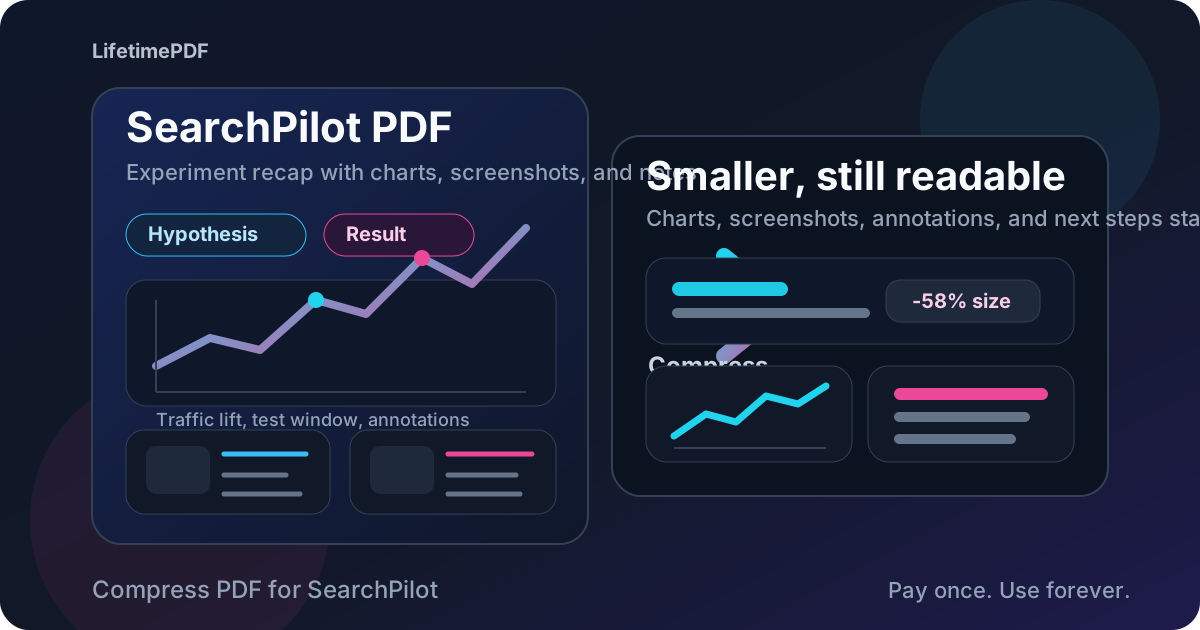
Table of contents
- Quick start: compress a SearchPilot PDF in under 2 minutes
- Why SearchPilot PDFs get heavy so quickly
- What good compression looks like for SEO test reports
- What file size should you aim for?
- Which compression level should you choose?
- Step-by-step: shrink a SearchPilot PDF with LifetimePDF
- How to keep the test story intact
- When to split instead of compressing harder
- How to check readability before you send it
- Workflow habits that reduce PDF bloat
- Related LifetimePDF tools and useful next steps
- FAQ (People Also Ask)
Quick start: compress a SearchPilot PDF in under 2 minutes
If your real goal is simply make this SearchPilot PDF smaller so it is easier to send, upload, or archive, this workflow is usually enough:
- Open Compress PDF.
- Upload the SearchPilot report you actually plan to share, such as a test summary, experiment recap, stakeholder review deck, rollout report, or evidence appendix.
- Choose Medium compression first.
- Download the smaller file and compare the new size with the original.
- Open it once and check the smallest useful details: chart labels, date ranges, screenshot captions, annotations, notes, page examples, and the conclusion slide or summary section.
- If the pack is long, use Split PDF or Extract Pages to keep only what the next reader actually needs.
- If the PDF is still too heavy, trim appendix pages, repeated screenshots, or duplicate context slides before trying stronger compression.
Why SearchPilot PDFs get heavy so quickly
SearchPilot-style reporting often combines several things that each add weight. You may have the test setup, a timeline, comparison charts, screenshots, notes about the implementation, observations on winners and losers, and a recommendation for what to do next. That makes the report useful, but it also means the PDF is carrying a lot more than a single export table.
In practice, the file-size problem usually comes from packaging. Teams often bundle the short stakeholder summary, the raw evidence, the screenshot appendix, and internal commentary into one document because it is convenient at the moment of export. Compression helps, but the biggest win often comes from deciding what belongs in the main handoff and what should live in a second appendix.
Common reasons SearchPilot PDFs feel bulky
- Screenshot-heavy proof: before-and-after examples, SERP snapshots, or page captures add visual weight quickly.
- Multiple reader types: one PDF tries to serve executives, SEO strategists, developers, and clients all at once.
- Repeated context slides: headings, methodology pages, and legend sections often show up more than once.
- Long evidence appendices: the supporting material is useful, but not every reader needs it inside the main file.
- Wide margins and filler pages: small layout cleanup often removes more weight than people expect.
What good compression looks like for SEO test reports
A smaller PDF is not automatically a better PDF. With SearchPilot reports, good compression means the next reader can still follow the logic of the test without guessing. They should be able to understand what changed, what the evidence suggests, and why the recommendation is worth trusting.
That means the small details matter more than chasing the lowest possible file-size number. If chart labels blur, screenshots flatten into mush, or the notes that explain the outcome become annoying to read, the PDF may be lighter but it is not more useful.
Signs the compressed file is still strong
- Chart labels remain readable at normal zoom.
- Screenshots still support the conclusion without forcing constant zooming.
- Date ranges, notes, and annotations stay clean.
- The main takeaway is obvious within the first page or two.
- The person opening the file can understand the result without digging through filler slides first.
What file size should you aim for?
There is no perfect size for every SearchPilot export, but these ranges are practical:
| SearchPilot PDF type | Good target range | Why it works |
|---|---|---|
| Single experiment summary | Under 1MB to 2MB | Usually light enough for fast sharing while keeping the core chart and notes readable. |
| Test recap with screenshots | 2MB to 3MB | Gives screenshots, annotations, and comparison visuals enough room to stay clear. |
| Stakeholder deck or client-ready report | 2MB to 4MB | Better for multi-page storytelling without making the handoff awkward to send. |
| Deep evidence appendix | 4MB+ | Fine if the goal is archival detail rather than instant email convenience. |
If you have to choose between a slightly smaller file and a more believable report, choose believable. The whole point of an SEO test PDF is to help another person trust the result quickly.
Which compression level should you choose?
Most SearchPilot PDFs benefit from a moderate first pass. The right level depends less on the platform name and more on what the document contains.
Use Light compression when
- the file already looks lean,
- small text is critical,
- the report contains lots of thin lines, labels, or notes, or
- you only need a gentle size reduction.
Use Medium compression when
- you want the best default for most reports,
- the PDF mixes screenshots and charts together,
- the file needs to travel by email or through a portal, or
- you want lighter delivery without noticeably weakening the evidence.
Use Strong compression only when
- the file is still too big after cleanup,
- the appendix matters less than convenience, or
- you already separated the key pages from the supporting material.
Step-by-step: shrink a SearchPilot PDF with LifetimePDF
- Export the final report version. Do not compress a messy draft if you already know some pages will be removed later.
- Open Compress PDF.
- Upload the file. This could be a one-page result summary, a full experiment narrative, or a stakeholder report with evidence pages attached.
- Choose Medium compression. It is usually the safest balance for SearchPilot material.
- Download and compare. Check the new size, then open the compressed copy once.
- Review key evidence. Focus on chart labels, date ranges, screenshots, annotations, example pages, notes, and the recommendation section.
- Clean up further if needed. If the file still feels heavy, use Extract Pages, Delete Pages, or Split PDF before trying stronger compression.
Useful combo: compress first, then split long evidence packs into a summary PDF and an appendix PDF if different readers need different depth.
How to keep the test story intact
SearchPilot PDFs are often judged by one question: does this still make the outcome easy to trust? That is why context matters. A lighter file still needs enough structure for the reader to understand what changed, what evidence matters, and what should happen next.
Keep these parts intact
- The purpose: what was being tested?
- The timing: which date range or rollout window matters?
- The evidence: charts, screenshots, or examples that support the result.
- The interpretation: what should the reader conclude?
- The next action: what should happen after the test?
If compression makes any of those harder to follow, the report is too thin. The best fix is often structural rather than technical. Put the conclusion and key evidence in the main PDF. Move raw appendices, duplicate screenshots, or extra reference pages into a separate document.
When to split instead of compressing harder
Stronger compression is not always the right answer. Sometimes the file is large because it is trying to serve three different readers at once. A stakeholder may need the headline result. An SEO lead may want the charts and notes. An implementer may care about the page examples and rollout detail. One PDF can do all of that, but it often becomes clumsy.
Split the file when
- the first section is a concise summary and the rest is supporting evidence,
- the appendix contains many screenshots or proof slides,
- only one team needs the deep-dive pages, or
- you keep fighting for size after Medium compression.
In those cases, use Split PDF to create a shorter primary report and a secondary appendix. That usually works better than flattening everything harder and hoping the evidence still survives.
How to check readability before you send it
Before you send the compressed file, review the details that matter most in SearchPilot workflows:
- chart labels and legend text,
- date ranges and comparison windows,
- example pages or screenshot captions,
- annotation callouts,
- before-and-after evidence, and
- the recommendation or next-step notes near the conclusion.
Open the result at normal zoom first. If you need to zoom in immediately to understand the main claim, you may have compressed too hard or packed too much into one page. Good report delivery should feel easy before it feels tiny.
Workflow habits that reduce PDF bloat
- Export only the report you actually need. Do not include extra pages just because they were already in the deck.
- Separate summaries from deep evidence. Different readers often need different file depths.
- Remove duplicate screenshots. Repeated visual proof adds size faster than most teams expect.
- Use extract and delete tools before stronger compression. Structural cleanup protects quality better than aggressive shrinking.
- Name the final file clearly. If needed, clean up titles and metadata so the report is easier to find later.
Good SEO test reporting is not just about the result. It is also about making that result easy to pass around, revisit, and trust a month later. Cleaner PDFs help with that more than most teams realize.
Related LifetimePDF tools and useful next steps
If your SearchPilot PDF needs more than a simple size reduction, these tools are usually the most helpful next step:
- Compress PDF for the first size reduction pass.
- Split PDF for separating the summary from the appendix.
- Extract Pages for pulling only the most important pages into a clean handoff file.
- Delete Pages for removing filler or repeated proof slides.
- Compare PDFs for checking whether a cleaned report version still contains the pages you meant to keep.
- Merge PDF if you want to rebuild a cleaner final package after trimming parts.
FAQ (People Also Ask)
1) How do I compress a PDF for SearchPilot?
Export the SearchPilot report as a PDF, upload it to a PDF compressor, start with Medium compression, and review the smaller copy before sharing it. For most reports, Medium is the safest starting point because it reduces file size while keeping charts, screenshots, annotations, and summary notes readable.
2) What file size should I aim for with SearchPilot PDFs?
Under 2MB is a strong target for short experiment summaries and single-test updates. Multi-page stakeholder decks, rollout recaps, and appendix-heavy evidence packs usually work better around 2MB to 4MB, as long as the smallest useful details still read clearly.
3) Will compression make SearchPilot charts or screenshots blurry?
It can if you compress too aggressively. That is why Medium compression is usually the best first pass. Always check chart labels, date ranges, screenshot captions, notes, and the conclusion page before you keep the smaller file.
4) When should I split a SearchPilot PDF instead of compressing it harder?
Split the file when the main summary and the supporting evidence serve different readers. A short stakeholder version plus a separate appendix often works better than one heavily compressed document that tries to do everything.
5) Which LifetimePDF tools help most after compression?
Compress PDF is the starting point, then Split PDF, Extract Pages, Delete Pages, Compare PDFs, and Merge PDF help when you want to rebuild a cleaner SearchPilot handoff for different readers.
Ready to shrink your SearchPilot PDF?
Best workflow: Export the final report - Compress - Review key evidence - Split or trim if needed - Share the clean copy.
Published by LifetimePDF - Pay once. Use forever.