Compress PDF for SalesIntel: Keep Buyer Lists, Contact Briefs, and Prospecting PDFs Easy to Open
To compress a PDF for SalesIntel, upload the final buyer list, contact brief, account snapshot, or prospecting handoff PDF to LifetimePDF's Compress PDF tool, start with Medium compression, and keep the smaller copy only after names, job titles, email addresses, phone numbers, notes, and screenshot callouts still look clean in the real SalesIntel workflow, list review, or handoff step where the file gets reopened.
For most SalesIntel PDFs, under 2MB is a strong target for short one-pagers, contact summaries, and simple buyer lists, while screenshot-heavy account briefs, buying-committee snapshots, and multi-page prospecting packets usually work best around 2MB to 5MB after light cleanup.
SalesIntel is built to make prospect data easier to use. The PDF should not become the slowest part of the workflow. When a file gets too heavy, it adds drag during handoffs, makes mobile review annoying, and turns a simple contact brief into something people delay opening. The real goal is not the smallest possible PDF. It is the lightest file that still keeps the buyer details readable and credible.
Fastest path: run the SalesIntel PDF through LifetimePDF's Compress PDF tool on Medium, then extract the pages that matter or split backup material only if the file is still heavier than the real handoff, review, or follow-up needs.
In a hurry? Jump to Quick start: compress a SalesIntel PDF in about 2 minutes.
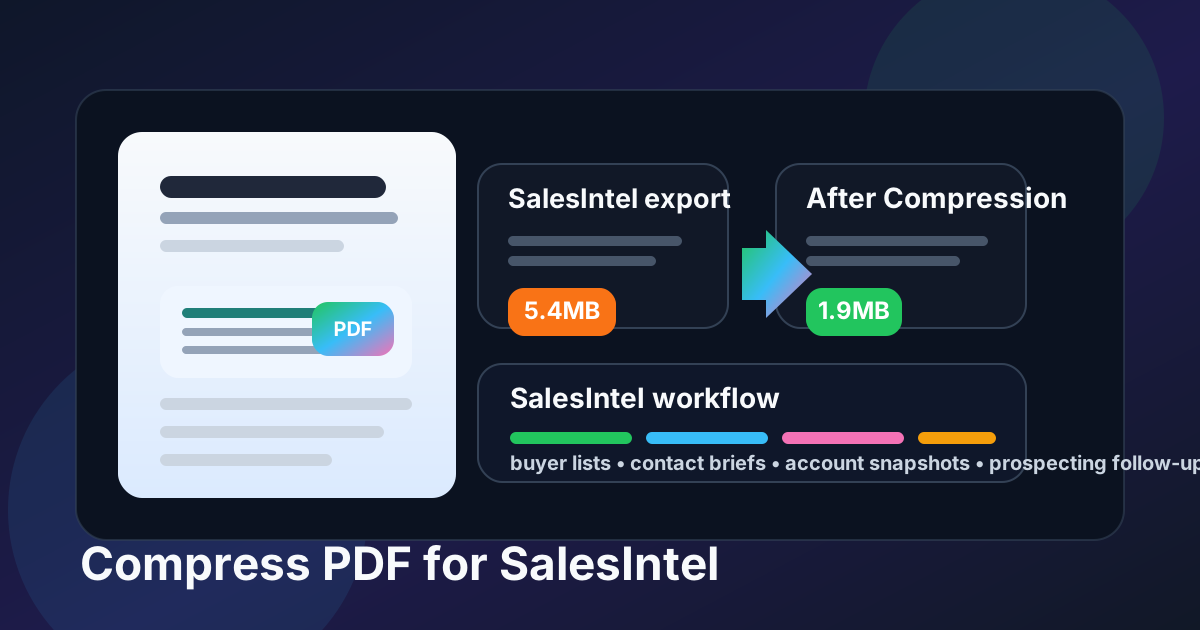
Table of contents
- Quick start: compress a SalesIntel PDF in about 2 minutes
- Why SalesIntel PDFs get heavy so quickly
- Where large PDFs create friction in SalesIntel workflows
- What file size should you aim for?
- Which compression level should you choose?
- Step-by-step: shrink a SalesIntel PDF with LifetimePDF
- Best strategy for common SalesIntel PDF types
- What if the file is still too big?
- How to keep contact data readable
- Workflow habits that keep SalesIntel PDFs lighter
- Related LifetimePDF tools and useful internal reading
- FAQ (People Also Ask)
Quick start: compress a SalesIntel PDF in about 2 minutes
- Open Compress PDF.
- Upload the final SalesIntel buyer list, contact brief, account snapshot, or prospecting handoff PDF.
- Start with Medium compression.
- Download the smaller copy and reopen it from the real review or handoff step where it will actually be used.
- If the file is still too big, extract the pages that matter or split appendix material instead of forcing the whole packet through stronger compression.
That solves most cases. SalesIntel PDFs usually do not need aggressive compression. They need a realistic size target, one honest readability check, and a cleaner packet structure when the file is carrying more background than the next person actually needs.
Why SalesIntel PDFs get heavy so quickly
SalesIntel PDFs get bulky when a short buyer list turns into a mixed research packet. Teams often add screenshots, buying-committee notes, account context, old exports, manager comments, and backup pages that felt useful once but do not belong in every live handoff.
Another common issue is that one PDF tries to do too many jobs at the same time. It becomes a research archive, an SDR handoff, and a prospect-facing attachment in one file. Compression helps, but the bigger win often comes from keeping only the pages the next step truly needs.
Where large PDFs create friction in SalesIntel workflows
The problem is not that SalesIntel can never work with a larger file. The problem is that a heavy PDF adds friction exactly where speed matters:
- Buyer list review and cleanup: reps should be able to skim the right names and details quickly, not fight through a bloated packet.
- SDR-to-AE handoffs: the next person should get the useful summary fast instead of sorting through repeated exports and backup pages.
- Account research: screenshot-heavy briefs become annoying when someone needs a quick refresher right before outreach.
- Prospecting follow-up attachments: a short proof file feels less polished when the attachment is bulkier than the message around it.
Smaller files reduce that drag without changing the meaning of the document. Done well, compression makes the PDF easier to use without making the contact data feel weaker or less dependable.
What file size should you aim for?
There is no single perfect number, but these ranges work well for most SalesIntel workflows:
| Document type | Practical target | Why it works |
|---|---|---|
| Buyer lists and short contact briefs | < 1MB to 2MB | Fast to open while keeping names, job titles, company details, emails, and phone numbers readable |
| Account snapshots and SDR handoff PDFs | 2MB to 3MB | Leaves room for notes and screenshots without making the file feel clumsy |
| Research packets and multi-page prospecting bundles | 2MB to 5MB | Safer when screenshot labels, notes, and contact details still need to stay easy to trust |
If the document already opens quickly and the important details still look clean, stop there. Compression is supposed to improve the workflow, not win a file-size contest.
Which compression level should you choose?
For SalesIntel work, Medium is usually the best default. It lowers file size enough to make prospecting and handoffs easier while keeping names, titles, email addresses, phone numbers, notes, and screenshots readable.
- Low compression: best when the PDF is already clean and you only need a modest size reduction.
- Medium compression: the safest first choice for most buyer lists, contact summaries, and handoff documents.
- High compression: use it only after checking whether page cleanup or splitting would solve the problem more cleanly.
If the file contains narrow columns of contact data, dense notes, or small screenshots, test Medium first before touching anything stronger.
Step-by-step: shrink a SalesIntel PDF with LifetimePDF
- Start with the final document. Use the actual buyer list, contact brief, account snapshot, or follow-up PDF instead of an older working draft.
- Upload it to Compress PDF. Open LifetimePDF Compress PDF and add the file.
- Choose Medium first. That is usually the best balance for SalesIntel documents.
- Download the smaller copy. Save it with a clear name so it does not get mixed up with older versions.
- Reopen the real workflow. View the PDF from the exact place where people will use it: a list review, SDR handoff, account research step, or follow-up message.
- Inspect the high-risk details. Check names, job titles, company names, email addresses, phone numbers, notes, and the busiest page.
- Trim structure if needed. If the file is still heavy, delete dead pages, extract the relevant section, or split backup material before trying stronger compression.
That order keeps you from solving the wrong problem. In SalesIntel work, the cleanest outcome is usually not the most compressed file. It is the smallest file that still feels dependable in the exact moment somebody needs it fast.
Best strategy for common SalesIntel PDF types
Buyer lists and contact summaries
These are usually the easiest files to compress because they are mostly text, table data, and light formatting. Medium compression is normally enough. Just make sure names, job titles, company names, email addresses, and phone numbers still read cleanly without zooming.
Account snapshots and SDR handoffs
Be more careful here. Compression is useful, but small screenshot labels, note blocks, and custom filters can become annoying if you push too hard. If the packet is large because it mixes live pages with internal backup, split it before you use aggressive compression.
Prospecting one-pagers and follow-up PDFs
These should open fast because they often get forwarded. A short proof file loses value when the recipient has to wait for it or zoom through a bloated document just to find the point. Compress lightly, then check the headline proof point, contact summary, and CTA section.
Research packets with screenshots and buyer notes
These get heavy because they collect context from several places. If the file stays stubbornly large, extract the section the next person actually needs and keep raw background material somewhere else. Not every screenshot or internal note belongs in the live packet that moves forward.
What if the file is still too big?
Do not keep pushing compression harder without checking the structure of the PDF. If Medium does not get the file where you need it, try one of these first:
- Use Delete Pages to remove draft pages, repeated exports, or appendix material.
- Use Extract Pages to keep only the handoff or prospect-facing section.
- Use Split PDF when the main document and backup material should not live together.
- Use Crop PDF to remove scan borders and wasted margins.
- Use PDF Metadata Editor to clean properties before sharing internal research more broadly.
Those steps usually remove more useful weight than jumping straight to High compression.
How to keep contact data readable
The easiest mistake is checking only the first page. For SalesIntel documents, inspect the details that make real prospecting and handoff work possible:
- names, job titles, company names, email addresses, phone numbers, and next-step notes
- table columns, filter labels, and small UI text
- screenshot callouts, arrows, highlights, and note boxes
- dates, reminders, and account comments
- the densest page in the file, not only the cleanest one
If any of those look fuzzy, uncertain, or annoying to zoom into, keep the lighter setting or clean the file another way. Compression should remove waste, not context.
Workflow habits that keep SalesIntel PDFs lighter
A few simple habits prevent PDF bloat from coming back:
- Share the final handoff or follow-up PDF, not the working packet with internal extras.
- Keep raw research, old screenshots, and backup material separate when they do not need to travel with the live file.
- Replace duplicate exports instead of stacking nearly identical versions in the same document.
- Trim oversized screenshots before they become part of the PDF.
- Check mobile readability before deciding the document is truly finished.
Those habits matter because the best compression workflow starts before the file ever reaches the compressor.
Related LifetimePDF tools and useful internal reading
If SalesIntel is only one part of your broader sales-intelligence and prospecting stack, these tools and guides pair well with this workflow:
- Compress PDF for the main size-reduction step.
- Extract Pages when only the core document should stay attached.
- Delete Pages to remove outdated versions or repeated exports.
- Split PDF to separate the live file from backup material.
- Crop PDF to trim wasted scan borders.
- PDF Metadata Editor for cleaner document properties.
- Compress PDF for UpLead.
- Compress PDF for ZoomInfo.
- Compress PDF for LeadIQ.
- Compress PDF for ContactOut.
- Compress PDF for Apollo.io.
- Compress PDF for Seamless.AI.
Need the quickest fix? Compress the final SalesIntel PDF first, then clean up structure only if the file is still too heavy.
FAQ (People Also Ask)
How do I compress a PDF for SalesIntel?
Upload the final PDF to a compressor, start with Medium compression, download the smaller copy, and test it in the real SalesIntel workflow before replacing the original. Medium is usually the safest first pass because it lowers file size without making names, titles, contact details, notes, or screenshots harder to trust.
What file size should I aim for in SalesIntel?
For short buyer lists, one-pagers, and simple contact briefs, under 2MB is a strong target. Screenshot-heavy account snapshots, prospecting packets, and multi-page SDR or AE handoffs usually work best around 2MB to 5MB as long as the smallest useful detail still reads clearly.
Will PDF compression blur email addresses, phone numbers, or buyer notes in SalesIntel documents?
It can if you compress too aggressively. That is why Medium compression is the best place to start. Always check names, email addresses, phone numbers, note blocks, screenshot callouts, and the busiest page before you keep the smaller file.
Should I split a large prospecting packet instead of compressing it harder for SalesIntel?
Often, yes. If one PDF combines the prospect-facing summary with internal notes, older exports, manager comments, approvals, or a long appendix, splitting it usually creates a cleaner SalesIntel workflow than forcing the whole bundle through aggressive compression.
Which LifetimePDF tools pair best with SalesIntel?
Compress PDF is the main starting point. Extract Pages, Delete Pages, Split PDF, Crop PDF, PDF Metadata Editor, and OCR PDF are especially useful when you want smaller, cleaner SalesIntel documents without carrying extra pages, scan waste, hidden metadata, or image-only text forward.
Published by LifetimePDF - Pay once. Use forever.