Compress PDF for SEOTesting Without Monthly Fees: Shrink SEO Test Reports, Search Console Experiments, and Client PDFs Without Another Subscription
If you need to compress a PDF for SEOTesting without monthly fees, export the report, upload it to LifetimePDF's Compress PDF tool, start with Medium compression, and keep the smaller copy only if chart labels, screenshots, dates, and result notes still look clear.
For most SEOTesting PDFs, that is enough to reduce file size without adding another recurring subscription just to package test results for sharing.
SEO testing already asks you to do the hard part: form a hypothesis, ship the change, wait for enough data, and explain what actually happened. The PDF step should not be the expensive part. Usually the real need is simple. You want a report that opens fast, uploads easily, and still preserves the evidence that supports the conclusion. That is exactly why a pay-once PDF workflow fits this query so well.
Fastest path: run the SEOTesting export through LifetimePDF's Compress PDF tool at Medium, then split or extract pages only if the file is still heavier than the next reader actually needs.
In a hurry? Jump to Quick start: compress an SEOTesting PDF in under 2 minutes.
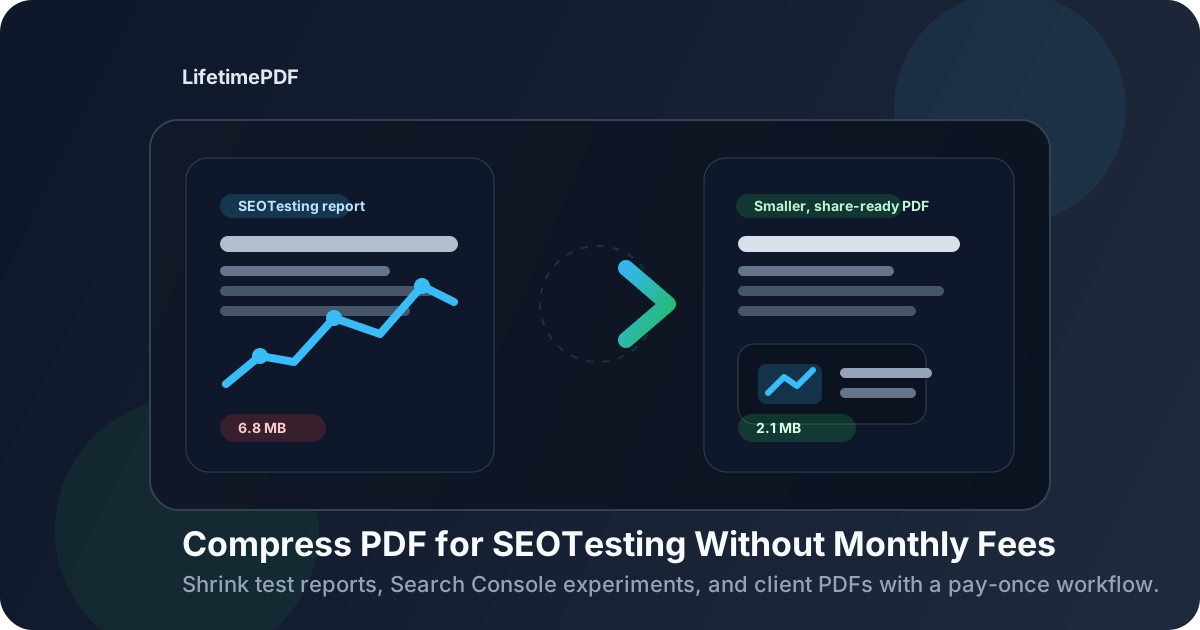
Table of contents
- Quick start: compress an SEOTesting PDF in under 2 minutes
- Why "without monthly fees" matters here
- Why SEOTesting PDFs get heavy in the first place
- What size should an SEOTesting PDF be?
- Which compression level should you choose?
- Step-by-step: use LifetimePDF to shrink the file
- Common SEOTesting PDFs that benefit from compression
- What to do if the PDF is still too large
- How to keep charts, screenshots, and notes readable
- Workflow habits that reduce PDF bloat
- Related LifetimePDF tools and internal links
- FAQ (People Also Ask)
Quick start: compress an SEOTesting PDF in under 2 minutes
If your real goal is simply make this SEOTesting PDF smaller so it is easier to send, this workflow is usually enough:
- Export the final PDF you actually plan to share, whether it is a single test summary, a Search Console experiment recap, a before-and-after evidence pack, or a client-ready results deck.
- Open Compress PDF.
- Upload the SEOTesting file you want to shrink.
- Choose Medium compression first.
- Download the smaller result and compare the new size.
- Preview the details that matter most: chart labels, page examples, date ranges, screenshots, annotation callouts, and result notes.
- If the file is still bulky, use Extract Pages, Split PDF, or Delete Pages before forcing stronger compression.
That handles most real-world SEOTesting exports without turning one quick delivery task into another subscription decision.
Why "without monthly fees" matters here
The search intent behind this keyword is straightforward. People are not looking for a giant new document stack. They already have the result. They simply need a smaller PDF without paying forever for a task that usually takes a few minutes at the end of the workflow.
That frustration makes sense. SEO teams already pay for testing platforms, reporting tools, analytics, storage, and collaboration software. Adding another monthly fee just to shrink exported PDFs feels backwards. A pay-once workflow fits the job better because the meaningful work already happened inside SEOTesting. The final packaging step should stay lightweight.
Simple rule: if the real work happened in the test, the PDF cleanup step should stay quick, practical, and easy to repeat.
Why SEOTesting PDFs get heavy in the first place
SEOTesting exports are useful because they combine evidence with explanation. That is also why they get heavy fast. One report can contain multiple screenshots, a summary slide, page examples, annotations, comparison dates, and commentary about what changed and what to do next. Compression helps, but the file usually grows because the document is trying to carry too many visual details at once.
Most of the weight comes from packaging too much supporting context into one deliverable rather than from the text itself. Repeated screenshots, appendix pages for multiple tests, old deck backgrounds, and one PDF serving several audiences at once all push the size up. The smartest workflow is usually a mix of compression and page cleanup, not compression alone.
Why smaller SEOTesting PDFs help
- Faster reviews: clients and stakeholders can open the file quickly instead of waiting on a bulky attachment.
- Cleaner handoff: strategists, editors, and SEO leads get a lighter report that is easier to forward and archive.
- Less upload friction: smaller PDFs fit more comfortably inside project tools, shared drives, and reporting portals.
- More usable archives: experiment libraries stay tidy when every recap is not carrying unnecessary screenshot weight.
- Better meetings: result discussions go smoother when everybody can access the same file without friction.
What size should an SEOTesting PDF be?
There is no universal number, but a few practical ranges help you know whether the file already feels shareable or still needs cleanup.
| Document type | Practical target | Why it works |
|---|---|---|
| Single test summaries and tight internal recaps | < 1MB to 2MB | Usually small enough for fast sharing while keeping the key labels and notes readable |
| Search Console experiment recaps and before-and-after reviews | 2MB to 3MB | Leaves room for screenshots and explanation without making the file awkward to send |
| Client-ready result decks and screenshot-heavy evidence packs | 3MB to 4MB | More realistic when the PDF still needs to preserve visual proof and commentary |
| Above 4MB | Compress again or split the pack | Often means the document contains more pages or images than the next reader actually needs |
If you can get below those numbers without hurting readability, great. But if chart labels or screenshot details start looking soft at normal zoom, stop. A slightly larger file that remains usable beats a tiny file that makes the test harder to trust.
Which compression level should you choose?
Most SEOTesting PDFs respond well to one simple rule: start in the middle, then only get more aggressive if the first pass is still too large.
Low compression
Best when the PDF is already fairly lean and the visuals carry tiny but important details. This is useful for screenshot-heavy evidence packs where every label matters.
Medium compression
Usually the smartest default. It tends to shrink page weight enough to make the document easier to share while keeping charts, annotations, screenshots, and conclusion notes readable.
High compression
Use it carefully. It can help when the file is dramatically too large, but it is also the setting most likely to make screenshots and chart labels look soft. If you have to use it, preview the result carefully before you send it to anyone else.
Step-by-step: use LifetimePDF to shrink the file
Here is a reliable workflow for most SEOTesting exports:
- Export the final version of the report you actually plan to share.
- Open Compress PDF.
- Upload the file and choose Medium.
- Download the compressed copy.
- Open it once and check the smallest meaningful details: chart axes, date ranges, page examples, screenshots, annotation callouts, and summary notes.
- If the result is still heavy, remove appendix pages or split the pack into cleaner sections with Split PDF.
- If the audience only needs part of the report, keep the relevant pages with Extract Pages.
That sequence works because it solves the most common problem first. You are not trying to manufacture the smallest possible file. You are trying to create the easiest version to hand off.
Common SEOTesting PDFs that benefit from compression
Compression is especially useful for these kinds of exports:
- Single test summaries prepared for content teams or editors
- Search Console experiment recaps used in SEO reviews and retrospectives
- Before-and-after evidence packs with screenshots and annotations
- Client-ready result decks with commentary and next-step recommendations
- Quarterly learnings packs where several tests are summarized in one document
In most of these cases, the PDF is not useful because it is large. It is useful because it makes the learning clear enough for someone to decide what to keep, what to change, and what to test next.
What to do if the PDF is still too large
If Medium compression helps but not enough, do not jump straight to the harshest setting. Usually the better move is to reduce the document itself.
Try these fixes first
- Split one oversized deck into separate PDFs for summary, evidence, and appendix pages.
- Extract only the pages a client or teammate actually needs.
- Delete repeated screenshots or old comparison pages.
- Crop wide margins or empty space that adds weight without adding meaning.
- Keep one focused report per audience instead of bundling every possible view into one file.
Helpful follow-up tools: use page-level cleanup before forcing heavier compression across the whole PDF.
How to keep charts, screenshots, and notes readable
Readability is the whole point. If the compressed file no longer supports quick decisions, the savings are not worth it.
Before you keep the smaller version, check these points at normal zoom:
- Can you still read the smallest chart labels and axes?
- Do page examples and URLs still look clean?
- Are screenshots sharp enough to support the takeaway you reference?
- Do annotation callouts and summary notes still feel readable rather than muddy?
- Does the PDF still feel professional enough to send externally?
If the answer to any of those is no, back off one step. A lighter file is helpful. A lighter file that damages the meaning of the result is not.
Workflow habits that reduce PDF bloat
The easiest PDF to compress is the one that was kept focused from the start. A few simple habits help a lot:
- Build separate PDFs for different audiences instead of one giant universal deck.
- Keep appendix evidence separate from the decision-ready summary.
- Use only the screenshots that prove the point.
- Export only the pages that still matter to the current discussion.
- Archive raw support material separately so the shared PDF can stay concise.
Those habits often save more weight than aggressive compression ever will. They also make the document easier to use after it lands in somebody else's inbox.
Related LifetimePDF tools and internal links
If you are building a cleaner SEOTesting handoff rather than just shrinking one file, these tools and guides pair well with this workflow:
- Compress PDF for the first size reduction pass
- Split PDF when one experiment pack is trying to serve too many audiences
- Extract Pages for summary-only handoffs
- Crop PDF to remove wasted space around screenshots
- Compress PDF for SEOTesting for the non-pricing-specific version of this workflow
- Compress PDF for Google Search Console Without Monthly Fees for related Search Console reporting workflows
- Compress PDF for SEOmonitor Without Monthly Fees for rank and reporting handoffs
- Compress PDF for KeywordTool.io Without Monthly Fees for keyword research exports
- Compress PDF for CognitiveSEO Without Monthly Fees for backlink and SEO analysis PDFs
Want the simplest setup? Use LifetimePDF for the final PDF cleanup step and keep the testing workflow focused on the test itself.
FAQ (People Also Ask)
How do I compress a PDF for SEOTesting without monthly fees?
Export the SEOTesting PDF, upload it to LifetimePDF, start with Medium compression, and preview the result before you share it. If the PDF is still too large, split or extract the pages the reader actually needs instead of squeezing the whole file harder.
What file size should I aim for before sharing an SEOTesting PDF?
Under 1MB to 2MB is a strong target for compact test summaries and single experiment recaps. Broader evidence packs and screenshot-heavy client reviews often work better around 2MB to 4MB as long as the smallest important details remain easy to read.
Will compression make SEOTesting charts or screenshots blurry?
It can if you compress too aggressively. Medium compression is usually the safest first pass because it reduces size while preserving the labels, screenshots, and notes that make the export useful.
Should I split a large SEOTesting PDF instead of compressing it harder?
Often yes. If one file combines summary slides, screenshots, multiple tests, and appendix pages for different readers, splitting it is usually more effective than forcing heavy compression across every page.
Why is a pay-once PDF workflow a better fit here?
Because the PDF step is usually the last small cleanup task after the real SEO testing work is done. A pay-once tool fits that reality better than adding a recurring bill just to shrink exports for sharing.
Published by LifetimePDF - Pay once. Use forever.