Compress PDF for Reputation.com: Keep Review Reports, Listing Audits, and Client PDFs Small Without Losing the Details
To compress a PDF for Reputation.com, export or print the file as PDF, upload it to LifetimePDF's Compress PDF tool, start with Medium compression, and keep the smaller copy only if star ratings, screenshots, listing details, and action notes still read cleanly.
For most Reputation.com PDFs, under 2MB works well for a focused review summary or one-location update, while listing audits, scorecards, executive recaps, and multi-location client packs usually sit best around 2MB to 5MB.
Reputation.com PDFs usually show up at the handoff moment. A client wants the review summary before a call. A regional operator needs the listing audit without another login. An agency account lead wants a smaller scorecard that opens quickly on mobile and still looks credible. That is where smart compression helps. The goal is not the tiniest file possible. The goal is a smaller PDF that still feels trustworthy when someone checks ratings, response trends, screenshots, location details, and the notes that explain what should happen next.
Fastest path: run the Reputation.com export through LifetimePDF's Compress PDF tool on Medium, then do one quick readability check before you email, upload, or archive the smaller copy.
Short on time? Jump to Quick start: compress a Reputation.com PDF in under 2 minutes.
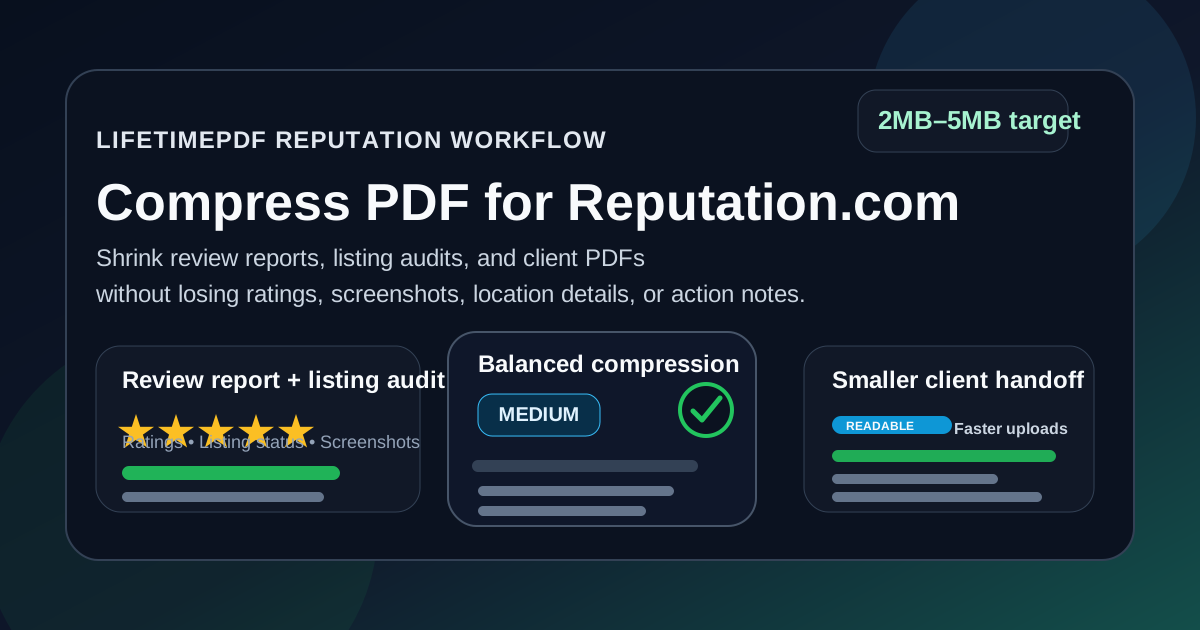
Table of contents
- Quick start: compress a Reputation.com PDF in under 2 minutes
- Why smaller PDFs help in Reputation.com workflows
- What file size should you aim for?
- Which compression level should you choose?
- Step-by-step: shrink a Reputation.com PDF with LifetimePDF
- Best strategy for common Reputation.com PDF types
- What if the PDF is still too large?
- How to keep screenshots, ratings, and listing details readable
- Workflow habits that reduce PDF bloat
- Related LifetimePDF tools and internal links
- FAQ (People Also Ask)
Quick start: compress a Reputation.com PDF in under 2 minutes
If your real goal is simply make this Reputation.com PDF smaller so it is easier to send, review, and store, this workflow is usually enough:
- Open Compress PDF.
- Upload the Reputation.com PDF you want to shrink, such as a review report, listing audit, location scorecard, executive summary, or multi-location client pack.
- Choose Medium compression first.
- Download the smaller file and compare the new size with the original.
- Open it once and check the smallest useful details: star ratings, review counts, location names, listing statuses, screenshots, and next-step notes.
- If the report is long, use Split PDF or Extract Pages to keep only what the next reader actually needs.
- If the file is still heavy, trim duplicate screenshots, appendix pages, or oversized margins before you try a stronger compression level.
Why smaller PDFs help in Reputation.com workflows
Reputation.com reports become PDFs because somebody outside the platform needs the takeaway fast. A client wants a review snapshot without a live walkthrough. A district manager wants the listing audit before a meeting. An internal team wants a scorecard they can attach to an email thread, portal ticket, or recap deck. Once that handoff turns into a PDF, file size starts affecting how useful the document feels.
Heavy PDFs create drag. They take longer to email, feel clumsy to upload into client portals, and open less gracefully on mobile when the next reader mostly wants the conclusion. In practice, extra weight often comes from screenshot-heavy pages, repeated location sections, long appendix blocks, or one oversized export trying to answer every possible follow-up in the same file. Good compression removes some of that drag without weakening the evidence.
Why compression usually helps
- Faster sharing: smaller files are easier to email, upload, and attach inside broader reporting workflows.
- Smoother review: a lighter PDF opens faster when someone only needs the key review, listings, or action takeaway.
- Cleaner archives: recurring multi-location packs are easier to store when every export is not bloated.
- Better handoffs: a compact, focused PDF is more likely to get opened and used.
- Less rework: one sensible compression pass is easier than resending an oversized attachment after the first upload fails.
What file size should you aim for?
There is no perfect number for every Reputation.com export, but a few practical ranges keep you from compressing harder than necessary:
| PDF type | Practical target | Why that range works |
|---|---|---|
| Short review summary or one-location update | Under 2MB | Usually enough for email, mobile review, and quick internal sharing without sacrificing basic clarity. |
| Listing audit or location scorecard | 2MB to 4MB | Gives charts, status tables, screenshots, and issue notes more room to stay readable. |
| Multi-location client pack or executive recap | 2MB to 5MB | More realistic when one file combines several locations, charts, screenshots, and summary commentary. |
Think of those ranges as sharing targets, not rules. If the file is already easy to send and the small details still look clean, you are done. If it is still bulky, do not just keep compressing forever. Split sections, extract the summary, or remove duplicate evidence pages first.
Which compression level should you choose?
Most Reputation.com exports should start on Medium. It is usually the safest balance between smaller files and a report that still looks professional when someone reviews ratings, screenshots, location details, and recommendation notes.
- Low compression: best when the PDF is already reasonably small and you mainly want a lighter copy with minimal visual change.
- Medium compression: the best default for review reports, listing audits, scorecards, and screenshot-backed client handoffs.
- High compression: use only when the file must be much smaller and you are willing to check carefully for blurry labels, soft screenshots, or hard-to-read notes.
Step-by-step: shrink a Reputation.com PDF with LifetimePDF
- Export only the file you actually need. If the next reader only needs the review recap, do not send the full appendix-heavy pack.
- Open Compress PDF.
- Upload the Reputation.com PDF. This might be a review performance summary, listing audit, location scorecard, or executive handoff.
- Start with Medium compression. That is usually enough to cut weight without damaging the evidence people actually check.
- Download the result. Compare the new file size with the original so you know whether the gain is meaningful.
- Open the smaller copy once. Check star ratings, screenshot captions, listing statuses, trend lines, location names, and action notes.
- Clean up only if needed. If the file is still too large, use Delete Pages, Extract Pages, or Crop PDF before you try a stronger compression level.
- Keep the cleanest useful version. The winner is the file that is small enough to move easily and clear enough to trust quickly.
Best strategy for common Reputation.com PDF types
1) Review reports
These usually need star ratings, response patterns, and before-versus-after context to stay readable. Medium compression is often enough. If the report includes many repeated screenshots, trimming extra pages usually helps more than pushing compression harder.
2) Listing audits
Listing status tables and issue screenshots can blur if you overdo compression. Keep an eye on location names, mismatch notes, status badges, and any annotations that explain what needs fixing. If the audit is very long, split by region or audience instead of sending one huge file everywhere.
3) Location scorecards
Scorecards often look compact, but charts, small labels, and summary blocks can become annoying to read when compressed too aggressively. Medium compression plus a quick zoom test is usually enough.
4) Multi-location client packs
These are the most likely to stay heavy even after compression. Split location groups, remove appendix pages the client does not need right now, and extract the executive summary if that is all the next reader actually wants.
What if the PDF is still too large?
If one pass of Medium compression is not enough, the next move usually is not more compression. The better move is cleaning the document structure.
- Split by location: especially useful for multi-location scorecards and audits.
- Extract summary pages: keep only the executive recap or client-facing pages for routine sharing.
- Delete repeated appendix pages: remove duplicates, outdated snapshots, or evidence meant only for internal review.
- Crop wasted margins: large white borders add file weight without helping the reader.
- Compare before sending: make sure the cleaned version still includes the proof the next person expects.
Useful tools for that cleanup: Split PDF, Extract Pages, Delete Pages, and Crop PDF.
How to keep screenshots, ratings, and listing details readable
This is the only quality check that really matters: can the next person trust the smaller PDF without asking for the original again?
Before you send the compressed copy, check:
- Star ratings and review counts
- Chart labels and trend lines
- Location names and status notes
- Listing issue screenshots and callouts
- Action items, next-step notes, and commentary
Workflow habits that reduce PDF bloat
- Export narrower date ranges when the reader only needs this month or this quarter.
- Separate summary and appendix versions instead of making every audience download the same large pack.
- Avoid duplicate screenshots when one clear proof image tells the story.
- Use consistent naming so the lighter, share-ready copy is obvious inside your workflow.
- Review changes month to month with a comparison step rather than preserving every prior evidence page inside the current report.
Those habits matter because the cleanest way to make a PDF smaller is often preventing unnecessary weight before the export becomes a problem.
Related LifetimePDF tools and internal links
If you work with Reputation.com exports regularly, these tools usually pair well together:
- Compress PDF for the first size reduction pass
- Split PDF for separating locations or appendix sections
- Extract Pages for keeping only the client-facing summary
- Delete Pages for removing repeated evidence pages
- Crop PDF for trimming wasted margins
- Compare PDFs for checking what changed after cleanup
- PDF Metadata Editor for cleaner file details before sharing
Best simple workflow: compress the Reputation.com export first, then split, extract, or delete pages only if the smaller file still includes more than the next reader needs.
FAQ: Compress PDF for Reputation.com
How do I compress a PDF for Reputation.com?
Export the Reputation.com report or audit as a PDF, upload it to a PDF compressor, start with Medium compression, and review the smaller copy before sharing it. Medium compression is usually the safest first pass because it lowers file size while keeping ratings, screenshots, listing details, and action notes readable.
What file size should I aim for with Reputation.com PDFs?
Under 2MB works well for a short review summary, one-location update, or focused executive recap. Listing audits, scorecards, and multi-location client packs usually land best around 2MB to 5MB as long as the smallest useful details still read clearly.
Will compression make Reputation.com screenshots or charts blurry?
It can if you compress too aggressively. That is why Medium compression is usually the best starting point. Always review chart labels, screenshots, listing statuses, review counts, and action notes before you keep the smaller file.
Should I split a large Reputation.com PDF instead of compressing it harder?
Often, yes. If one PDF combines multiple locations, long appendices, repeated screenshots, and sections meant for different readers, splitting it usually works better than forcing stronger compression across the whole file.
Which LifetimePDF tools pair best with Reputation.com exports?
Compress PDF is the main starting point. Split PDF, Extract Pages, Delete Pages, Crop PDF, Compare PDFs, and PDF Metadata Editor are especially useful when you want smaller, cleaner review and listings PDFs without sending the whole working appendix every time.