Compress PDF for Reputation.com: Share Smaller Review Reports, Listing Audits, and Client PDFs Faster
To compress a PDF for Reputation.com, export or print the report as PDF, upload it to Compress PDF, start with Medium compression, and keep the smaller copy only if charts, screenshots, listing details, and action notes still look clean.
For most Reputation.com PDFs, under 2MB works well for short review summaries and single-location updates, while broader multi-location scorecards, listing audits, and screenshot-heavy client packs usually work best around 2MB to 5MB.
If the file is still heavy, split appendix pages, remove repeated screenshots, or extract only the pages your next reader actually needs before you try stronger compression.
Reputation.com PDFs usually get shared when someone needs a portable version of local marketing or customer feedback work without asking every teammate or client to log into the platform. Maybe you are sending a review summary to an owner, handing a listing audit to an account manager, or packaging a scorecard for a multi-location leadership update. In those moments, smaller PDFs help. They upload faster, feel easier to forward, and reduce friction when the real goal is reviewing the insight instead of waiting on a bulky attachment. The best result is not the tiniest possible file. The best result is a smaller PDF that still feels dependable when someone checks charts, review trends, listing detail, screenshots, and recommended next steps.
Fastest path: Run the Reputation.com export through LifetimePDF's Compress PDF tool at Medium, then do one quick readability check before you email, upload, or archive the smaller copy.
Short on time? Jump to Quick start: compress a PDF for Reputation.com in under a minute.
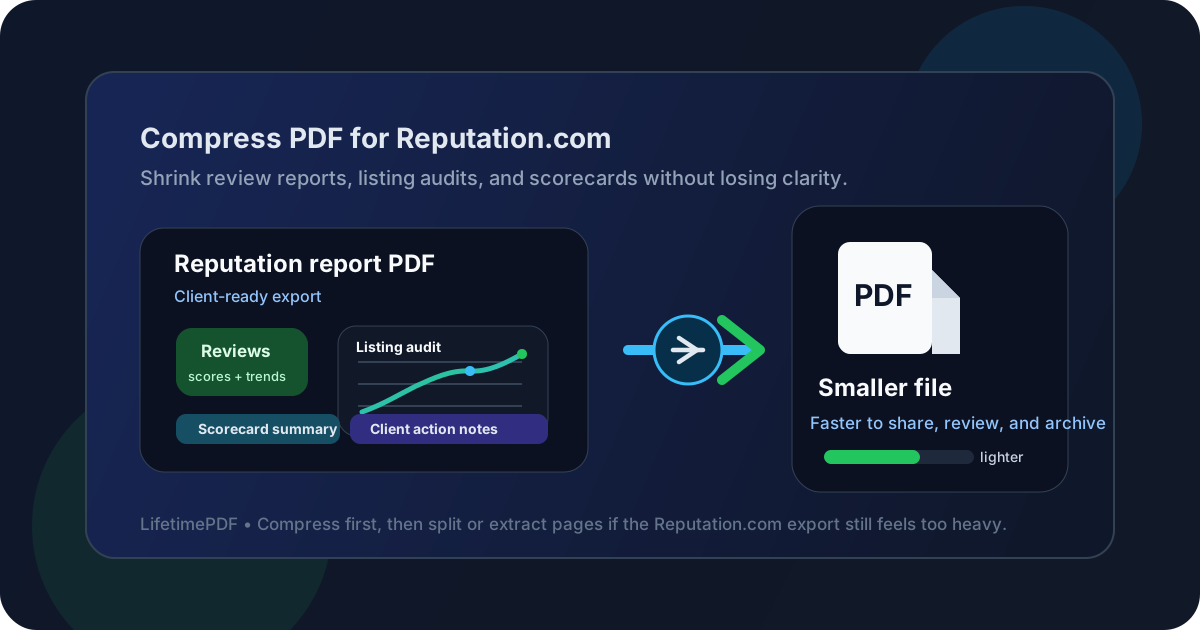
Table of contents
- Quick start: compress a PDF for Reputation.com in under a minute
- Why smaller PDFs help in Reputation.com workflows
- What file size should you aim for?
- Which compression level should you choose?
- Step-by-step: shrink a PDF with LifetimePDF
- Best strategy for review reports, listing audits, and scorecards
- What if the PDF is still too large?
- How to keep charts, screenshots, and notes readable
- Workflow habits that reduce PDF bloat
- Related LifetimePDF tools and internal links
- FAQ (People Also Ask)
Quick start: compress a PDF for Reputation.com in under a minute
If your real goal is simply make this Reputation.com PDF smaller so it is easier to send, review, and save, this is the shortest reliable workflow:
- Open Compress PDF.
- Upload the Reputation.com review report, listing audit, scorecard, location summary, or client-ready PDF you want to shrink.
- Choose Medium compression first.
- Download the smaller file and compare the new size with the original.
- Open it once to check charts, screenshots, review summaries, listing details, and action notes.
- If the file is long, use Split PDF or Extract Pages to keep only the pages the next reader actually needs.
- If the pack includes repeated screenshots, old appendix pages, or duplicate location sections, trim that weight before trying a stronger compression level.
Why smaller PDFs help in Reputation.com workflows
Reputation.com PDFs usually exist because someone needs a fixed snapshot of work that normally lives inside a dashboard. That might be a review trend report, a location scorecard, a listing audit, or a monthly recap meant for an owner or leadership team. File size matters because those readers often want fast answers, not a large attachment that stalls when they try to open or forward it.
Heavy PDFs are slower to upload, more annoying to email, and easier for busy readers to ignore. In practice, the extra weight often comes from screenshot-heavy appendices, repeated location views, oversized charts, or one export trying to serve several audiences at once. Good compression is not about forcing the file to the smallest possible number. It is about trimming waste while keeping the details people still rely on, such as review counts, charts, listing status, screenshots, and the summary notes that explain what happens next.
When a PDF feels lighter and cleaner, people are more likely to actually use it. That matters whether you are sending a one-location update to an owner or a multi-location report to a client team.
What file size should you aim for?
A good Reputation.com PDF target depends on who will read it and what the document includes. There is no perfect number, but these ranges work well in real reporting workflows:
| Use case | Recommended target | Why it works |
|---|---|---|
| Short review summaries, focused scorecards, and single-location updates | < 2MB | Easy to email, quick to preview, and low-friction for busy readers |
| Most multi-location recaps, listing audits, and screenshot-heavy client review PDFs | 2MB to 5MB | Usually the best balance between readability and convenience |
| Large appendices, evidence packs, and combined monthly handoffs | 5MB+ | Still workable internally, but often a sign that the file should be split or trimmed before wider sharing |
If the PDF is going to a client or location owner who mostly needs the summary and next action, lean smaller. If it is going to an internal specialist who wants every screenshot and every location detail, you can accept a somewhat larger file as long as the small text stays readable.
Which compression level should you choose?
For Reputation.com, the safest first choice is usually Medium compression. It normally reduces file size enough to make sharing easier while still keeping charts, screenshots, tables, and notes usable.
- Low compression: best when the PDF includes tiny chart labels, dense tables, or screenshots someone may zoom into closely.
- Medium compression: the best starting point for most Reputation.com exports because it balances size and readability well.
- High compression: only use it after you have already removed unnecessary pages and you still need the file much smaller.
If high compression makes review charts, rating summaries, location grids, or action notes feel muddy, step back. A slightly larger file that stays readable is more useful than a tiny one that nobody trusts.
Step-by-step: shrink a PDF with LifetimePDF
- Export the Reputation.com report as PDF.
- Open LifetimePDF Compress PDF.
- Upload the file and choose Medium compression.
- Download the compressed copy.
- Review the result carefully, especially charts, screenshots, listing detail, review summaries, and recommended next steps.
- If the report still feels too large, remove unnecessary pages with Delete Pages or split the appendix from the main report with Split PDF.
- Rename the final copy clearly so the client or teammate knows it is the cleaned version.
That last step matters more than people expect. A file name like Reputation-Report-Compressed.pdf makes the handoff feel intentional instead of improvised.
Best strategy for review reports, listing audits, and scorecards
Different Reputation.com PDFs benefit from different cleanup choices. The best compression workflow depends on what the document is actually doing.
Review reports
These are usually summary-driven. If the file mainly exists to show review volume, trend direction, ratings, or response progress, medium compression is usually enough. Keep the key charts and summary callouts crisp and readable. If there are repeated screenshots or long appendix sections, cut those before you compress harder.
Listing audits
Listing audits can be more fragile because small labels, status fields, and issue details matter. Start with medium compression, then zoom in on the smallest text before you keep the result. If anything feels soft, try low compression instead of forcing a smaller file.
Scorecards and executive recaps
Scorecards often land in front of people who want a clean signal, not every supporting page. If the PDF combines the scorecard, screenshots, and backup detail, consider splitting the evidence into a separate appendix. That makes the main file smaller and easier to read.
Screenshot-heavy client PDFs
Screenshot-heavy PDFs are where compression can go wrong fastest. Before compressing harder, remove repeated shots, crop unnecessary margins, and separate the must-see screenshots from the rest. In many cases, Crop PDF helps more than a stronger compression setting.
Useful combo: compress the main Reputation.com PDF first, then split out appendix pages if a client only needs the core summary.
What if the PDF is still too large?
If the file is still too big after one careful compression pass, the answer usually is not compress harder immediately. It is usually remove weight more intelligently.
- Split multi-location reports into separate files.
- Extract only the summary pages a client or owner needs.
- Delete repeated screenshots or outdated location sections.
- Crop oversized screenshots that include too much blank space.
- Move appendix material into its own file.
These fixes often produce a better final PDF than aggressive compression because they reduce file size without sacrificing the most useful visual detail.
How to keep charts, screenshots, and notes readable
The fastest post-compression quality check is simple. Open the smaller PDF and look for the pieces that matter most:
- small chart labels and location names
- review counts, scores, and trend summaries
- listing statuses and issue details
- screenshots and highlighted notes
- recommended fixes and next steps
If those still look clear, the compression was probably successful. If any of them feel fuzzy, the file may technically be smaller but practically worse. In that case, revert to a lighter compression level or split the report instead.
Workflow habits that reduce PDF bloat
Good Reputation.com PDFs usually start smaller before compression even happens. A few habits help a lot:
- avoid exporting more pages than the next reader needs
- skip duplicate screenshots unless they prove something important
- separate appendix material from the main client narrative
- crop empty margins around screenshots and visuals
- use a focused summary instead of stacking every possible report section into one file
This matters because compression works best on a clean document. If the PDF is bloated before it ever reaches the compressor, the final result usually feels heavier and messier than it needs to.
Related LifetimePDF tools and internal links
If you work with Reputation.com exports often, these tools usually save more time than compression alone:
- Compress PDF for the main file-size reduction step
- Split PDF for separate location packs and appendices
- Extract Pages for summary-only handoffs
- Delete Pages for removing repeated screenshots or outdated sections
- Crop PDF for oversized screenshots and visuals
- PDF Metadata Editor for cleaning document details before client delivery
Related reading on LifetimePDF:
FAQ (People Also Ask)
How do I compress a PDF for Reputation.com?
Export the Reputation.com report as a PDF, upload it to a PDF compressor, start with medium compression, and review the result before sharing it. Medium compression is usually the safest starting point because it reduces file size without ruining charts, screenshots, or notes.
What file size should I aim for before sending a Reputation.com PDF?
For a short review summary or focused scorecard, under 2MB is a practical target. For broader monthly reporting packs or multi-location files, around 2MB to 5MB is usually more realistic as long as the key visual detail still looks clear.
Will compression make Reputation.com screenshots or charts blurry?
It can if you compress too aggressively. That is why medium compression is usually the best first pass. Always check chart labels, screenshot callouts, listing details, and action notes before you keep the compressed version.
Is it better to split a Reputation.com report instead of compressing it harder?
Often, yes. If the PDF mixes several locations, screenshots, appendix pages, and different sections for different readers, splitting it usually creates a more useful file than forcing stronger compression on everything.
Which LifetimePDF tools help most with Reputation.com exports?
Compress PDF is the main starting point. Split PDF, Extract Pages, Delete Pages, Crop PDF, Compare PDFs, and PDF Metadata Editor are also useful when you need smaller, cleaner, client-ready local marketing files.
Ready to clean up a Reputation.com PDF? Start with compression, then split or extract pages only if the report still feels heavier than it needs to be.
Published by LifetimePDF - Pay once. Use forever.