Compress PDF for Procore Without Monthly Fees: Shrink Drawings, Submittals, and Project Docs Without Subscription Bloat
If you need to compress a PDF for Procore without monthly fees, the simplest answer is: use a pay-once PDF compressor, start with Medium compression, and review the smaller file once before you upload it.
For most Procore workflows, that is enough to shrink drawings, submittals, RFIs, inspection reports, and project PDFs without making field notes, stamps, callouts, or dimensions harder to read.
This is the kind of task that should stay boring. A project file is too heavy, so you make it smaller, upload it, and move on. But subscription-heavy PDF tools love to turn that tiny cleanup step into one more monthly charge. That feels especially wasteful in construction and project management workflows, where teams already pay for core systems, storage, collaboration tools, and site software. The real goal is simple: keep the file readable enough for field use while making it lighter to upload, review, archive, and resend.
Fastest path: use LifetimePDF's Compress PDF tool, start with Medium compression, and split or extract pages only if the Procore file is still heavier than you want.
In a hurry? Jump to Quick start: compress a Procore PDF in under 2 minutes.
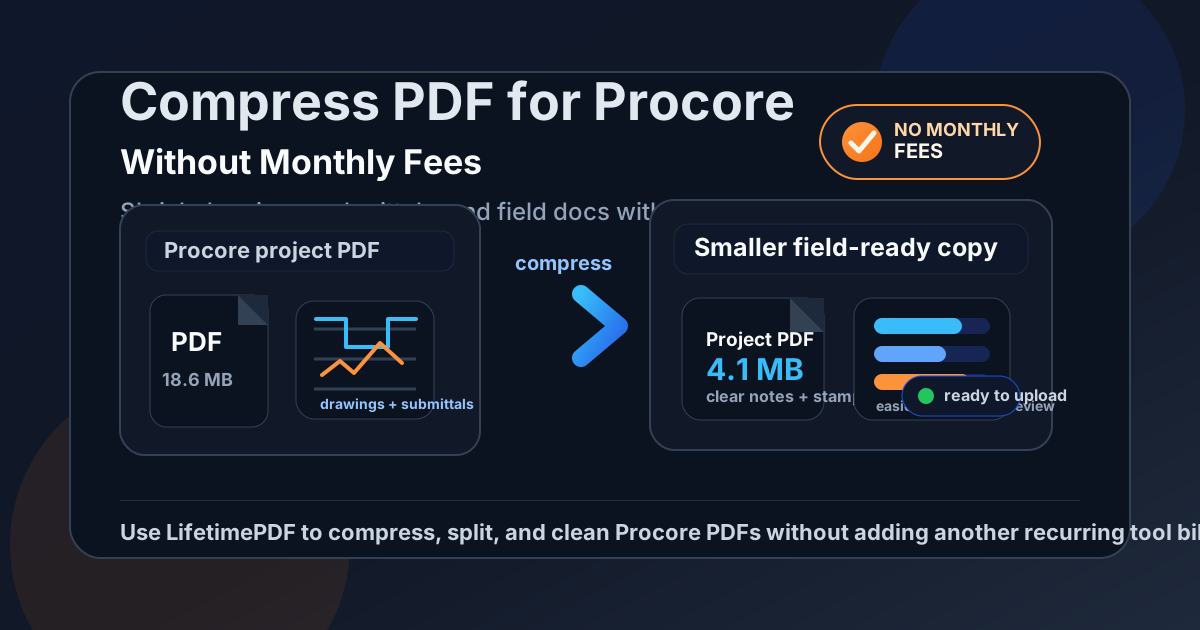
Table of contents
- Quick start: compress a Procore PDF in under 2 minutes
- Why "without monthly fees" matters in this workflow
- Why smaller PDFs work better for Procore
- What size should a Procore-friendly PDF be?
- Which compression level should you choose?
- Step-by-step: use LifetimePDF to shrink a Procore PDF
- Common Procore PDFs that benefit from compression
- What to do if the PDF is still too large
- How to keep drawings and project documents readable
- Workflow habits that keep project PDFs cleaner
- Related LifetimePDF tools and internal links
- FAQ (People Also Ask)
Quick start: compress a Procore PDF in under 2 minutes
If your real goal is simply make this Procore file smaller so it is easier to upload and open, use this workflow:
- Open Compress PDF.
- Upload the drawing, submittal, RFI attachment, inspection report, closeout packet, safety file, or other PDF.
- Choose Medium compression first.
- Download the smaller file and check the new size.
- Preview the pages that matter most: plan notes, dimensions, revision clouds, stamps, tables, signatures, and callouts.
- If the file is still bulky, use Extract Pages, Split PDF, or Delete Pages instead of repeatedly crushing the whole packet.
Why "without monthly fees" matters in this workflow
People do not search for this because PDF compression is exciting. They search for it because the task is repetitive and recurring billing feels disproportionate. A project team may already pay for Procore, drawing tools, e-signature tools, storage, and collaboration software. Adding another monthly charge just to make PDFs smaller is exactly the kind of software sprawl that quietly drains budgets.
Procore document cleanup is ordinary operational work. You shrink a submittal, lighten a drawing excerpt, trim an inspection packet, or make a closeout file easier to send. Sometimes the PDF is a little too large. That is a document-handling problem, not a relationship you want to rent forever. A pay-once workflow fits better because it solves the real need without turning routine project admin into another subscription treadmill.
There is also a trust issue. Some tools feel free right up until the download step. Then the file is locked behind a trial wall, an account requirement, or a plan you never meant to buy. That is frustrating when the real job should take less time than the pricing page.
Construction teams already have enough recurring software costs. Your PDF cleanup workflow does not need to become another one.
Why smaller PDFs work better for Procore
Even when a Procore PDF technically uploads fine, that does not mean it is pleasant to use. Heavy files take longer to upload, slower to open, and feel clumsier when someone needs the same document more than once during a field walk, coordination meeting, submittal review, or owner update. That friction gets worse when the file is being reopened on tablets, phones, weak jobsite Wi-Fi, or shared again through email and chat.
Why smaller project PDFs feel better to use
- Faster uploads: easier to add to RFIs, submittals, inspections, and daily workflows.
- Cleaner field review: lighter files open more smoothly on tablets and phones.
- Better mobile access: compact PDFs create less friction when signal quality is bad.
- Smoother archive habits: closeout files and recurring reports are easier to store and revisit later.
- Less duplicate work: one cleaned PDF can move through Procore, email, and shared folders without repeated cleanup.
- Stronger collaboration: a focused, lighter file is easier for PMs, supers, subcontractors, and owners to use immediately.
Compression is not only about file limits. It is about reducing the small annoyances that make ordinary document sharing feel heavier than it should.
What size should a Procore-friendly PDF be?
There is no single magic number because a one-page signed form behaves very differently from a marked-up drawing set or a scan-heavy turnover packet. Still, realistic targets help you decide whether the file is already fine or still worth shrinking.
| Use case | Recommended target | Why it works |
|---|---|---|
| Short forms, simple logs, and lightweight reports | Under 2MB | Great for fast uploads, mobile review, and low-friction sharing |
| Most RFIs, submittals, and everyday project PDFs | 2MB-5MB | Usually the best balance between readability and convenience |
| Long packets, drawing excerpts, and photo-heavy files | 5MB-10MB | Still workable, but often worth trimming or splitting before broad sharing |
| Over 10MB | Compress, extract, or split | Often heavier than necessary for normal Procore collaboration |
Which compression level should you choose?
You usually do not need complicated settings. You need the right balance between file size and clarity.
Low compression
- Best when fine visual detail matters a lot, such as dense drawings or owner-facing packets.
- Useful when the file is already close to the target size and you only need a small reduction.
- Often unnecessary unless linework or plan detail is unusually sensitive.
Medium compression
- The best starting point for most people.
- Usually shrinks the PDF meaningfully while keeping notes, stamps, tables, and callouts readable.
- Good for submittals, RFIs, reports, inspections, closeout documents, and ordinary project attachments.
High compression
- Best when smaller size matters more than polished presentation.
- Useful for scan-heavy packets, photo appendices, and bulky field documentation.
- Worth previewing carefully because aggressive compression can soften small notes and dimensions faster than you expect.
Step-by-step: use LifetimePDF to shrink a Procore PDF
1) Open the Compress PDF tool
Start with Compress PDF. This solves the core problem directly: the file is heavier than it needs to be. LifetimePDF supports uploads up to 100MB, which helps when the original document is a large drawing export, a photo-heavy inspection packet, or a scan-based turnover file.
2) Upload the PDF you actually plan to share
Use the real final file, not an older draft. That avoids compressing yesterday's packet only to realize the newest version is still the oversized one.
3) Start with medium compression
For most Procore documents, Medium is the right first try. Text-heavy and form-heavy files usually survive it well, and mixed files with scans, tables, and markups often end up comfortably smaller without feeling damaged.
4) Review the result once
Open the compressed file and check the parts people actually care about: dimensions, revision clouds, notes, stamps, signatures, tables, callouts, and small markup. You do not need a dramatic audit. You just need confidence that the shared version still communicates clearly.
5) Trim structure before pushing compression harder
If the file is still bulky, the next best move is often not "compress harder." It is "share less PDF." Extract the relevant sheets, split the appendix into a separate file, or delete repeated covers and blank pages before doing another pass.
Need the file smaller right now?
Common Procore PDFs that benefit from compression
Not every file behaves the same, but these are the Procore PDFs that most often become bulkier than necessary:
1) Drawing excerpts and marked-up plan sheets
These can carry a lot of image weight even when only a few sheets matter. Compression helps, but the smallest notes, dimensions, and revision details deserve a quick check.
2) Submittal packages
Submittals often collect cover pages, product sheets, comments, approvals, and attached support files into one packet. That structure is useful, but it also makes files grow fast.
3) RFI attachments and field clarifications
These files are often opened quickly by busy people. A lighter PDF helps, especially when the attachment only needs to support one decision or one coordination question.
4) Inspection, safety, and daily reporting PDFs
These are commonly scan-heavy or photo-heavy. Medium compression is usually a good start, but blank pages and camera-heavy appendices often matter more than the compression setting itself.
5) Closeout and turnover documents
These files often get shared repeatedly across different stakeholders. A smaller PDF is easier to archive, resend, and reopen later, especially when only part of the packet is needed at one time.
What to do if the PDF is still too large
Sometimes the right answer is not "compress harder." Sometimes the right answer is "send a tighter packet." That is especially true in construction workflows, where many PDFs carry support pages most readers never touch.
Option 1: Extract only the pages people need
If the team only needs the relevant sheets, use Extract Pages first, then compress that smaller file. This often works better than crushing a 60-page packet into something tiny.
Option 2: Split the PDF into cleaner sections
If the file includes drawings, approvals, photos, and appendix material for different audiences, use Split PDF. Two or three focused files are often better than one oversized catch-all packet.
Option 3: Remove obvious waste
Blank pages, repeated covers, duplicate support sheets, oversized scan borders, and stale appendix pages all add weight without adding value. Use Delete Pages or Crop PDF before trying another compression pass.
How to keep drawings and project documents readable
The real fear behind this workflow is simple: I do not want the shared version to look bad. Fair concern. Text-first PDFs usually compress well. The risk rises when the file depends on tiny notes, narrow tables, scan noise, small dimensions, handwritten markup, or fine linework.
Usually safe to compress
- Short forms and simple reports: mostly text, headings, and standard tables
- Ordinary submittals: especially when they are not loaded with repeated scanned pages
- Commentary-heavy packets: text-first files often stay crisp
- Closeout summaries: when the main need is easier sharing, not print-perfect detail
Preview more carefully when
- The PDF is drawing-heavy
- Small dimensions matter
- Handwritten notes or stamps carry key information
- Scanned pages already look soft before compression
A useful rule is this: if people need to skim the file quickly, you can usually compress a little more aggressively. If they need to inspect details in the field, present from the file, or make decisions from small annotations, be more conservative.
Workflow habits that keep project PDFs cleaner
Compression helps, but cleaner document habits help even more. Most Procore PDF bloat starts before compression ever happens.
- Separate field use from archive use: the jobsite copy does not always need the same appendix as the permanent record.
- Avoid repeated cover pages and scans: branded is fine, redundant is heavy.
- Send the right packet to the right audience: owners, supers, and subcontractors often do not need the exact same PDF.
- Clean metadata before external delivery: use PDF Metadata Editor if you want tidier document properties.
- Compare revisions when needed: use Compare PDFs if the packet changed between rounds and you want a quick check.
- Keep a master plus a shared copy: one file can stay fuller for archive, while the smaller version handles upload and field use.
A strong workflow is often: export or assemble the right packet -> compress once -> review -> split or trim if needed -> upload the cleaner version. That keeps the PDF usable without overcomplicating the process.
Related LifetimePDF tools and internal links
Compressing a PDF for Procore is often one step in a broader project-document workflow. These tools pair naturally with it:
- Compress PDF - shrink Procore files before uploading them
- Extract Pages - send only the sheets a reviewer actually needs
- Split PDF - break one oversized packet into clearer sections
- Delete Pages - remove blank or repeated pages before compression
- Crop PDF - trim wasted scan borders and dead space
- PDF Metadata Editor - clean titles and document properties before sharing
- Compare PDFs - useful when reviewing revised packets
- Merge PDF - combine only the supporting files you actually want in the final packet
Suggested internal blog links
- Compress PDF for Procore
- Compress PDF Without Monthly Fees
- Compress PDF for Bluebeam
- Compress PDF for Bluebeam Without Monthly Fees
- Compress PDF for Autodesk Build
- Compress PDF for Buildertrend
- Compress PDF for Fieldwire
- Browse all LifetimePDF articles
FAQ (People Also Ask)
How do I compress a PDF for Procore without monthly fees?
Use Compress PDF, upload the Procore file, start with medium compression, and download the smaller result. If it is still bulky, extract only the relevant sheets or split the packet instead of repeatedly over-compressing the whole file.
What file size is best for Procore PDFs?
Under 2MB is a strong target for short forms and simple reports. Under 5MB is a practical everyday target for many RFIs, submittals, and ordinary project PDFs.
Will compressing a Procore PDF make drawings blurry?
Usually not if you begin with Medium compression. The parts worth checking most carefully are small notes, dimensions, stamps, revision clouds, and any handwritten markup the team still needs to trust.
Why look for a Procore PDF compressor without monthly fees?
Because this is routine project work. Most teams want a dependable way to shrink PDFs without adding one more recurring software bill for a task that should stay simple.
What if my Procore file is still too large after compression?
Split the packet into sections with Split PDF, or extract the relevant sheets with Extract Pages. In many cases, sharing a tighter PDF works better than compressing the entire file more aggressively.
Best workflow for most teams: compress once -> preview the result -> split or trim only if needed -> upload confidently.
Published by LifetimePDF - Pay once. Use forever.