Compress PDF for PlanGrid: Keep Plan Sheets, Punch Lists, and Site PDFs Small Without Losing the Details
To compress a PDF for PlanGrid, export or print the file as PDF, upload it to LifetimePDF's Compress PDF tool, start with Medium compression, and keep the smaller copy only if sheet notes, callouts, punch items, and markup still look clear.
For most PlanGrid PDFs, under 5MB works well for everyday plan excerpts, punch lists, and issue packets, while bigger drawing sections and photo-heavy site files often sit best around 5MB to 10MB.
PlanGrid documents usually get opened in motion, not in a calm office review. A superintendent needs one marked-up sheet during a walk. A project engineer is opening an issue packet on a tablet. A subcontractor only needs the punch list pages tied to today's scope. A PM is forwarding one field report, not the whole document archive. Smaller PDFs help because they upload faster, reopen with less friction, and make it easier for the next person to act on the document instead of waiting on a bulky file. The goal is not to crush every PDF into the tiniest number possible. The goal is to make it lighter while protecting the details that still drive work on site.
Fastest path: run the PlanGrid PDF through LifetimePDF's Compress PDF tool on Medium, then do one quick readability check before you upload, send, or archive the smaller copy.
Short on time? Jump to Quick start: compress a PlanGrid PDF in under 2 minutes.
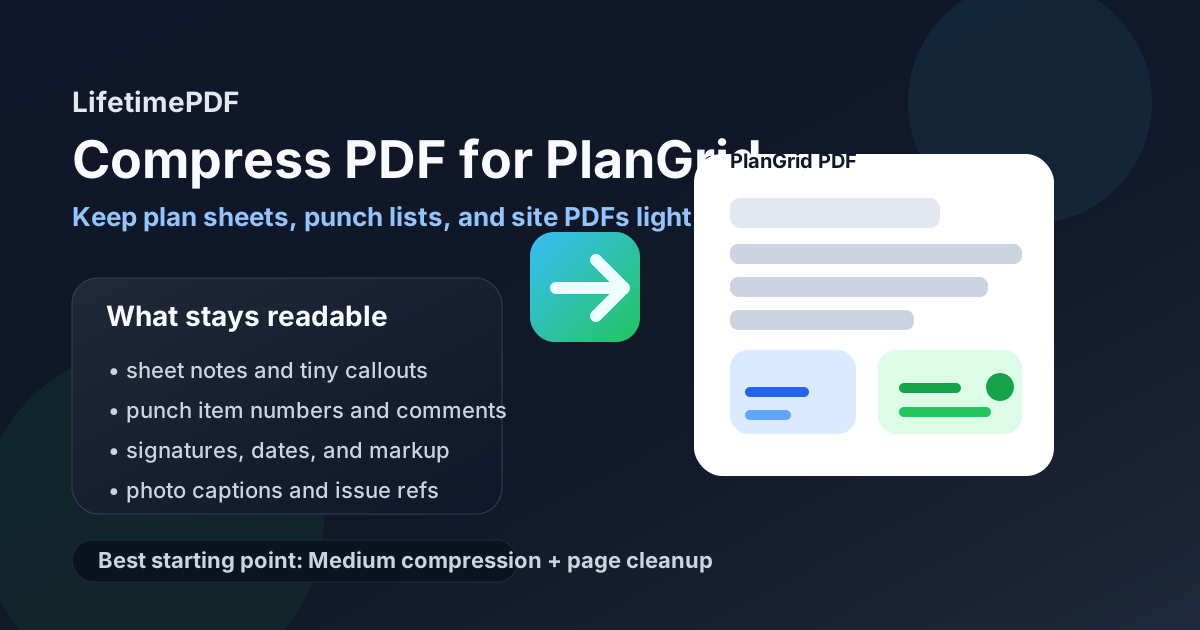
Table of contents
- Quick start: compress a PlanGrid PDF in under 2 minutes
- Why smaller PDFs help in PlanGrid workflows
- What file size should you aim for?
- Which compression level should you choose?
- Step-by-step: shrink a PlanGrid PDF with LifetimePDF
- Best strategy for common PlanGrid PDF types
- What if the PDF is still too large?
- How to keep construction details readable
- Workflow habits that reduce PDF bloat
- Related LifetimePDF tools and internal links
- FAQ (People Also Ask)
Quick start: compress a PlanGrid PDF in under 2 minutes
If your real goal is simply make this PlanGrid PDF smaller so it is easier to upload, open, and use in the field, this workflow is usually enough:
- Open Compress PDF.
- Upload the PlanGrid file you want to shrink, such as a plan sheet, punch list export, issue packet, field report, markup set, closeout backup, or as-built excerpt.
- Choose Medium compression first.
- Download the smaller file and compare the new size with the original.
- Open it once and check the smallest useful details: sheet notes, room labels, revision bubbles, issue references, punch item numbers, signatures, and photo captions.
- If the packet is long, use Extract Pages or Split PDF so the next person only gets the pages that matter.
- If the file is still bulky, trim repeated covers, blank scans, superseded sheets, or oversized appendices before pushing compression harder.
Why smaller PDFs help in PlanGrid workflows
PlanGrid PDFs are working documents. They get reopened during site walks, drawing reviews, punch follow-ups, issue coordination, owner updates, and closeout preparation. That means the file does not only need to exist. It needs to open quickly and stay readable in the places people actually use it.
Heavy PDFs slow that down. They take longer to upload, feel clumsy on mobile, and create friction when someone only needs one sheet, one issue cluster, or one report section. In practice, the extra weight often comes from large drawing exports, photo-heavy field packets, repeated scans, oversized appendix pages, or one giant PDF trying to serve several audiences at once. Good compression removes that friction without weakening the useful record.
Why compression usually helps
- Faster uploads: useful when you are attaching drawings, field reports, or support files during active project coordination.
- Smoother field review: lighter files reopen faster on the tablets and phones people actually carry around the jobsite.
- Cleaner handoffs: supers, PMs, subcontractors, owners, and inspectors are more likely to open a focused file than an oversized packet.
- Less archive bloat: recurring issue packets, punch documentation, and closeout support stay easier to store and revisit.
- Less rework: one sensible compression pass is easier than resending the file after someone says it is too heavy, too slow, or annoying to open.
What file size should you aim for?
There is no single perfect number because a one-page sign-off, a punch list with photos, and a marked-up sheet set do not behave the same way. Still, practical target ranges help.
- Under 2MB: good for short task attachments, sign-off forms, simple issue backups, and lightweight punch lists.
- 2MB to 5MB: a strong everyday range for many PlanGrid PDFs such as field reports, punch exports, and focused drawing excerpts.
- 5MB to 10MB: often reasonable for larger sheet sections, photo-heavy site reports, or multi-page closeout and as-built excerpts.
If your file lands above those ranges, that does not automatically mean it is wrong. It usually means you should ask one more question: does the next person really need the whole packet, or only part of it? That is where page extraction, splitting, and cleanup usually do more good than extra compression pressure.
Which compression level should you choose?
For most PlanGrid workflows, Medium compression is the safest place to start. It usually reduces enough weight to improve mobile sharing and reopening without damaging the smallest details that matter on site.
- Light compression: use it when tiny sheet notes, dimension strings, or markup layers are extremely important and the original is only a little too large.
- Medium compression: the default choice for punch lists, issue packets, field reports, and most field-ready plan excerpts.
- Stronger compression: reserve it for files where portability matters more than fine visual detail, or after you have already removed unnecessary pages.
Practical shortcut: if the PDF is too heavy and only six of thirty pages matter, trim the packet first. Structural cleanup usually protects PlanGrid readability better than aggressive compression across the full file.
Step-by-step: shrink a PlanGrid PDF with LifetimePDF
- Export or print the PlanGrid document as PDF. Save the actual file you need to send, not the entire project archive if only one section matters.
- Upload it to Compress PDF. Start with the original before layering on more edits.
- Pick Medium compression. This is the best first pass for most construction workflows.
- Download and preview the result. Do not stop at the file-size number. Open the PDF and scan the smallest details that drive action.
- Check the site-critical elements. Look at sheet notes, revision clouds, issue numbers, signatures, punch comments, photo captions, and any markup that tells the next person what changed.
- Clean structure if needed. If the file is still too large, use Extract Pages, Delete Pages, or Crop PDF before you try a stronger setting.
- Save the smaller copy clearly. A filename like level-2-punch-list-smaller.pdf or sheet-a201-revision-review.pdf is easier for the next person to trust and reopen quickly.
Best strategy for common PlanGrid PDF types
Plan sheets and detail callouts
Start with Medium compression and preview the smallest notes, dimensions, tags, and revision markers. If the sheet still feels heavy, crop dead margins or extract only the exact pages the crew or trade partner needs.
Punch list exports and issue packets
These often need clarity more than dramatic size reduction. Make sure item numbers, comments, status notes, due dates, and image references are still easy to read. A smaller file only helps if the receiving team can act on it immediately.
Field reports and daily documentation
These files usually live or die by checklist rows, timestamps, signatures, observations, and photo captions. Medium compression is often enough. If not, remove blank back pages or repeated cover material before you compress harder.
Photo-heavy site packets
These get large quickly. Instead of forcing the entire packet down at once, split the narrative section from the photo appendix when that makes the handoff cleaner. The reviewer may not need every supporting image in one file.
As-built, closeout, and sign-off excerpts
Treat these as reliability-first documents. Keep references, signatures, and markups clean. If one PDF bundles several unrelated sections, split it into tighter handoff parts instead of over-compressing the whole record.
What if the PDF is still too large?
If one compression pass is not enough, the best next move is usually structural cleanup rather than more pressure on the entire file.
- Extract only the useful pages: perfect when the next person needs one drawing, one issue cluster, or one report section.
- Split long packets: better for multi-trade review packs, closeout bundles, and big photo appendices.
- Delete repeated covers and blanks: scan-heavy files carry more waste than people realize.
- Crop dead margins: oversized white space and scan borders add weight without adding value.
- OCR when needed: if the file is scan-heavy and hard to search, OCR PDF can make it more usable after the size issue is under control.
Ask: Which pages does the next person actually need in PlanGrid, and what can I remove without harming the record? That usually leads to a cleaner result than aggressive compression alone.
How to keep construction details readable
PlanGrid PDFs fail when the smallest useful detail becomes annoying to verify during real work. That is why the preview step matters.
Before replacing the original, check:
- tiny sheet notes and detail callouts
- dimensions, room labels, and location references
- punch item numbers, comments, and status notes
- checklist rows, signatures, initials, and dates
- markup bubbles, revision clouds, and review notes
- photo captions or image evidence tied to field issues
- sheet titles, section tags, and revision references
If one of those items feels soft at normal review zoom, step back. Use a lighter compression level, or clean the file structurally instead. A lighter PDF only helps if someone can still use it confidently on the first open.
Workflow habits that reduce PDF bloat
- Export narrower packets: do not turn every live field handoff into a full backup archive.
- Trim before sharing: the best time to remove extra pages is before the file starts bouncing between tasks, emails, and devices.
- Avoid repeated scan-and-print cycles: every extra scan pass usually makes the file heavier and uglier.
- Keep audience-specific versions separate: a foreman, owner, and closeout archive may not need the same packet.
- Name final copies clearly: descriptive filenames reduce confusion when several versions exist in fast-moving field work.
Related LifetimePDF tools and internal links
If you work with PlanGrid documents often, these tools are the most useful companions:
- Compress PDF - first stop for shrinking working files
- Extract Pages - keep only the exact sheets or report sections needed
- Split PDF - break one oversized packet into cleaner handoff parts
- Delete Pages - remove repeated covers, blanks, and appendix clutter
- Crop PDF - reduce dead scan borders and wasted space
- Rotate PDF - fix awkward scan orientation before sharing
- OCR PDF - make scan-heavy PDFs easier to search and reuse
- Compare PDFs - useful when you need to review revisions without manual page flipping
For related construction-document reading, see Compress PDF for PlanGrid: Upload Smaller Plan Sheets, Punch Lists, and Site Docs Faster, Compress PDF for Fieldwire, Compress PDF for Procore, Compress PDF for Autodesk Build, and Compress PDF for Buildertrend.
FAQ (People Also Ask)
How do I compress a PDF for PlanGrid?
Export the file as PDF, upload it to a PDF compressor, start with Medium compression, and preview the smaller result before sharing it. That first pass is usually enough for everyday plan excerpts, punch lists, field reports, and issue packets.
What file size is best for PlanGrid PDFs?
Under 2MB works well for short sign-off forms and simple issue backups. Around 2MB to 5MB is a practical target for many everyday construction PDFs. Larger drawing sections and photo-heavy packets may need 5MB to 10MB as long as important details still read clearly.
Will compression make PlanGrid drawings blurry?
It can if you push too hard. Start with Medium compression and check tiny notes, dimensions, revision markers, issue references, signatures, and markup before you keep the smaller file.
Should I split a PlanGrid PDF instead of compressing it harder?
Often, yes. If the packet combines drawings, punch lists, issue sections, photos, or audience-specific handoff pages, splitting it usually protects readability better than heavier compression across the whole document.
Which LifetimePDF tools pair best with PlanGrid files?
Compress PDF is the main starting point. Extract Pages, Split PDF, Delete Pages, Crop PDF, OCR PDF, Rotate PDF, and Compare PDFs all help when you need smaller, cleaner construction documents without sending the entire working packet every time.
Bottom line: if your PlanGrid PDF feels heavier than the task requires, compress it first, then trim the packet until only the useful pages remain.