Compress PDF for Pitchbox Without Monthly Fees: Shrink Outreach Reports, Campaign Snapshots, and Client PDFs Without Another Subscription
If you need to compress a PDF for Pitchbox without monthly fees, use a pay-once PDF tool, start with Medium compression, and check prospect names, domains, stage labels, and notes once before you send the smaller file.
For most Pitchbox workflows, that is enough to shrink outreach reports, campaign snapshots, and client PDFs without turning routine PDF cleanup into one more recurring software bill.
Pitchbox already handles the valuable part: organizing outreach, keeping prospect records together, and helping teams understand what moved this week. The annoying part usually shows up at the very end, when the exported PDF is useful but heavier than it needs to be for email, a client portal, or a quick internal handoff. The goal is not to flatten the file until it looks cheap. The goal is to make it lighter while keeping the rows, notes, screenshots, and campaign status clear enough that someone can still act on what they are reading.
Fastest path: export the Pitchbox PDF you actually need, run it through LifetimePDF's Compress PDF tool at Medium, then split or extract pages only if the report still feels heavier than the next reader needs.
In a hurry? Jump to Quick start: compress a Pitchbox PDF in under 2 minutes.
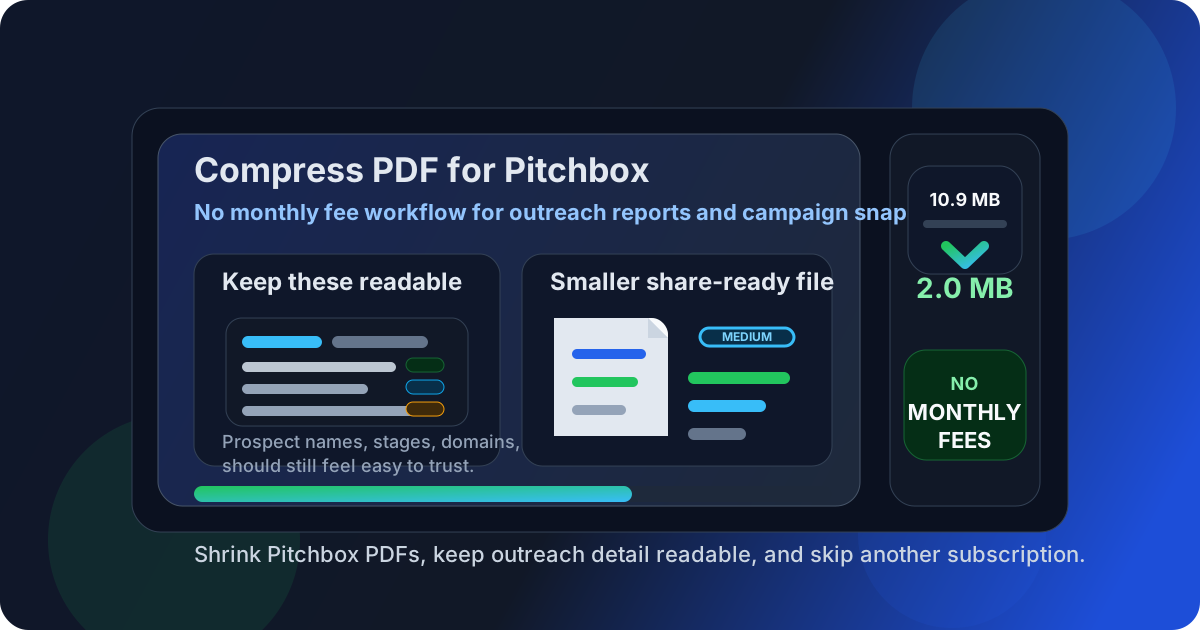
Table of contents
- Quick start: compress a Pitchbox PDF in under 2 minutes
- Why "without monthly fees" matters here
- Why smaller PDFs help in Pitchbox workflows
- What size should a Pitchbox PDF be?
- Which compression level should you choose?
- Step-by-step: use LifetimePDF to shrink the file
- Common Pitchbox PDFs that benefit from compression
- What to do if the PDF is still too large
- How to keep prospect details and campaign notes readable
- Workflow habits that reduce PDF bloat
- Related LifetimePDF tools and internal links
- FAQ (People Also Ask)
Quick start: compress a Pitchbox PDF in under 2 minutes
If your real goal is simply make this Pitchbox PDF smaller so it is easier to send, use this workflow:
- Open Compress PDF.
- Upload the Pitchbox export you want to share.
- Choose Medium compression first.
- Download the smaller file and compare the new size.
- Preview the sections that matter most: prospect names, domains, stage labels, outreach dates, notes, screenshots, and summary comments.
- If the PDF is still bulky, use Extract Pages, Split PDF, or Delete Pages instead of repeatedly crushing the whole file.
Why "without monthly fees" matters here
This keyword exists for an obvious reason. People already pay for the platform that generated the report. They may also pay for crawlers, rank trackers, backlink tools, reporting dashboards, storage, and the rest of an SEO stack. Adding another monthly plan just to make one exported PDF smaller feels like overhead, not progress.
Pitchbox PDFs are finish-line work. The outreach campaign is already organized. The prospecting decisions are already made. The client update is already ready to share. The only remaining job is making the file easier to send, upload, or archive without damaging the details people still need to read. That is exactly the kind of task where a pay-once PDF workflow makes more sense than another recurring subscription.
There is also a trust problem with many "free" PDF sites. You upload the file, wait for it to process, then discover the clean download is hidden behind a sign-up wall or billing prompt. When you are trying to finish an outreach handoff before a meeting or send a client recap before the day ends, that friction is worse than the oversized PDF you started with.
Plain-English version: if you already pay for Pitchbox and the tools around it, you probably do not want another recurring bill just to make an exported PDF smaller.
Why smaller PDFs help in Pitchbox workflows
Pitchbox reports usually leave the platform when outreach work needs to become something another person can scan quickly. Maybe it is a client who wants a campaign snapshot. Maybe it is an SEO lead reviewing prospect quality and response trends. Maybe it is a teammate who only needs the action pages before the next round of follow-up. In all of those cases, file size becomes a delivery problem.
Large PDFs are slower to upload, more annoying to forward, and easier for busy readers to postpone. The extra weight usually comes from wide prospect tables, screenshot appendices, internal notes, or one oversized report trying to serve several audiences at once. Compression helps, but the real win is making the document light enough to move easily while keeping the details people still rely on, such as prospect names, domains, stage labels, notes, and next-step comments.
That matters because Pitchbox PDFs usually support decisions. Which prospects are moving? Which campaigns need attention? Which opportunities need follow-up this week? If the file opens quickly and still feels readable, the report does its job. If the file feels bloated, the handoff slows down for no good reason.
Where the weight usually comes from
- Wide prospect tables: useful detail adds value, but it also adds file weight.
- Screenshot-heavy recaps: email examples, campaign evidence, and summary callouts can make a short update surprisingly bulky.
- One export for every audience: a strategist, an outreach specialist, and a client rarely need the exact same depth.
- Long appendices: old rounds, duplicate examples, and background pages can turn a simple update into a clumsy attachment.
What size should a Pitchbox PDF be?
There is no single perfect number, but there is a practical range. For short outreach updates, compact campaign snapshots, and quick internal reviews, staying under 2MB is a strong target. That usually keeps the file easy to email and quick to preview.
For broader client recaps, screenshot-heavy reviews, or appendix-heavy exports, 2MB to 4MB is often more realistic. Smaller is nice when it happens, but not if the reduction makes names, notes, or stage details harder to trust.
| Pitchbox PDF type | Practical target | Why it works |
|---|---|---|
| Short outreach updates and compact snapshots | < 2MB | Easy to email, quick to open, and usually enough room for the most important rows and comments |
| Campaign recaps and prospect reviews | 2MB to 4MB | Leaves room for tables, notes, and a few screenshots without feeling bulky |
| Appendix-heavy or screenshot-heavy client packs | 4MB+ | Usually a sign the report should be split or trimmed before wider sharing |
Which compression level should you choose?
Start with Medium compression almost every time. It usually removes enough weight to make the report easier to share while keeping the details that matter in Pitchbox exports. That includes prospect rows, domains, stage markers, notes, screenshots, and the small comments that explain what should happen next.
Low compression can make sense if the PDF already looks clean and you only need a modest reduction. High compression is better saved for oversized appendices, image-heavy evidence packs, or internal-only files where a little visual softness is acceptable.
If you feel tempted to use stronger compression, do it after removing unnecessary pages. In many outreach workflows, deleting clutter produces a better result than forcing more compression across pages that actually matter.
Step-by-step: use LifetimePDF to shrink the file
- Export the exact Pitchbox view you plan to share as PDF.
- Open Compress PDF.
- Upload the file and choose Medium.
- Download the compressed copy.
- Check the pages that matter most: top prospect rows, domains, stage labels, screenshots, and summary recommendations.
- If the PDF is still too heavy, trim the file before you compress again.
That last step matters. A lot of outreach PDFs carry extra pages that nobody outside the delivery team needs. Maybe the report includes repeated screenshots, stale prospect lists, or a long appendix that belongs in a separate file. Removing that weight usually gives you a cleaner final asset than aggressive compression alone.
Common Pitchbox PDFs that benefit from compression
The best compression approach depends on what kind of file you exported. These are the common patterns:
- Outreach reports: keep prospect rows and stage labels readable.
- Campaign snapshots: preserve summary notes, progress tables, and quick evidence pages.
- Prospect reviews: keep domain details, notes, and approval decisions easy to scan.
- Client-ready recaps: prioritize the summary pages first, then decide whether appendix material really needs to travel with them.
- Internal review packs: keep only the pages that support the immediate decision rather than every raw export page.
That is also why a one-size-fits-all compression choice is not ideal. A clean two-page outreach recap can usually handle stronger shrinking than a long prospect review filled with screenshots and dense tables. Use the report type to decide how cautious you should be.
What to do if the PDF is still too large
If the first compression pass does not get you where you need to go, do not immediately keep pressing harder. Reduce the file more intelligently instead.
- Use Extract Pages to keep only the executive summary or client-facing portion.
- Use Split PDF to separate the appendix from the main report.
- Use Delete Pages to remove repeated screenshots, stale exports, or blank support pages.
- Use Crop PDF if oversized margins are wasting space.
In many Pitchbox workflows, sharing less PDF works better than compressing the whole file harder. A client may only need the summary pages. A teammate may only need the approved prospects and notes. A second appendix file is often easier to review than one oversized attachment.
How to keep prospect details and campaign notes readable
The most important check is simple: open the compressed file at normal zoom and look at the smallest useful information first. In Pitchbox PDFs, that usually means prospect names, domains, stage labels, notes, and any short comments that explain why a campaign or contact matters.
If those details feel slightly soft but still clear, you are probably fine. If you need to zoom in immediately just to trust the content, back off. A smaller file is not helpful if the recipient has to work harder to interpret the report than they would have with the original.
Workflow habits that reduce PDF bloat
The easiest file to compress is the one that was exported thoughtfully in the first place. If you already know the report is going to a client or teammate, keep the PDF focused before it ever reaches the compression step.
- Export only the date range and sections that matter for the handoff.
- Avoid duplicate screenshot pages when one example proves the point.
- Separate evidence-heavy appendices from the main narrative.
- Use a summary-first structure so decision-makers do not need the entire raw export.
- Keep archived master files separate from the slim version you actually share.
These habits save time because they reduce both manual cleanup and repeated compression attempts. They also produce better communication. The cleaner the PDF structure is, the easier it is for the next reader to understand what changed and what should happen next.
Related LifetimePDF tools and internal links
Compress PDF is the main starting point, but Pitchbox workflows often improve when you pair it with a few other tools:
- Compress PDF for the first size reduction.
- Extract Pages for executive summaries or client-only sections.
- Split PDF for appendix-heavy reports.
- Delete Pages for stale screenshots or duplicate pages.
- Compress PDF for Pitchbox for the broader workflow version of this topic.
- Compress PDF for BuzzStream Without Monthly Fees if your team also shares outreach exports from adjacent tools.
- Compress PDF for LinkAssistant Without Monthly Fees and LinkResearchTools Without Monthly Fees for related SEO reporting workflows.
- Compress PDF for Ahrefs Without Monthly Fees and Monitor Backlinks Without Monthly Fees for backlink and reporting handoffs.
- How to Reduce PDF File Size for Email for general sharing best practices.
Want the simplest version? Compress the Pitchbox PDF first, then extract or split only if the result is still heavier than the next reader needs.
FAQ (People Also Ask)
How do I compress a PDF for Pitchbox without monthly fees?
Use a pay-once PDF tool like LifetimePDF, upload the Pitchbox export, start with Medium compression, and preview the smaller result before sharing it. If the file is still too large, split or extract the pages people actually need instead of over-compressing the whole report.
What file size should I aim for with Pitchbox reports?
Under 2MB is a strong target for short outreach updates and compact campaign snapshots. Broader client recaps, screenshot-heavy reviews, and larger appendix PDFs usually work better around 2MB to 4MB as long as the smallest useful prospect row, stage label, and note still looks clear.
Will compression make Pitchbox prospect tables blurry?
It can if you compress too aggressively. That is why Medium compression is usually the safest first pass. Always check prospect names, domains, stage labels, notes, and summary comments before keeping the compressed copy.
Why look for a Pitchbox PDF compressor without monthly fees?
Because shrinking exported outreach reports is routine finish-line work, not something most SEO teams want to rent forever. A pay-once workflow makes more sense when you need dependable compression without adding another recurring subscription to your stack.
What if my Pitchbox PDF is still too large after compression?
Extract only the summary pages, split long appendix sections, remove repeated screenshots, and delete stale support pages before pushing compression harder. In many Pitchbox workflows, sharing less PDF works better than crushing the whole report further.
Published by LifetimePDF - Pay once. Use forever.