Compress PDF for Oracle Analytics Cloud Without Monthly Fees: Shrink Dashboard Exports, Analysis PDFs, and KPI Reports Without Another Subscription
If you need to compress a PDF for Oracle Analytics Cloud without monthly fees, use a pay-once PDF tool, start with Medium compression, and review the smaller file once before you send it.
For most Oracle Analytics Cloud workflows, that is enough to shrink dashboard exports, analysis PDFs, KPI packs, and browser print copies without turning simple report cleanup into one more recurring software bill.
This is exactly the kind of task that should stay boring. The dashboard is already built. The numbers are already approved. The only job left is making the PDF light enough to email, upload, archive, or attach to a review packet without sacrificing the labels, filters, and small KPI details people still rely on. If the file opens quickly and still feels trustworthy, you solved the real problem.
Fastest path: use LifetimePDF's Compress PDF tool, begin with Medium compression, and crop or split the file only if the Oracle Analytics Cloud export is still heavier than you want.
In a hurry? Jump to Quick start: compress an Oracle Analytics Cloud PDF in under 2 minutes.
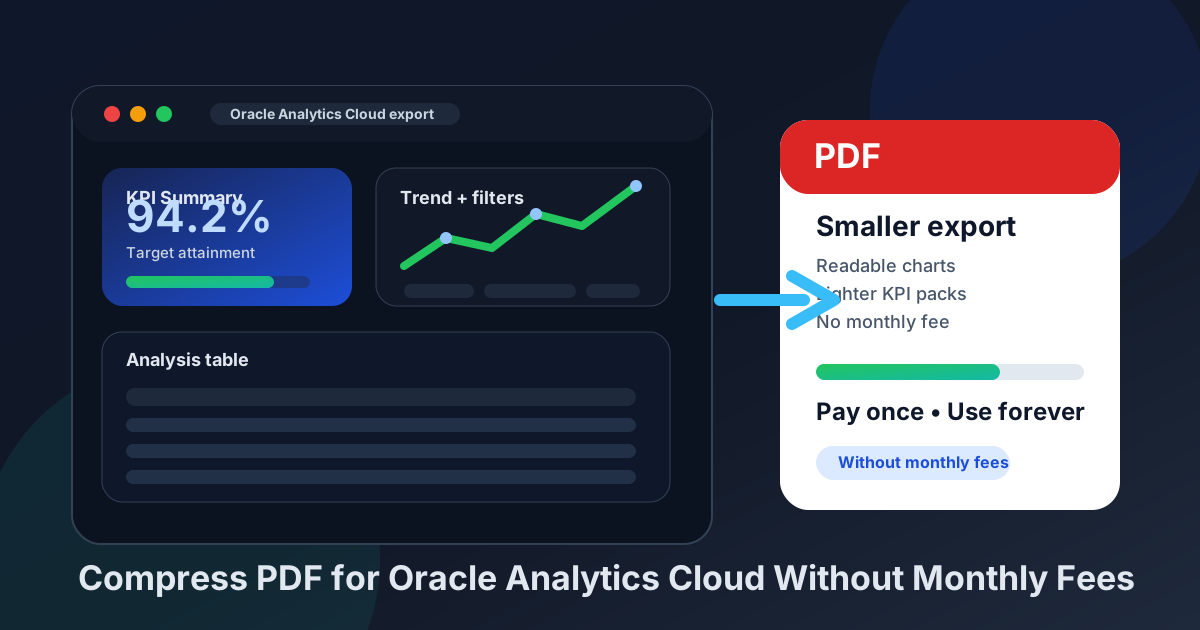
Table of contents
- Quick start: compress an Oracle Analytics Cloud PDF in under 2 minutes
- Why "without monthly fees" matters here
- Why smaller PDFs work better for Oracle Analytics Cloud reporting
- What size should an Oracle Analytics Cloud PDF be?
- Which compression level should you choose?
- Step-by-step: use LifetimePDF to shrink the file
- Common Oracle Analytics Cloud PDFs that benefit from compression
- What to do if the PDF is still too large
- How to keep charts, tables, and filter context readable
- Workflow habits that reduce PDF bloat
- Related LifetimePDF tools and internal links
- FAQ (People Also Ask)
Quick start: compress an Oracle Analytics Cloud PDF in under 2 minutes
If your real goal is simply make this Oracle Analytics Cloud PDF smaller so it is easier to share, use this workflow:
- Open Compress PDF.
- Upload the dashboard export, analysis PDF, KPI review pack, or browser print copy you want to send or store.
- Choose Medium compression first.
- Download the smaller file and check the new size.
- Preview the sections that matter most: legends, chart labels, date ranges, filter values, threshold markers, table rows, and commentary.
- If the file is still heavier than you want, use Crop PDF, Extract Pages, or Split PDF instead of repeatedly crushing the whole report.
Why "without monthly fees" matters here
The search intent behind this phrase is simple: teams do not want another subscription for a task that happens at the very end of the workflow. Oracle Analytics Cloud already sits inside a bigger reporting stack. There may be dashboards, storage, data warehouse costs, finance tooling, ticketing systems, collaboration software, and all the rest. Paying yet another monthly fee just to make exported PDFs smaller feels like subscription creep in its purest form.
That is why the no-subscription angle is not fluff. It matches the real use case. A manager may need a lighter KPI pack for email. An analyst may need a smaller analysis PDF for review. A finance or operations team may need to upload a browser-generated report into a portal with stricter file limits. In each case, the hard part is already done. The PDF cleanup step should not become its own recurring bill.
There is also a trust problem with many supposedly free PDF tools. They behave like a shortcut until the final screen, then put the finished file behind an account wall, a watermark, or a trial countdown. When your actual task should take two minutes, that friction is worse than the oversized PDF you started with.
Oracle Analytics Cloud already covers the reporting side. Your PDF finishing step does not need to become another recurring subscription.
Why smaller PDFs work better for Oracle Analytics Cloud reporting
Oracle Analytics Cloud exports usually move from working material to communication material. Somebody needs a dashboard snapshot for leadership. Somebody needs a short analysis PDF for a weekly review. Somebody needs a KPI pack that can actually be emailed, uploaded, or archived without a fight. That is when file size starts to matter more than people expect.
Large PDFs slow down review. They open slower on laptops, feel clumsy on phones, and create friction in meetings where people just want the numbers and the conclusion. In many cases, the extra weight does not come from the important part of the report. It comes from browser margins, repeated appendix pages, stacked screenshots, or one oversized packet trying to serve every possible audience. Good compression trims that waste while keeping the details people still rely on, like labels, filters, row text, timestamps, and KPI numbers.
Why compression usually helps
- Faster sharing: smaller PDFs are easier to email, upload, attach to tickets, and archive in project folders.
- Smoother review: lighter files open faster for analysts, finance teams, stakeholders, and clients.
- Better mobile access: smaller exports are less annoying to open from a phone during a live call.
- Cleaner archives: recurring weekly and monthly packs stack up quickly, so lighter files age better.
- Less rework: compressing once is usually easier than rebuilding and resending a report that turned out too large to use comfortably.
What makes Oracle Analytics Cloud PDFs grow so quickly
- Dashboard pages with multiple widgets and legends.
- Analysis exports with dense row-level tables.
- Browser print-to-PDF copies with oversized white margins.
- Scheduled packs that combine summary pages and appendix pages in one file.
- Support material that only a few readers actually need.
What size should an Oracle Analytics Cloud PDF be?
The right target depends on what the document is for. Smaller is helpful, but only if the file still reads clearly when someone checks labels, small table text, filter values, or note blocks.
| Oracle Analytics Cloud PDF type | Good target size | What to protect |
|---|---|---|
| Single dashboard snapshots and concise KPI updates | Under 1MB to 2MB | Widget titles, legends, trend markers, and headline numbers |
| Multi-page analysis PDFs and review packs | About 2MB to 4MB | Table rows, filter values, date ranges, and explanatory notes |
| Browser print copies and appendix-heavy reporting packets | About 3MB to 5MB | Screenshot clarity, labels, timestamps, and small text detail |
Those numbers are not rules. They are practical ranges. If a 2.7MB file opens quickly and still feels trustworthy, it may already be the right answer. The best PDF is the smallest one that keeps the important story intact.
Which compression level should you choose?
In most Oracle Analytics Cloud workflows, the safest first move is still Medium compression. It usually cuts enough size to solve the sharing problem without flattening legends, table headers, or small scorecard text too much.
Low compression
Good when the PDF already looks lean and you only need a modest size drop. This is a smart option for executive decks, files with dense rows, or reports that may be printed later.
Medium compression
Usually the best starting point. It keeps most Oracle Analytics Cloud PDFs readable while removing enough weight to make emailing, uploading, and archiving easier.
High compression
Useful when you are stuck against a file-size limit and the alternative is not sending the document at all. But use it carefully. The more visual detail and small text a report carries, the easier it is to overdo compression and make labels, tables, or notes annoying to review.
Step-by-step: use LifetimePDF to shrink the file
- Open Compress PDF.
- Upload the Oracle Analytics Cloud PDF you want to share.
- Pick Medium compression as your first pass.
- Download the smaller file and compare the new size with the original.
- Open the compressed version and check chart labels, legends, filter values, row text, threshold markers, timestamps, and note blocks.
- If the file is still heavier than you want, remove wasted margins or split long appendix sections before pushing the compression harder.
If your PDF still feels too big after the first pass, the fix is often structure rather than force. Crop the browser margins. Extract only the pages a reader actually needs. Split the appendix. Delete duplicate support pages. That usually works better than squeezing the whole file until it stops being pleasant to read.
Useful next tools: shrink the file first, then trim pages only if the report still feels oversized.
Common Oracle Analytics Cloud PDFs that benefit from compression
Not every export has the same risk profile. Some are chart-heavy. Some are table-heavy. Some are basically a short decision memo with supporting pages attached. That is why it helps to think about the document type before you compress it.
Dashboard exports
These often go to stakeholders who care about trends, targets, and exceptions more than raw appendix detail. Keep legends, widget titles, and KPI callouts crisp. You can usually trim background support into a second file if needed.
Analysis PDFs
Here, small text matters. Readers may scan row values, sort order, filters, and comparison periods quickly. Medium compression is usually enough. Do not overdo it.
Scheduled review packs
These often mix summary pages, commentary, and supporting tables. They compress well, but browser-generated white space and repeated section headers can add weight faster than people realize, so always preview the result once.
Browser print copies
This is where unnecessary bloat shows up most often. If the PDF carries wide margins, awkward page breaks, or extra blank areas, cropping helps more than stronger compression alone.
What to do if the PDF is still too large
If Medium compression does not solve the problem, do not assume stronger compression is the only answer. In reporting workflows, oversized files usually improve faster when you remove unnecessary pages and layout waste.
- Extract only the summary pages for the person who needs the fast version.
- Split appendix sections into a second PDF.
- Delete duplicate screenshots, stale covers, or repeated support pages.
- Crop wasted margins if the export left lots of unused white space.
- Keep one fuller archive copy and a lighter shared copy.
This matters because not every reader needs the same depth. Leadership may want the headline KPIs. Analysts may want the appendix. A project manager may only want the first few pages. Lighter, purpose-built PDFs usually work better than one heavy master file.
How to keep charts, tables, and filter context readable
PDF compression is only useful if the file still feels dependable. Before you send the final version, check the elements that break first when compression goes too far.
- Chart labels: make sure small axis or legend text still reads clearly.
- Filter values: confirm prompts, date ranges, and selected segments are still obvious.
- Table rows: scan the smallest rows and columns rather than only the bold headings.
- KPI cards: check thresholds, percentages, and comparison markers.
- Notes and callouts: make sure the explanation still feels comfortable at normal zoom.
- Timestamps: verify footer dates and report timing details if they matter for review.
Workflow habits that reduce PDF bloat
The easiest file to compress is the one that never became bloated in the first place. A few habits help a lot:
- Export only the sections you plan to share.
- Keep the executive summary separate from the appendix when audiences differ.
- Crop browser waste early instead of carrying it through every revision.
- Delete duplicate screenshots and stale support pages before the PDF becomes final.
- Use one clean review version instead of stacking old notes into the same packet.
These habits save time even before compression starts. They also make the final PDF easier to understand, which is usually more valuable than any single megabyte you cut.
Related LifetimePDF tools and internal links
If you work with Oracle Analytics Cloud exports regularly, these LifetimePDF tools pair well with the compression step:
- Compress PDF for the main file-size reduction step.
- Crop PDF when browser margins waste space without adding value.
- Extract Pages when only the summary or appendix needs to go out.
- Split PDF when one report is trying to serve too many readers at once.
- Delete Pages for duplicate support pages or stale appendix sections.
You may also find these related guides useful:
- Compress PDF for Oracle Analytics Cloud
- Compress PDF for Google Analytics Without Monthly Fees
- Compress PDF for IBM Cognos Analytics
- Compress PDF for Power BI Without Monthly Fees
FAQ (People Also Ask)
How do I compress a PDF for Oracle Analytics Cloud without monthly fees?
Upload the Oracle Analytics Cloud export to a pay-once PDF tool like LifetimePDF, start with Medium compression, and preview the smaller result before sharing it. If the file is still bulky, crop margins or split the packet instead of over-compressing everything.
What file size should I aim for with Oracle Analytics Cloud reports?
Under 2MB is a strong target for short dashboard snapshots and KPI updates. Larger analysis exports, review packs, and appendix-heavy browser print copies usually work better around 2MB to 5MB as long as the smallest useful details still look clear.
Will compression make Oracle Analytics Cloud charts or tables blurry?
It can if you compress too aggressively. That is why Medium compression is usually the safest first pass. Always check chart labels, legends, filter values, table rows, timestamps, and KPI numbers before keeping the compressed copy.
Why look for an Oracle Analytics Cloud PDF workflow without monthly fees?
Because shrinking exported analytics reports is finish-line work. If you already pay for Oracle Analytics Cloud and the rest of your reporting stack, another subscription just to make PDFs smaller is hard to justify. A pay-once workflow fits the job better.
What if my Oracle Analytics Cloud PDF is still too large after compression?
Extract only the summary pages, split the appendix into a second file, remove duplicate support pages, and crop wasted browser margins before pushing compression harder. In many Oracle Analytics Cloud workflows, sharing less PDF works better than crushing the whole report harder.
Ready to make the file smaller? Start with compression, then trim pages only if the report still feels heavier than it should.