Compress PDF for MicroStrategy: Keep Dossier Exports, Dashboard PDFs, and KPI Reports Small Without Losing the Details
To compress a PDF for MicroStrategy, export the final dossier, dashboard, or board-review PDF, upload it to LifetimePDF's Compress PDF tool, start with Medium compression, and keep the smaller copy only if KPI cards, grid rows, prompt selections, and commentary still read cleanly.
For most MicroStrategy workflows, under 2MB is a strong target for short scorecards and one-page updates, while dossier exports, dashboard packets, and board books usually land best around 2MB to 5MB.
MicroStrategy PDFs usually matter most when someone is no longer inside the live dashboard. They get attached to board prep, passed into executive reviews, stored with audit support, or forwarded to people who just need a fixed version that opens fast and still looks trustworthy. That is why the goal is not the tiniest possible file. The goal is a smaller PDF that still keeps prompts, filters, KPI cards, grid detail, threshold colors, annotations, and footnotes readable when somebody checks the numbers under normal meeting pressure.
Fastest path: run the MicroStrategy export through LifetimePDF's Compress PDF tool on Medium, then do one quick readability check before you send, archive, or replace the lighter copy.
Need the short version? Jump to Quick start: compress a MicroStrategy PDF in about 2 minutes.
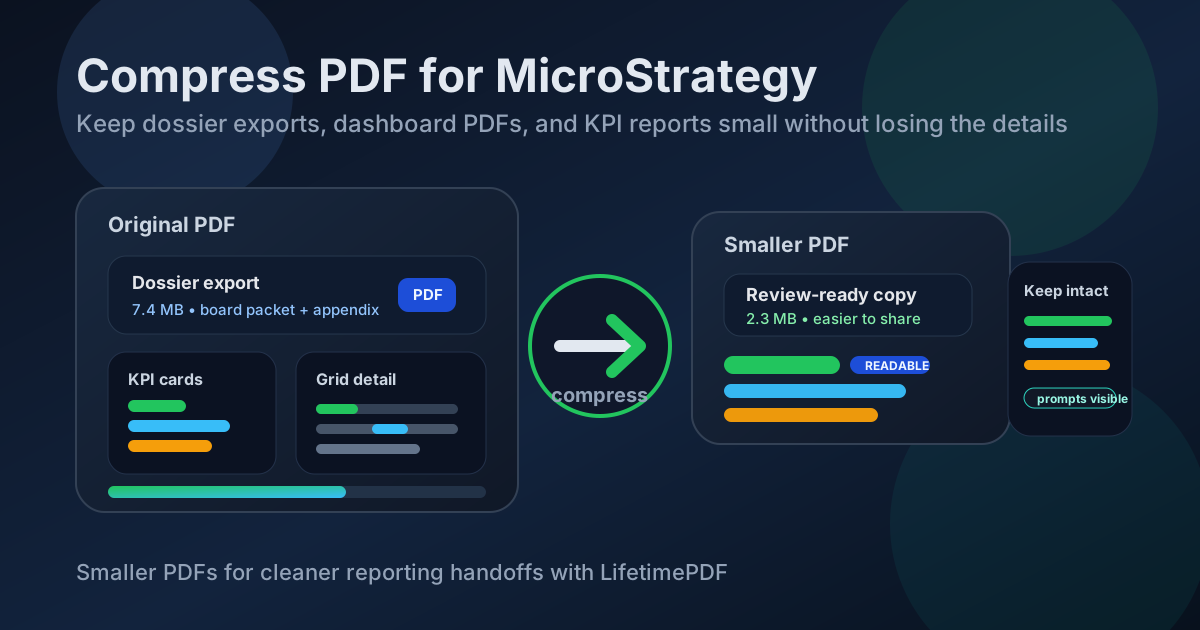
Table of contents
- Quick start: compress a MicroStrategy PDF in about 2 minutes
- Why MicroStrategy PDFs get heavy so quickly
- What file size should you aim for?
- Which compression level should you choose?
- Step-by-step: shrink a MicroStrategy PDF with LifetimePDF
- Best strategy for common MicroStrategy PDF types
- What if the export is still too large?
- How to protect dashboard and grid readability
- Export habits that keep MicroStrategy PDFs lighter
- Related LifetimePDF tools and internal links
- FAQ (People Also Ask)
Quick start: compress a MicroStrategy PDF in about 2 minutes
If your real goal is simply make this MicroStrategy PDF smaller without making it annoying to review, this workflow is usually enough:
- Open Compress PDF.
- Upload the file you actually plan to share, such as a dossier export, dashboard PDF, scorecard packet, board book, Library handoff, or appendix-backed review pack.
- Choose Medium compression first.
- Download the smaller result and compare the new size with the original.
- Preview the weak spots once: KPI cards, grid headers, small row labels, prompt values, chart legends, date ranges, and footnotes.
- If the packet is still heavy, extract or split the appendix instead of jumping straight to a harsher compression pass.
- If the file contains scans, screenshots, or repeated backup pages, clean that weight before you compress again.
Why MicroStrategy PDFs get heavy so quickly
MicroStrategy exports often turn into all-purpose packets. One PDF tries to satisfy leadership, finance, operations, auditors, and analysts at the same time. A short executive summary becomes a dashboard packet, then a dossier export, then a support appendix, and finally a scan-heavy sign-off bundle. By the time the file is ready to send, it contains far more pages than the next reader actually needs.
Compression helps, but it works best when you understand what is adding weight. In MicroStrategy workflows, the problem is rarely just one KPI card or one clean chart. The real bulk usually comes from repeated views, dense grids, exported comments, dashboard screenshots, backup tables, and supporting pages that belong in a second PDF instead of the main review pack.
What usually adds weight
- Dossier exports with multiple sections: executive views, supporting tabs, and appendix pages bundled together.
- Dense grids and long tables: small text needs more visual detail, so aggressive compression becomes obvious fast.
- Repeated dashboard states: similar pages exported more than once for different filters or prompts.
- Screenshot-heavy evidence: callouts, annotations, or pasted reference pages that increase file size quickly.
- Scan-heavy approvals: signatures, supporting documents, and phone-camera pages added at the end of a reporting packet.
What file size should you aim for?
There is no perfect number for every MicroStrategy export, but these ranges are practical enough to keep you from over-compressing:
| MicroStrategy PDF type | Good target | Details you should protect |
|---|---|---|
| Short KPI snapshot, scorecard, or one-page summary | Under 2MB | KPI values, thresholds, date ranges, prompt labels, and short notes |
| Dossier export or dashboard packet | 2MB to 4MB | Chart labels, legends, grid headers, filters, and commentary |
| Board review file or mixed reporting book | 3MB to 5MB | Summary pages, supporting tables, appendix references, and footnotes |
| Scan-heavy appendix or approval bundle | Split if possible | Searchability, signatures, page clarity, and readable text on every scan |
The best target is the smallest size that still feels normal to review at standard zoom. If the board packet ends up at 3.8MB but opens quickly and keeps the KPI cards, prompt selections, and supporting notes intact, that is usually better than forcing it under 2MB and making the file harder to trust.
Which compression level should you choose?
The right setting depends on what the next reader needs to inspect:
- Light compression: best for grid-heavy files, detailed appendices, and reports where tiny row labels matter.
- Medium compression: the best default for most MicroStrategy PDFs because it lowers file size without sacrificing too much clarity.
- Stronger compression: useful for internal reference copies, quick previews, or archive files where convenience matters more than small visual detail.
Step-by-step: shrink a MicroStrategy PDF with LifetimePDF
- Export the final version first. Use the PDF you actually plan to send instead of an older draft that still contains pages you already know you will cut.
- Open Compress PDF. Upload the dossier export, dashboard packet, KPI review file, or board book.
- Start with Medium compression. That is usually the safest balance for KPI cards, grid text, legends, prompts, and commentary.
- Download and compare. Check how much size you saved before you do anything else.
- Review the weak points once. Zoom in on grid headers, prompt selections, chart labels, threshold colors, footnotes, and date filters instead of only checking the cover page.
- Only then decide whether it needs cleanup. If the packet is still too large, extract the summary or split the appendix before trying a stronger setting.
That order matters. Many people go from one compression pass straight to a harsher one when the real issue is simply that the PDF contains too many pages for the audience.
Best strategy for common MicroStrategy PDF types
Dossier exports
Dossiers often mix summary visuals with deeper supporting detail. Compress them, but make sure you check the pages that use denser grids or smaller callouts. These are the spots where over-compression shows up first.
Dashboard PDFs
Dashboard exports usually compress well when the main job is sharing charts, scorecards, and brief commentary. Focus your review on legends, axis labels, thresholds, prompt values, and any page where several visuals sit close together.
Board books and monthly review packs
These benefit the most from splitting. If one PDF includes the executive summary, full dashboard exports, appendix tables, screenshots, and sign-off pages, make a lighter board-facing packet for the main audience and keep the backup material in a second file. That usually works better than trying to crush everything into one universal document.
Dense grids and appendix tables
Long tables are where aggressive compression becomes obvious. Small row labels, percentages, and notes can become frustrating quickly. Use lighter compression here, or separate those pages from the main summary packet if only a few readers actually need them.
What if the export is still too large?
If the compressed MicroStrategy PDF still feels bulky, stronger compression is only one option. Often it is not the best one.
- Use Extract Pages to keep only the decision-ready section.
- Use Split PDF to separate the appendix from the main report.
- Use Delete Pages to remove repeated support pages, blank separators, or outdated exports.
- Use Crop PDF if oversized margins or whitespace make each page heavier than it needs to be.
- Use OCR PDF if a scan-heavy appendix also needs better searchability later.
How to protect dashboard and grid readability
A compressed MicroStrategy PDF is only useful if the next person can still trust what they are seeing. That means checking the details most likely to fail first:
- Prompt selections and filter values
- KPI cards, thresholds, and summary numbers
- Chart legends, axis labels, and comparison markers
- Grid headers, row labels, and totals
- Date ranges, commentary blocks, and footnotes
- Appendix references, notes, and sign-off callouts
If those weak points still look normal at the zoom level people actually use during review, the compression is probably good enough. If they feel shaky, keep the original, try a lighter setting, or reduce the page count instead.
Export habits that keep MicroStrategy PDFs lighter
The cleanest compression result usually starts before compression. A few small export habits reduce PDF bloat without extra rework later:
- Export only the pages you need: do not include every supporting tab if only the summary matters.
- Separate the executive packet from the analyst appendix: different readers usually need different levels of detail.
- Avoid repeated dashboard states: keep only the views that add meaning to the review.
- Move scan-heavy support pages into a second file: signatures and backups do not always belong in the main packet.
- Trim wasted margins and blank pages: empty space and separators add weight without helping the report.
Those habits matter because compression works best when the PDF already has a clear purpose. A focused export compresses better, reads better, and travels better.
Related LifetimePDF tools and internal links
If you clean up MicroStrategy exports regularly, these tools and companion guides usually help the most:
- Compress PDF for the main size-reduction step.
- Split PDF for separating the review packet from the appendix.
- Extract Pages for decision-ready summaries.
- Delete Pages for duplicate or outdated sections.
- Crop PDF for trimming wasted margins.
- Compare PDFs for checking the compressed copy against the original.
- Compress PDF for MicroStrategy Without Monthly Fees if the main issue is avoiding another recurring tool bill.
- Compress PDF for MicroStrategy: Share Smaller Dossier Exports, Dashboard PDFs, and KPI Reports Faster for a companion workflow guide.
Practical takeaway: start with compression, then reduce page count only if the PDF is still heavier than the next reader needs.
FAQ (People Also Ask)
How do I compress a PDF for MicroStrategy?
Export the final MicroStrategy dossier or dashboard as a PDF, upload it to a PDF compressor, start with Medium compression, and keep the smaller copy only if KPI cards, grid text, prompt selections, legends, and notes still look clean. Medium compression is usually the safest first pass because it reduces size without making the report feel unreliable.
What file size should I aim for with a MicroStrategy PDF?
Under 2MB is a strong target for short KPI snapshots, scorecards, and one-page updates. Dossier exports, dashboard packets, and board-review files usually work better around 2MB to 5MB as long as the smallest labels, tables, prompts, and commentary still read clearly.
Will compression make MicroStrategy grids or charts blurry?
It can if you compress too aggressively. That is why Medium compression is the best starting point for most MicroStrategy PDFs. Always review grid headers, small row labels, chart legends, threshold colors, prompt values, dates, and commentary before keeping the compressed copy.
Should I split a large MicroStrategy board pack instead of compressing harder?
Often, yes. If one PDF includes the executive summary, several dashboard pages, appendix tables, screenshots, and scanned approvals, splitting it usually works better than forcing stronger compression across the whole packet.
Which LifetimePDF tools help most with MicroStrategy workflows?
Compress PDF is the main starting point. Split PDF, Extract Pages, Delete Pages, Crop PDF, OCR PDF, and Compare PDFs are especially useful when you want a smaller MicroStrategy handoff file without sending more pages than the next reader actually needs.