Compress PDF for Majestic Without Monthly Fees: Shrink Backlink Reports and SEO PDFs Without Subscription Bloat
If you need to compress a PDF for Majestic without monthly fees, use a pay-once PDF tool, start with Medium compression, and review the smaller file once before you send it.
For most Majestic workflows, that is enough to shrink backlink reports, Site Explorer exports, anchor text breakdowns, and client PDFs without turning a small document task into another recurring software bill.
This is exactly the kind of workflow where people get annoyed by software bloat. You already pay for the SEO platform. You already did the analysis. Now you just need the PDF to be smaller, easier to upload, and easier for a client or teammate to open. That should not require another monthly subscription hanging off the side of your reporting process. The useful goal is simple: keep the Majestic data readable while making the file light enough to share comfortably.
Fastest path: use LifetimePDF's Compress PDF tool, begin with Medium compression, and split or extract pages only if the Majestic report is still heavier than you want.
In a hurry? Jump to Quick start: compress a Majestic PDF in under 2 minutes.
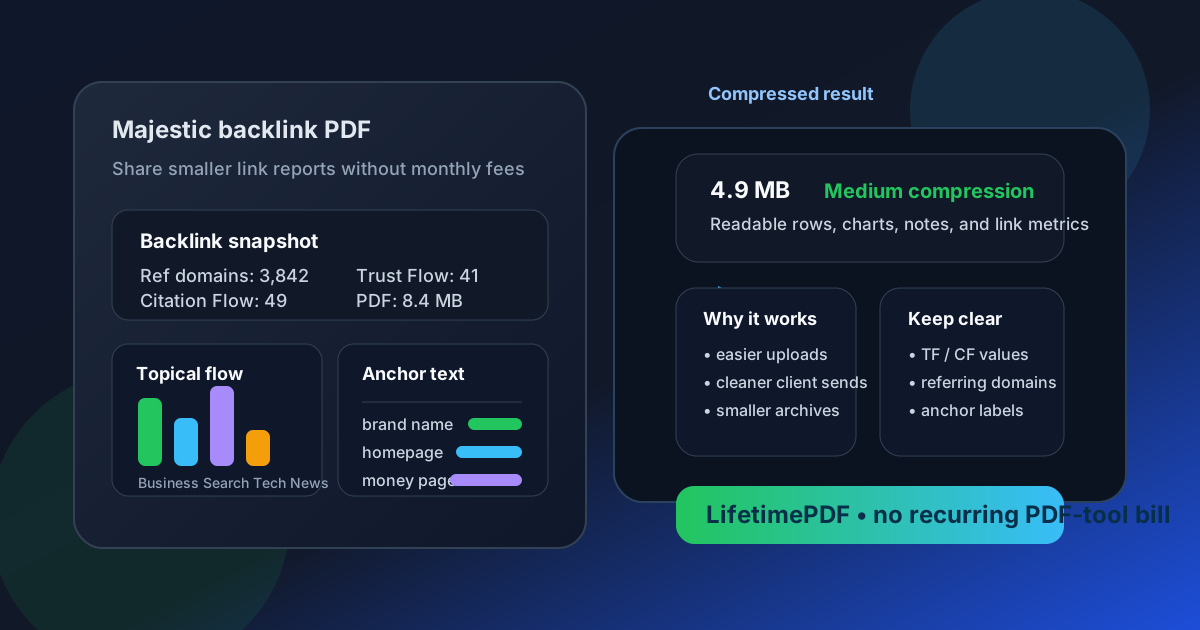
Table of contents
- Quick start: compress a Majestic PDF in under 2 minutes
- Why "without monthly fees" matters here
- Why smaller PDFs work better for Majestic reporting
- What size should a Majestic-friendly PDF be?
- Which compression level should you choose?
- Step-by-step: use LifetimePDF to shrink a Majestic PDF
- Common Majestic PDFs that benefit from compression
- What to do if the PDF is still too large
- How to keep backlink tables and metrics readable
- Client-delivery habits that keep report PDFs cleaner
- Related LifetimePDF tools and internal links
- FAQ (People Also Ask)
Quick start: compress a Majestic PDF in under 2 minutes
If your real goal is simply make this Majestic PDF smaller so it is easier to send, use this workflow:
- Open Compress PDF.
- Upload the Majestic export you want to share or archive.
- Choose Medium compression first.
- Download the smaller file and compare the new size.
- Preview the sections that matter most: referring-domain rows, Trust Flow and Citation Flow values, anchor text labels, chart legends, notes, and screenshots.
- If the PDF is still bulky, use Extract Pages, Split PDF, or Delete Pages instead of repeatedly crushing the whole file.
Why "without monthly fees" matters here
People do not search for this because PDF compression is exciting. They search for it because the task repeats and recurring billing feels unnecessary. An SEO consultant, link builder, in-house marketer, or agency team may already be paying for Majestic, outreach tools, analytics platforms, storage, and reporting software. Adding another monthly line item just to make exported PDFs smaller starts to feel silly fast.
That is why this keyword makes sense. The job itself is ordinary. Someone needs to send a lighter backlink report, upload a cleaner Site Explorer export, archive a smaller monthly link recap, or attach a PDF to a client deck without wasting time on a pricing wall. A pay-once workflow fits that reality better than subscription sprawl.
There is also a trust problem with many so-called free PDF tools. They often feel free only until the moment you try to download the result. Then the trial timer appears, the watermark arrives, or the subscription page takes over. When the actual task should take two minutes, that kind of friction feels worse than the large file you started with.
Backlink analysis already costs enough. Your PDF cleanup step does not need to become another recurring bill.
Why smaller PDFs work better for Majestic reporting
Majestic PDFs usually exist because the findings need to leave the platform. A client wants a backlink summary. A strategist wants a competitor comparison. A founder wants the important takeaways without logging into the tool. A link-building team needs a fixed attachment for approvals, outreach context, or reporting archives. In all of those cases, file size becomes a practical usability issue, not just a technical detail.
Heavy PDFs are slower to upload, more awkward to email, and easier for busy readers to postpone. The extra weight usually comes from screenshot-heavy appendix pages, repeated report covers, exported tables nobody trimmed, or a single large pack trying to satisfy multiple readers at once. Good compression removes waste while preserving the details people still care about, such as referring-domain counts, Trust Flow and Citation Flow values, anchor text sections, topic labels, notes, and screenshot callouts.
Why compression usually helps
- Faster client review: smaller files open more quickly when someone only needs the main backlink story.
- Easier uploads: lighter PDFs play nicer with portals, tickets, shared drives, and email limits.
- Cleaner monthly archives: recurring link reports stop stacking up as oversized files.
- Less resend work: you are less likely to rebuild a report just because the first PDF felt too heavy.
- Smoother meetings: compressed copies are easier to open during live calls or handoff reviews.
What size should a Majestic-friendly PDF be?
There is no one perfect size for every export, but these working ranges help you avoid compressing harder than you need to:
| Document type | Good working target | Why it usually works |
|---|---|---|
| Short backlink snapshot | Under 2MB | Easy to email, fast to open, and usually enough for a quick performance recap. |
| Site Explorer export or anchor text review | 2MB to 4MB | Lets you keep denser tables and screenshots readable without sending a bulky file. |
| Competitor comparison or outreach research pack | 3MB to 5MB | Gives more space for context, charts, and notes while still feeling shareable. |
| Full client appendix | As small as possible while still readable | These packs often work better when split into sections rather than forced into one aggressively compressed file. |
The best size depends on what the next reader actually needs. A short monthly link recap can be tiny. A multi-section competitor pack often needs a bit more breathing room. If the smallest text people need to read starts looking questionable, you have probably gone too far.
Which compression level should you choose?
For most Majestic exports, Medium compression is the right starting point. It usually strips enough size to matter without softening the very details people are checking, like metric values, domain rows, chart labels, and anchor text notes.
| Compression level | Best use case | Main tradeoff |
|---|---|---|
| Low | When readability matters more than file size and the PDF is only slightly too large | Safe, but sometimes does not shrink enough to solve the delivery problem |
| Medium | Most backlink reports, site snapshots, client updates, and competitor reviews | Usually the best balance of size and clarity |
| High | Only when the PDF is still too heavy after cleanup and a smaller copy matters more than visual polish | Greater risk to small text, narrow tables, and screenshot detail |
Step-by-step: use LifetimePDF to shrink a Majestic PDF
- Export or save the Majestic report as PDF.
- Open Compress PDF.
- Upload the backlink summary, Site Explorer export, anchor text report, topical-flow snapshot, competitor review, or client-ready PDF you want to shrink.
- Choose Medium compression.
- Download the smaller file and compare the new size.
- Preview Trust Flow and Citation Flow values, referring-domain rows, anchor text labels, chart legends, screenshot callouts, and notes.
- If the file is still too heavy, clean up the report with Extract Pages, Delete Pages, Crop PDF, or Split PDF.
That last step matters more than people think. In a lot of SEO workflows, the best fix is not harsher compression. It is sending fewer unnecessary pages.
Common Majestic PDFs that benefit from compression
Compression helps most when the PDF is useful but slightly bloated. Common examples include:
- Backlink summaries for monthly reporting
- Site Explorer exports shared with clients or managers
- Anchor text reviews sent to content or outreach teams
- Competitor backlink comparisons included in SEO proposals
- Prospecting packs for link-building shortlists
- Appendix-heavy PDF decks that include screenshots and evidence pages
These are all strong candidates because the reader rarely needs every page at maximum fidelity. They just need the PDF to open quickly and still show the points that drive the decision.
What to do if the PDF is still too large
If Medium compression is not enough, do not assume the next step is smashing the whole file harder. Often the smarter move is to reduce what the PDF is trying to carry.
- Extract the summary pages: send the executive view first and keep the evidence pack separate.
- Split the appendix: one file for findings, one file for screenshots or raw exports.
- Delete repetition: extra covers, repeated charts, and duplicate evidence pages add weight fast.
- Crop wasted margins: oversized white space around screenshots makes files heavier than they need to be.
- Separate audiences: the client summary and the analyst appendix often should not live in the same PDF.
How to keep backlink tables and metrics readable
The danger with over-compression is not abstract. It shows up in the exact places SEO teams care about: tiny metric values, dense rows, small axis labels, and screenshot callouts that suddenly feel soft.
Before you send the smaller copy, check these areas once:
- Trust Flow and Citation Flow numbers
- Referring-domain counts and table rows
- Anchor text labels
- Chart legends and date ranges
- Screenshot annotations and callouts
- Short recommendations or next-step notes
If those still look clear at normal zoom, the PDF is probably fine. You do not need perfection. You need trust.
Client-delivery habits that keep report PDFs cleaner
The easiest PDF to compress is the one that was packaged well in the first place. A few habits make a real difference:
- Export only the sections you plan to discuss.
- Keep analyst evidence separate from stakeholder summaries.
- Use screenshots intentionally instead of dumping every view into the appendix.
- Archive a working copy and send a trimmed delivery copy.
- Review file size before the PDF becomes part of a recurring monthly workflow.
This is where a pay-once tool fits well. Once the workflow is set, the compression step becomes routine instead of another small monthly tax.
Related LifetimePDF tools and internal links
Majestic exports often become easier to work with when you combine compression with a few cleanup tools:
- Compress PDF for the main file-size reduction step
- Extract Pages to keep only the pages a client or manager needs
- Split PDF for separating summary pages from evidence-heavy appendices
- Delete Pages to remove repeated covers and filler pages
- Crop PDF to tighten screenshot-heavy pages
- Compress PDF for Ahrefs Without Monthly Fees for a nearby SEO reporting workflow
- Compress PDF for Semrush Without Monthly Fees for another no-subscription SEO PDF workflow
- Compress PDF for Majestic for the broader non-pricing-angle guide
Want the short version? Compress the PDF first, then extract or split pages only if the report is still bigger than your delivery channel likes.
FAQ (People Also Ask)
How do I compress a PDF for Majestic without monthly fees?
Use a pay-once PDF tool like LifetimePDF, upload the Majestic export, start with Medium compression, and preview the smaller result before sending it. If the report is still bulky, extract only the pages people need instead of repeatedly over-compressing the entire pack.
What file size is best for Majestic reports?
Under 2MB is a strong target for short backlink snapshots and quick SEO updates. Larger competitor comparisons, site explorer exports, and appendix-heavy client packs often work better around 2MB to 5MB as long as the smallest useful labels still look clear.
Will compressing a Majestic PDF make charts or tables blurry?
Usually not if you start with Medium compression and review the result once. The biggest risk is with dense referring-domain tables, tiny metric values, chart labels, screenshot callouts, and narrow notes, so those are the parts worth checking first.
Why look for a Majestic PDF compressor without monthly fees?
Because shrinking exported reports is routine work, not something most SEO teams want to rent forever. A pay-once workflow makes more sense when you need dependable compression without adding another recurring subscription to your stack.
What if my Majestic PDF is still too large after compression?
Extract only the summary pages, split the appendix into a second file, delete repeated evidence pages, and crop wasted screenshot margins before trying stronger compression. In many Majestic workflows, sharing less PDF works better than crushing the whole file harder.