Compress PDF for KeywordTool.io: Keep Keyword Research Exports, Autocomplete Reports, and Client PDFs Small Without Losing the Details
To compress a PDF for KeywordTool.io, export the final report, upload it to LifetimePDF's Compress PDF tool, start with Medium compression, and keep the smaller copy only if keyword rows, search volume, CPC columns, question lists, and screenshots still look clear.
For most KeywordTool.io PDFs, under 2MB is a strong target for focused exports and quick handoffs, while broader multi-platform research packs and screenshot-heavy client decks usually work best around 2MB to 4MB after light cleanup.
KeywordTool.io exports usually become PDFs when the research needs to move from discovery into action. A writer needs the shortlist, a strategist needs the question clusters, or a client needs a clean recap that is easier to review than a live tab. That is where smaller PDFs help. They upload faster, open faster, and feel easier to forward without turning the research into a messy attachment. The goal is not to squeeze every file into the tiniest possible number. The goal is to make the PDF lighter while preserving the details people still use to make decisions.
Fastest path: run the KeywordTool.io export through LifetimePDF's Compress PDF tool on Medium, then split appendices or remove repeated screenshots only if the file is still heavier than the next reader needs.
Need the short version? Jump to Quick start: compress a KeywordTool.io PDF in under 2 minutes.
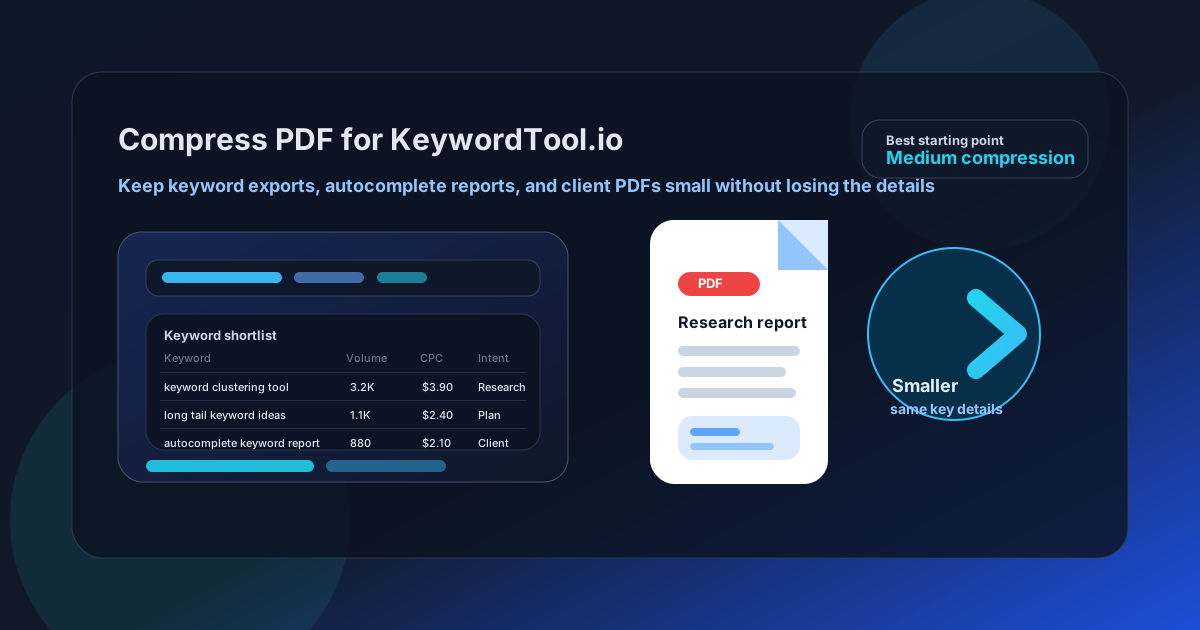
Table of contents
- Quick start: compress a KeywordTool.io PDF in under 2 minutes
- Why KeywordTool.io PDFs get heavy so quickly
- What file size should you aim for?
- Which compression level should you choose?
- Step-by-step: shrink a KeywordTool.io PDF with LifetimePDF
- Best strategy for common KeywordTool.io PDF types
- What if the PDF is still too large?
- How to keep keyword detail and screenshots readable
- Workflow habits that keep KeywordTool.io PDFs cleaner
- Related LifetimePDF tools and useful reading
- FAQ (People Also Ask)
Quick start: compress a KeywordTool.io PDF in under 2 minutes
If your goal is simply make this KeywordTool.io PDF smaller so it is easier to send, upload, and review, this workflow is usually enough:
- Open Compress PDF.
- Upload the final keyword export, autocomplete report, question list, platform snapshot, or client-ready PDF you actually plan to share.
- Choose Medium compression first.
- Download the smaller result and compare the new size with the original.
- Open it once and check the details that matter most: keyword rows, search volume, CPC values, filters, screenshots, notes, and any action items.
- If the file is still heavier than you want, use Extract Pages, Delete Pages, or Crop PDF before trying stronger compression.
Why KeywordTool.io PDFs get heavy so quickly
KeywordTool.io PDFs often get bulky because one document quietly starts doing several jobs at once. It is part keyword export, part screenshot archive, part planning document, and part client recap. Compression helps, but the deeper size problem is usually that the PDF is carrying more visual baggage than the next reader actually needs.
Keyword lists and question ideas compress differently from screenshot-heavy sections, pasted charts, or full-page browser captures. A clean text-heavy export behaves one way. A deck full of screenshots, competitor examples, and appendix pages behaves another. That is why the best result usually comes from balanced compression plus a little cleanup instead of simply forcing the strongest setting.
What usually adds weight
- Screenshot-heavy pages: full-browser captures and repeated SERP visuals add size quickly.
- Overloaded client decks: one PDF tries to satisfy writers, strategists, managers, and clients at the same time.
- Appendix sprawl: extra exports, duplicate sections, and backup screenshots stay attached by default.
- Repeated keyword views: slightly different filtered exports can quietly bloat the same pack.
- Wide margins and unused space: print-style layouts often preserve more empty canvas than the reader needs.
What file size should you aim for?
There is no single perfect size for every KeywordTool.io export, but these practical ranges help you avoid compressing harder than necessary:
| KeywordTool.io PDF type | Good target | Why that range works |
|---|---|---|
| Focused keyword shortlist or question list | Under 2MB | Easy to email, upload, and reopen while keeping the key columns clear. |
| Writer brief or strategist handoff | 2MB to 3MB | Usually enough room for notes, screenshots, and filtered exports without feeling bulky. |
| Client-ready research pack | 2MB to 4MB | More realistic when the PDF mixes tables, screenshots, context notes, and recommendations. |
| Appendix-heavy archive copy | As small as practical after splitting | Often better handled as two PDFs instead of one over-compressed master file. |
If the file already opens quickly and sends cleanly, stop there. The right target is the smallest size that still leaves the research comfortable to review at normal zoom.
Which compression level should you choose?
The safest starting point for most KeywordTool.io exports is Medium compression. It usually cuts enough weight to make the PDF easier to move around without flattening small keyword detail too much.
| Compression level | Best for | Main trade-off |
|---|---|---|
| Low | Already-light exports with dense keyword tables or small numeric columns | Preserves detail well, but may not shrink enough for screenshot-heavy packs. |
| Medium | Most keyword reports, question lists, and client summaries | Best balance between smaller size and readable research detail. |
| High | Oversized drafts after you already trimmed extra pages | Can make small labels, CPC values, screenshots, and notes noticeably softer. |
Step-by-step: shrink a KeywordTool.io PDF with LifetimePDF
- Export only the file you really plan to share. If the audience only needs the summary pages, do not start with the biggest possible research pack.
- Open Compress PDF.
- Upload the file and choose Medium compression. This is usually the safest first pass for keyword rows, screenshots, and mixed research pages.
- Download the smaller result. Compare file size first so you know whether the compression pass actually solved the problem.
- Review the details that carry meaning. Check keyword columns, search volume, CPC values, search intent notes, screenshots, and recommendation bullets.
- Clean the file only if needed. If the PDF is still too large, use Extract Pages, Delete Pages, or Split PDF before trying stronger compression.
In many SEO workflows, a smaller PDF comes more from sending fewer pages than from squeezing the whole report harder. If the appendix exists only for backup, let it become a second file.
Best strategy for common KeywordTool.io PDF types
| Common file | Best first move | What to double-check after compression |
|---|---|---|
| Keyword shortlist export | Use Medium compression and keep only the final filtered set. | Keyword rows, search volume, CPC values, competition notes, and headers. |
| Autocomplete or question report | Compress first, then remove duplicate sections if several variants say almost the same thing. | Question wording, grouping, numbering, and any small annotation text. |
| Client-facing recap deck | Make a shorter main PDF and move backup screenshots into an appendix file. | Headlines, conclusions, screenshots, and the action notes people actually discuss. |
| Platform comparison or multi-market export | Split by market or channel before forcing stronger compression. | Filters, region labels, tabs, and summary comments. |
| Archive copy with lots of evidence | Delete duplicate pages or split support material before trying High compression. | Anything someone may need later to understand why a recommendation was made. |
What if the PDF is still too large?
If Medium compression helps but not enough, the next move is usually less PDF, not harder compression. That means trimming the file so it matches the real handoff.
- Extract the pages the reader actually needs if the appendix is only there for backup.
- Split one long pack into two files when writers and clients need different levels of detail.
- Delete repeated screenshots or outdated sections from revision-heavy recaps.
- Crop oversized margins on print-style pages so the PDF carries less empty space.
- Run OCR on scanned pages if signatures, handwritten notes, or imported paper materials got added to the pack.
How to keep keyword detail and screenshots readable
A compressed KeywordTool.io PDF only works if someone can still trust what they are seeing. That means reviewing the spots that tend to break first:
- Keyword columns: make sure rows do not blur together when someone scans quickly.
- Search volume and CPC values: small numbers lose usefulness fast if they soften too much.
- Question lists and topic variants: nuance matters when content decisions depend on wording.
- Screenshots and examples: if they are included to prove a point, they still need to support the point.
- Recommendations and notes: summary comments should still feel easy to read at normal zoom.
One quick open-and-check pass is usually enough. If the PDF makes you zoom immediately, the file is probably too compressed for a smooth handoff.
Workflow habits that keep KeywordTool.io PDFs cleaner
The best compression result often starts before you ever upload the PDF:
- Export only the filtered views the next reader actually needs.
- Keep a short share-ready version separate from the full evidence pack.
- Remove repeated screenshots or old draft pages before exporting the final PDF.
- Use cropping when browser captures include a lot of unused interface chrome.
- Standardize a leaner client template so every report does not start as an oversized master file.
Those habits matter because PDF size is usually a workflow problem before it becomes a compression problem. The cleaner the research pack starts, the easier it is to make it small without losing clarity.
Related LifetimePDF tools and useful reading
If you work with KeywordTool.io exports regularly, these LifetimePDF pages pair well with the exact-match guide:
- Compress PDF for the first size-reduction pass.
- Extract Pages when only the main findings need to be shared.
- Split PDF when one research pack is trying to serve different audiences.
- Delete Pages for outdated revisions and duplicated screenshots.
- Crop PDF for screenshot-heavy pages with wasted margins.
- OCR PDF if scan-heavy supporting pages got mixed into the report.
- Compress PDF for KeywordTool.io Without Monthly Fees for the pay-once angle.
- Compress PDF for KeywordTool.io: Share Smaller Keyword Research Exports, Autocomplete Reports, and Client PDFs Faster for the broader companion guide.
- Compress PDF for Semrush, Compress PDF for Ahrefs, and Compress PDF for Surfer SEO if you are comparing similar SEO reporting workflows.
FAQ (People Also Ask)
How do I compress a PDF for KeywordTool.io?
Export the final KeywordTool.io PDF, upload it to a compressor, start with Medium compression, and keep the smaller copy only if keyword rows, search volume, CPC values, screenshots, and notes still look clear. Medium compression is usually the safest first pass because it lowers file size without making the research harder to trust.
What file size should I aim for with KeywordTool.io PDFs?
Under 2MB is a strong target for focused keyword exports, question lists, and writer handoffs. Broader client decks, multi-platform research packs, and screenshot-heavy recap PDFs usually work best around 2MB to 4MB as long as the smallest useful text still reads clearly.
Will compression make KeywordTool.io tables or screenshots blurry?
It can if you compress too aggressively. That is why Medium compression is usually the best place to start. Always review keyword columns, CPC values, search volume figures, question lists, screenshots, and recommendation notes before you replace the original export.
Should I split a large KeywordTool.io research pack instead of compressing it harder?
Often, yes. If one PDF mixes the main keyword shortlist, screenshots, appendices, and client commentary for different readers, splitting it usually works better than forcing stronger compression across the whole file.
Which LifetimePDF tools pair best with KeywordTool.io workflows?
Compress PDF is the main starting point. Split PDF, Extract Pages, Delete Pages, Crop PDF, OCR PDF, and the related KeywordTool.io guides on LifetimePDF are especially useful when you want smaller, cleaner, share-ready research PDFs.
Ready to shrink the file? Start with the main KeywordTool.io export, use Medium compression, and only clean up extra pages if the PDF is still heavier than the workflow needs.