Compress PDF for Instantly: Keep Cold Outreach Attachments Fast to Open
To compress a PDF for Instantly, upload the final one-pager, case study, pricing sheet, proposal, or follow-up PDF to LifetimePDF's Compress PDF tool, start with Medium compression, and keep the smaller copy only after charts, screenshots, pricing, names, and next-step details still look clean in the real Instantly campaign, manual follow-up, or lead handoff workflow where the file gets reopened.
For most Instantly PDFs, under 2MB is a strong target for one-pagers, short case studies, and simple proof documents, while longer proposals, screenshot-heavy decks, and multi-page sales packets usually work best around 2MB to 5MB after light cleanup.
Cold outreach has almost no patience for friction. If a PDF opens slowly, looks bloated on mobile, or feels harder to skim than the email around it, the attachment starts working against you. The goal is not winning a compression contest. The goal is sending the lightest file that still feels sharp, credible, and worth a prospect's attention.
Fastest path: run the Instantly PDF through LifetimePDF's Compress PDF tool on Medium, then extract key pages or split a bulky packet only if the document is still heavier than the real outreach workflow needs.
In a hurry? Jump to Quick start: compress an Instantly PDF in about 2 minutes.
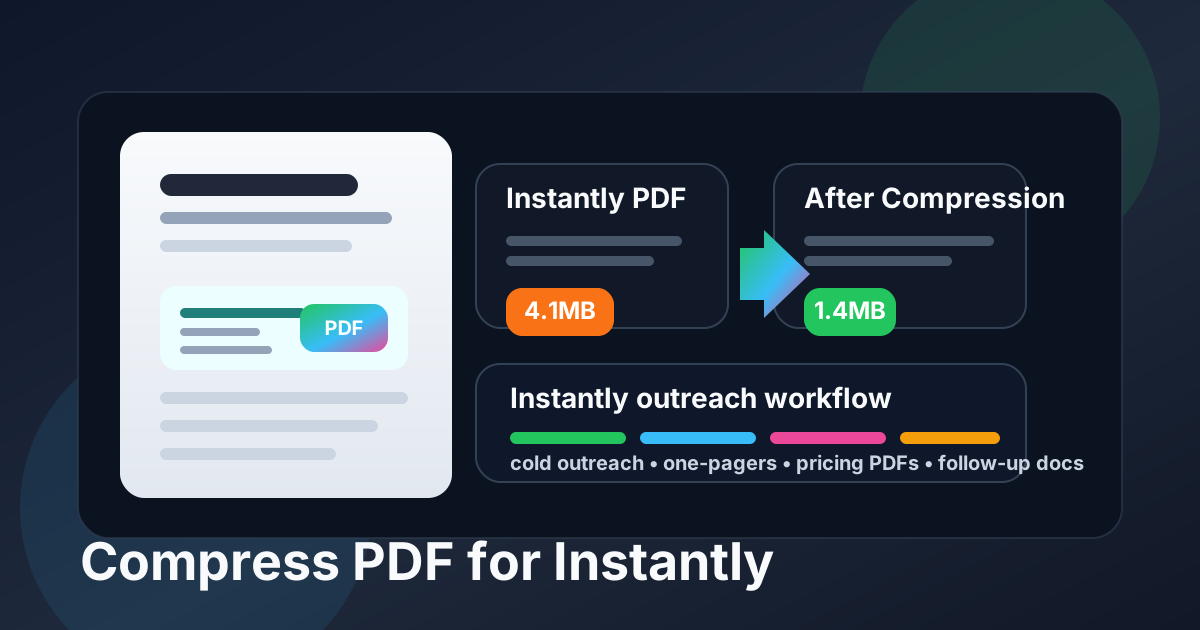
Table of contents
- Quick start: compress an Instantly PDF in about 2 minutes
- Why Instantly PDFs get heavy so quickly
- Where large PDFs create friction in outreach
- What file size should you aim for?
- Which compression level should you choose?
- Step-by-step: shrink an Instantly PDF with LifetimePDF
- Best strategy for common Instantly PDF types
- What if the file is still too big?
- How to keep charts, screenshots, and pricing readable
- Workflow habits that keep Instantly PDFs lighter
- Related LifetimePDF tools and useful internal reading
- FAQ (People Also Ask)
Quick start: compress an Instantly PDF in about 2 minutes
- Open Compress PDF and upload the exact file you plan to use in Instantly.
- Start with Medium compression. It is usually the safest balance for one-pagers, case studies, pricing sheets, and short follow-up PDFs.
- Download the smaller copy and reopen it where it is really used: the campaign step, manual reply, or lead handoff workflow.
- Check the details that matter most: pricing, names, dates, screenshot labels, chart text, signatures, and the smallest text on the busiest page.
- If the file is still heavier than it should be, use Extract Pages or Split PDF before trying stronger compression.
That order works because a large outreach PDF is often not only an image problem. It is usually a structure problem too. When you remove dead weight before you force the file smaller, the result is easier to open and easier to trust.
Why Instantly PDFs get heavy so quickly
Instantly attachments usually come from fast-moving sales work. A clean one-pager turns into a follow-up pack. A case study gets extra screenshots. A proposal gains pricing pages, approval notes, meeting recaps, and appendices that made sense internally but do not belong in the version a prospect sees first. After a few edits and exports, a PDF can become much heavier than the outreach moment requires.
The most common causes are duplicate pages, high-resolution screenshots, oversized brand graphics, repeated exports, scan-heavy signature pages, and extra background material riding along just because nobody trimmed it out. Compression helps, but it works best when you decide which version is actually supposed to travel with the email.
Where large PDFs create friction in outreach
In cold outreach, every extra second matters. A large PDF can slow down more than upload time. It creates friction whenever a prospect or teammate opens the file again.
- First-touch proof: a one-pager or short case study should feel light and easy to preview.
- Manual follow-up: a rep should be able to resend the right PDF without dragging along an oversized attachment.
- Meeting recap: a smaller proposal or pricing file keeps the next step clearer after a call.
- Mobile reading: heavy PDFs feel worst on phones, which is exactly where many first opens happen.
- Lead handoff: a cleaner file helps another teammate understand the context quickly instead of digging through clutter.
Smaller PDFs reduce all of that friction. The best compression workflow is the one that removes waste without making the document feel weaker.
What file size should you aim for?
There is no single perfect number, but a target range keeps you from over-compressing a file that is already good enough.
- Under 2MB: ideal for one-pagers, short case studies, pricing sheets, and simple proof documents.
- 2MB to 5MB: a healthy range for longer proposals, screenshot-heavy decks, and multi-section sales packets.
- Over 5MB: worth reviewing before you send it, especially if the attachment is supporting an early outreach touch.
If the file still sits above 5MB, do not assume stronger compression is automatically the fix. Very often the smarter move is removing appendix pages, splitting backup material into a separate file, or replacing a scan with a cleaner original export.
Which compression level should you choose?
For most Instantly workflows, the safest sequence is straightforward:
- Low compression: best when the PDF is already close to acceptable and only needs a modest trim.
- Medium compression: the best starting point for most one-pagers, proposals, case studies, and short follow-up PDFs because it removes obvious weight without making the file feel cheap.
- High compression: only use it after testing, especially if the document includes small pricing text, charts, signatures, screenshot labels, or legal details people still need to read.
Medium is the default recommendation because an outreach PDF is not just a file. It is part of the pitch. If compression makes it fuzzy or annoying to inspect, the document is smaller but the outreach is weaker.
Step-by-step: shrink an Instantly PDF with LifetimePDF
- Start with the final document. Use the actual one-pager, case study, proposal, pricing PDF, recap file, or proof document instead of an older working draft.
- Upload it to Compress PDF. Open LifetimePDF Compress PDF and add the file.
- Choose Medium first. That is usually the safest balance for Instantly attachments.
- Download the smaller copy. Save it with a clear name so it does not get mixed up with older versions.
- Reopen the real workflow. View the PDF from the exact place where people will use it: a campaign step, manual follow-up, or handoff note.
- Inspect the high-risk details. Check totals, dates, names, signatures, chart labels, screenshot text, and the densest page in the file.
- Trim structure if needed. If the file is still heavy, delete dead pages, extract the prospect-facing section, or split background material before trying stronger compression.
That sequence keeps you from solving the wrong problem. In outreach, the cleanest outcome is not the smallest possible PDF. It is the smallest useful PDF that still feels reliable on the first open.
Best strategy for common Instantly PDF types
Cold outreach one-pagers
These are usually the easiest to shrink because they are mostly text, simple layout blocks, and a few visuals. Medium compression is normally enough. Just make sure the core offer, CTA, and contact details still feel crisp.
Case studies and proof documents
These often get heavy because they mix screenshots, logos, charts, pull quotes, and branded pages. If the file stays stubbornly large, extract only the section a prospect really needs for that stage of the conversation.
Pricing sheets and proposals
These deserve extra care because tiny blur in package names, totals, or notes creates unnecessary hesitation. Start on Medium, then inspect the busiest page before you replace the original.
Recap PDFs and signed follow-ups
Be more careful here. Compression is still useful, but signatures, names, dates, and approval details must stay easy to verify. If a signed page came from a scan, zoom in before you keep the smaller version.
What if the file is still too big?
Do not keep pushing compression harder without checking the structure of the document. If Medium does not get the file where you need it, try one of these first:
- Use Delete Pages to remove draft pages, repeated covers, or appendix material.
- Use Extract Pages to keep only the prospect-facing section.
- Use Split PDF when the main document and backup material should not live together.
- Use Crop PDF to remove wasted scan borders or oversized margins.
- Use OCR PDF if an image-only scan needs to stay searchable after cleanup.
Those steps usually remove more useful weight than jumping straight to High compression.
How to keep charts, screenshots, and pricing readable
The easiest mistake is checking only the cover page. For Instantly attachments, inspect the details that make real follow-up possible:
- pricing, totals, package notes, and line items,
- names, dates, meeting notes, and next-step deadlines,
- signatures, initials, and approval fields,
- charts, screenshots, product visuals, and any labels inside them,
- the busiest page in the file, not only the cleanest one.
If any of those look fuzzy, uncertain, or tiring to zoom into, keep the lighter setting or clean the file another way. Compression should remove waste, not confidence.
Workflow habits that keep Instantly PDFs lighter
A few simple habits stop attachment bloat from creeping back in:
- Send the final prospect-facing PDF, not the internal working packet.
- Keep archived versions and appendix material separate when they do not belong in the live follow-up.
- Replace duplicate exports instead of stacking nearly identical files for the same campaign.
- Use cleaner digital originals instead of rescanning a document that already exists electronically.
- Check mobile readability before deciding the PDF is truly finished.
Those habits matter because cold outreach works best when the next useful file opens fast. Cleaner document discipline saves time long after the email is sent.
Related LifetimePDF tools and useful internal reading
If Instantly is only one part of your outreach stack, these tools and guides pair well with this workflow:
- Compress PDF for the main size-reduction step.
- Extract Pages when only the core document should stay attached.
- Delete Pages to remove outdated versions or repeated exports.
- Split PDF to separate the live file from backup material.
- Crop PDF to trim wasted scan borders.
- PDF Metadata Editor for cleaner document properties.
- Compress PDF for Mailshake.
- Compress PDF for Lemlist.
- Compress PDF for Reply.io.
- Compress PDF for Apollo.io.
- Compress PDF for Outreach.
- Lifetime access if PDF cleanup is a repeat part of your outreach workflow.
Bottom line: for most Instantly PDFs, start with Medium compression, test the real workflow, and trim page weight before you use stronger compression.
FAQ (People Also Ask)
How do I compress a PDF for Instantly?
Upload the final PDF to a compressor, start with Medium compression, download the smaller copy, and test it in the real Instantly workflow before replacing the original. Medium is usually the safest first pass because it lowers file size without making pricing, screenshots, charts, or next-step details harder to trust.
What file size should I aim for in Instantly?
For one-pagers, short case studies, and simple prospect-facing PDFs, under 2MB is a strong target. Longer proposals, screenshot-heavy decks, and multi-page sales packets usually work best around 2MB to 5MB as long as the smallest useful detail still reads clearly.
Will PDF compression blur screenshots or pricing details in Instantly emails?
It can if you compress too aggressively. That is why Medium compression is the best place to start. Always check totals, screenshot labels, names, dates, charts, and the busiest page before you keep the smaller file.
Should I split a long PDF instead of compressing it harder?
Often, yes. If one PDF combines the prospect-facing document with internal notes, old versions, approvals, or a long appendix, splitting it usually creates a cleaner Instantly workflow than forcing the whole bundle through aggressive compression.
Which LifetimePDF tools pair best with Instantly?
Compress PDF is the main starting point. Extract Pages, Delete Pages, Split PDF, Crop PDF, PDF Metadata Editor, and OCR PDF are especially useful when you want smaller, cleaner Instantly attachments without carrying extra pages, scan waste, hidden metadata, or image-only text forward.
Published by LifetimePDF - Pay once. Use forever.