Compress PDF for Hubdoc Without Monthly Fees: Shrink Receipts, Bills, and Bookkeeping PDFs Without Another Subscription
If you need to compress a PDF for Hubdoc without monthly fees, upload the file to LifetimePDF's Compress PDF tool, start with Medium compression, and keep the smaller copy only if supplier names, dates, totals, taxes, and references still look clear.
For most Hubdoc workflows, that is enough to shrink receipts, bills, statement pages, and bookkeeping PDFs without adding another recurring subscription just to finish routine document cleanup.
Hubdoc is supposed to reduce bookkeeping friction, not create a second layer of it. When a PDF becomes awkwardly large, the goal is not heroic compression. It is a cleaner file that still feels trustworthy when you or someone else opens it later.
Fastest path: run the Hubdoc file through LifetimePDF's Compress PDF tool at Medium, then use OCR, page cleanup, or split tools only if the PDF still carries more weight than the bookkeeping step actually needs.
In a hurry? Jump to Quick start: compress a Hubdoc PDF in about 2 minutes.
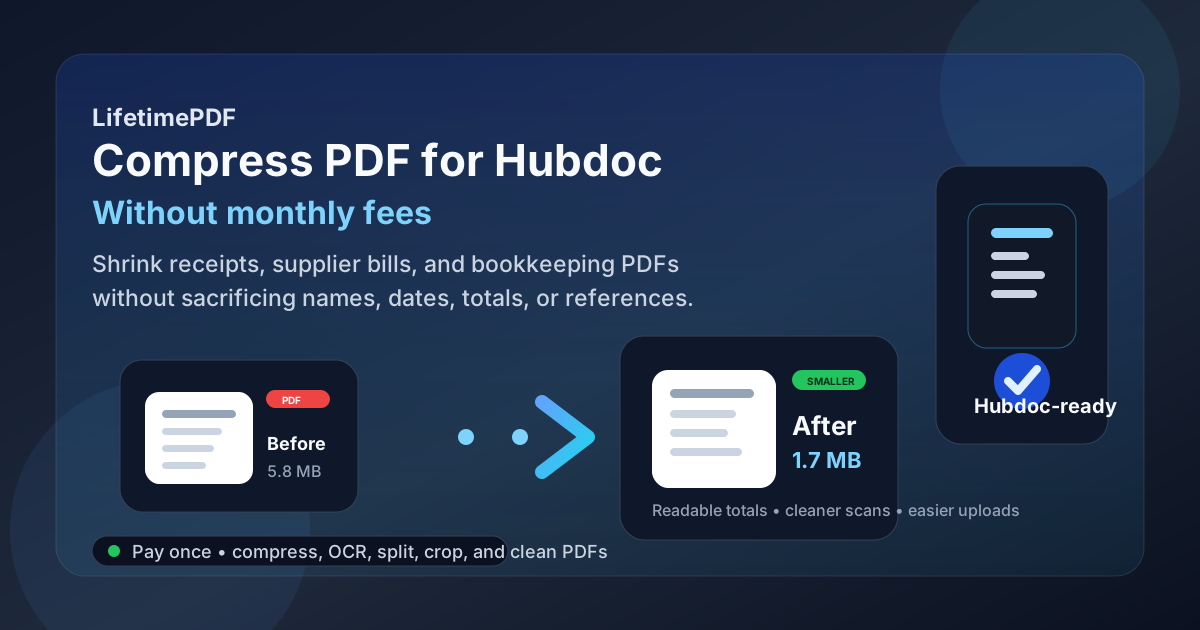
Table of contents
- Quick start: compress a Hubdoc PDF in about 2 minutes
- Why "without monthly fees" matters here
- Why smaller PDFs help in Hubdoc workflows
- What file size should a Hubdoc PDF be?
- Which compression level should you choose?
- Step-by-step: use LifetimePDF to shrink the file
- Best approach for common Hubdoc PDFs
- What to do if the PDF is still too large
- How to keep bookkeeping details readable
- Workflow habits that reduce PDF bloat
- Related LifetimePDF tools and useful reading
- FAQ (People Also Ask)
Quick start: compress a Hubdoc PDF in about 2 minutes
If your real goal is simply make this PDF smaller so it is easier to use with Hubdoc, this workflow is usually enough:
- Export or save the final receipt packet, supplier bill, statement excerpt, invoice backup, or bookkeeping PDF you actually plan to keep.
- Open Compress PDF.
- Upload the file and choose Medium compression first.
- Download the smaller result and compare the new size.
- Preview the weakest details: supplier names, dates, totals, taxes, invoice numbers, statement lines, and fine receipt text.
- If the file is still bulky or image-heavy, run OCR PDF, crop empty scan borders, delete duplicate pages, or split the packet before trying stronger compression.
Why "without monthly fees" matters here
The search intent is not only, "How do I make this PDF smaller?" It is also, "Can I finish this bookkeeping step without paying for one more recurring tool?" That is a fair question. PDF cleanup is usually finish-line work. The bill already exists. The receipt is already captured. The statement pages are already exported. The frustrating part is just getting the file into a lighter, cleaner state.
For Hubdoc users, that problem repeats. It is not one PDF forever. It is another supplier bill next week, another receipt batch at month end, another statement page during reconciliation, and another support packet when tax prep or audit follow-up gets messy. A pay-once PDF toolkit fits that pattern better than renting basic document maintenance month after month.
Practical reality: bookkeeping PDF cleanup is recurring work, but not something most teams want to keep renting forever.
Pay once, then compress, OCR, split, crop, merge, and clean bookkeeping PDFs whenever another Hubdoc document gets awkward.
Why smaller PDFs help in Hubdoc workflows
Hubdoc paperwork is usually ordinary, but it still needs to stay dependable. A receipt should open quickly. A supplier bill should stay readable without turning into a zooming exercise. A statement excerpt should still make sense when you revisit it later. A support packet should feel lighter, not more chaotic.
Smaller PDFs reduce friction at every stage. They upload faster, open more smoothly, and feel easier to store, resend, or check during bookkeeping cleanup. That matters even more when the source file came from a phone camera, scanner, screenshot, or export packed with empty space and oversized images doing most of the damage.
- Faster upload and review: useful when the file only exists to support a routine finance step.
- Less scan bloat: receipts and printed bills often carry shadows, borders, blank backsides, and image waste nobody needs.
- Cleaner storage: smaller PDFs are easier to archive and revisit during reconciliation, tax prep, or year-end work.
- Better downstream cleanup: leaner files are easier to OCR, split, merge, extract, and crop later.
Good compression is not about making the file tiny at any cost. It is about removing waste while keeping the proof inside the PDF easy to trust.
What file size should a Hubdoc PDF be?
There is no single perfect number for every workflow, but these ranges are a practical starting point:
| Document type | Practical target | Why it works |
|---|---|---|
| Text-heavy bill, invoice backup, or support PDF | < 1MB to 2MB | Usually enough for files that should stay quick to open and easy to review |
| Single receipt or short bookkeeping packet | < 500KB to 1.5MB | Often realistic if the source is already clean |
| Statement excerpt or multi-page support packet | 2MB to 5MB | Comfortable when the file includes several pages or mixed scan quality |
| Scan-heavy or camera-captured paperwork | As small as possible without hurting totals or references | The right answer is readability first, not chasing an arbitrary tiny number |
If the file is mostly text and simple tables, aim lower. If it depends on faint receipt print, small tax lines, handwritten notes, or photographic scans, accept a slightly larger file rather than making the record unreliable.
Which compression level should you choose?
For most Hubdoc PDFs, start with Medium compression. It usually removes enough file weight to help with upload and review while keeping dates, totals, taxes, supplier names, merchant names, and invoice references readable.
- Low compression: best when the source already looks clean and small details must stay especially sharp.
- Medium compression: the safest default for most receipts, bills, statement pages, and support packets.
- High compression: use carefully, mainly after you have already removed unnecessary pages or cleaned scan waste.
If you are unsure, do not guess. Compress once, then zoom in on the weakest-looking area before deciding whether to keep it.
Step-by-step: use LifetimePDF to shrink the file
- Open Compress PDF.
- Upload the Hubdoc-ready PDF.
- Start with Medium compression.
- Download the smaller result.
- Review supplier names, merchant names, dates, invoice numbers, totals, taxes, and statement references.
- If the PDF came from paper or a phone photo, run OCR PDF so the text is searchable too.
- Only after that, decide whether you need extra cleanup such as splitting, cropping, deleting pages, or another pass.
Best approach for common Hubdoc PDFs
Different bookkeeping files fail in different ways. The smartest compression choice depends on what the PDF actually is.
Receipts and expense evidence
Thermal-paper receipts are usually the most fragile. Compress them gently. Check the merchant name, date, total, tax detail if present, and any reference line before keeping the smaller version. If the receipt came from a phone camera, crop empty borders first.
Supplier bills and invoice backups
These are usually text-heavy and compress well. Medium compression is often enough. Review supplier names, invoice numbers, due dates, line items, tax lines, and totals. If the PDF includes several unrelated pages, extract only what the bookkeeping step actually needs.
Statement excerpts and bank-support pages
These files often look clean but can still carry unnecessary image weight, especially if they were printed, rescanned, or saved from screenshots. One balanced pass is usually enough. If not, clean the source before pushing compression harder.
Multi-page bookkeeping packets
Large packets often stay bulky because they contain too much, not because the compression is weak. Split long files, delete duplicate scans, or isolate the needed date range before trying to crush the entire packet harder.
Tax support or year-end evidence packs
These files need clarity more than heroically tiny size. If a PDF will be used to justify figures later, protect totals, taxes, supplier details, and references first. Clean structure beats aggressive compression almost every time.
What to do if the PDF is still too large
If one compression pass does not get the job done, the next move is usually structural cleanup, not brute force.
- Use Delete Pages for blank backsides, duplicate scans, or appendix pages nobody needs.
- Use Crop PDF for phone-capture margins and dead scan space.
- Use Extract Pages when only part of the packet matters.
- Use Split PDF when one oversized file is trying to serve several bookkeeping needs at once.
- Use Merge PDF only after you know which pages truly belong together.
Repeatedly compressing an already weak file is often the worst option. Clean the source structure first whenever possible.
How to keep bookkeeping details readable
Before you keep the smaller file, open it once and check the details that someone may rely on later. For Hubdoc prep, that usually means:
- supplier or merchant name
- invoice number or receipt reference
- transaction or statement date
- subtotal, tax, and final total
- payment reference or notes
- the faintest receipt section or smallest printed line
If any of those become uncomfortable to read, the file is too compressed for bookkeeping use. The goal is not a smaller file in theory. The goal is a smaller file that still works in practice.
Workflow habits that reduce PDF bloat
The easiest compression job is the one that starts with a cleaner source. A few habits help a lot:
- scan in decent light and avoid dark borders
- save only the pages the record actually needs
- do not combine unrelated receipts, bills, and statements into one giant PDF unless there is a real reason
- OCR paper-origin files early if you know they will be reused later
- check file metadata before sharing support documents outside your internal finance workflow
These habits do not just make smaller files. They make cleaner records.
Related LifetimePDF tools and useful reading
- Compress PDF for the main file-size reduction step
- OCR PDF for scanned receipts and paper bills
- Extract Pages for statement excerpts and partial support packets
- Delete Pages for blank scans and duplicates
- Crop PDF for phone-camera borders and scan waste
- Compress PDF for Hubdoc: Upload Smaller Receipts, Bills, and Bookkeeping Documents Faster if you want the broader workflow version without the cost-angle focus
- Compress PDF for QuickBooks Without Monthly Fees for a close accounting workflow comparison
- Compress PDF for Xero Without Monthly Fees for another bookkeeping comparison
- Compress PDF for Sage Without Monthly Fees for another finance-team companion page
- Compress PDF for Dext for an adjacent document-capture workflow
Need a pay-once setup for recurring bookkeeping cleanup? Use LifetimePDF to compress, OCR, split, crop, merge, and clean support files whenever another Hubdoc document gets awkward.
FAQ (People Also Ask)
How do I compress a PDF for Hubdoc without monthly fees?
Upload the file to LifetimePDF, start with Medium compression, download the smaller result, and review readability before you use it. If the PDF is still bulky, clean scan waste or split the packet before you compress again.
What file size should I aim for before uploading a PDF to Hubdoc?
Under 2MB is a strong target for ordinary receipts, supplier bills, statement excerpts, and text-heavy bookkeeping documents. Scan-heavy bundles often work well around 2MB to 5MB as long as the important figures still read clearly.
Will compression make bill totals or receipt text blurry?
It can if you compress too aggressively. Medium compression is usually the safest first pass, but you should always review totals, tax lines, dates, names, and invoice numbers before keeping the file.
Should I run OCR on scanned receipts or statement pages before storing them?
Usually yes. If the file came from a scanner or phone camera and the text is not selectable, OCR makes it easier to search, review, and reuse later, especially during reconciliation and tax follow-up.
Why use a pay-once PDF workflow instead of another subscription?
Because bookkeeping document prep happens over and over, but most businesses do not want to keep paying a monthly fee just to compress, OCR, crop, split, or clean support PDFs. A pay-once toolkit is a better fit for recurring maintenance work.