Compress PDF for GitLab: Keep Merge Request Attachments, Issue Docs, and Release PDFs Small Without Losing the Details
To compress a PDF for GitLab, upload the file to LifetimePDF's Compress PDF tool, start with Medium compression, and keep the smaller copy only if screenshots, diagrams, comments, and tables still read cleanly.
For most GitLab PDFs, under 2MB is a strong target for lightweight issue or merge request sharing, while longer release notes, architecture docs, and scan-heavy handoff files usually land best around 2MB to 5MB.
GitLab is where a lot of technical context becomes permanent team memory. A merge request may need a review packet. An issue may need bug evidence. A release thread may need a checklist, approval PDF, or exported report. A postmortem may need a clean appendix somebody can open on a phone while half awake. Smaller PDFs help because they reduce friction without changing the work itself. The goal is not to crush the file until it feels cheap. The goal is to make the PDF easier to upload, easier to open, and easier to trust when someone lands on it later.
Fastest path: run the GitLab PDF through LifetimePDF's Compress PDF tool on Medium, then do one quick readability check before you attach or replace the smaller copy.
Need the short version? Jump to Quick start: compress a GitLab PDF in under 2 minutes.
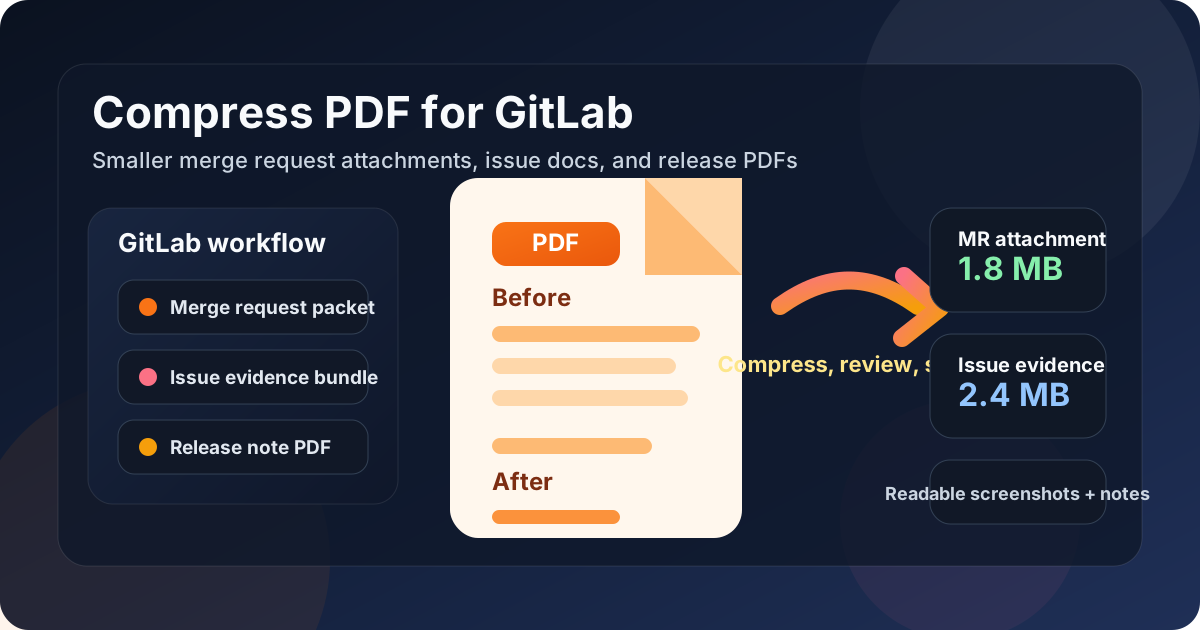
Table of contents
- Quick start: compress a GitLab PDF in under 2 minutes
- Why smaller PDFs help in GitLab workflows
- What file size should you aim for?
- Which compression level should you choose?
- Step-by-step: shrink a GitLab PDF with LifetimePDF
- Best strategy for common GitLab PDF types
- What if the PDF is still too large?
- How to keep merge request attachments and issue docs readable
- Workflow habits that reduce PDF bloat
- Related LifetimePDF tools and internal links
- FAQ (People Also Ask)
Quick start: compress a GitLab PDF in under 2 minutes
If your real goal is simply make this PDF smaller so it is easier to use in GitLab, this workflow is usually enough:
- Open Compress PDF.
- Upload the merge request packet, issue evidence file, release note, architecture appendix, audit packet, or scanned approval you want to shrink.
- Choose Medium compression first.
- Download the smaller file and compare the new size with the original.
- Open it once and check the smallest useful details: screenshots, arrows, labels, comments, tables, signatures, diagrams, and page references.
- If the file is still heavier than you want, use Split PDF or Extract Pages instead of forcing stronger compression across everything.
- If the PDF includes duplicate scans, oversized margins, or backup pages the thread does not need, remove that weight before compressing again.
Why smaller PDFs help in GitLab workflows
GitLab PDFs are rarely just passive storage. They usually support active work: code review, bug triage, security review, release prep, onboarding, vendor follow-up, or project handoff. When the file is heavier than it needs to be, every one of those moments gets slightly slower and slightly more annoying.
Compression is not only about saving space. It is a collaboration habit. Smaller PDFs upload faster, feel lighter in merge requests and issues, and are easier to reopen later when someone returns to the thread after a few days. That matters even more when the same file also moves into chat, docs, email, or internal wikis after the GitLab conversation does its job. On self-managed instances, lighter files also feel better for teams working behind VPNs or on slower remote connections.
Why compression usually helps
- Faster uploads: useful when you are attaching QA evidence, release notes, review docs, or incident summaries in the middle of active work.
- Smoother review: reviewers are more likely to open a lighter file immediately instead of postponing it.
- Better mobile access: smaller PDFs are less painful on phones and tablets during on-call review or quick approvals.
- Cleaner project history: oversized attachments make ordinary GitLab threads feel heavier than they need to.
- Easier cross-tool sharing: lighter PDFs move more comfortably into Slack, email, docs, and external support conversations.
- More practical archives: once the file is smaller, it is easier to store, forward, and reuse later.
What file size should you aim for?
There is no perfect number for every GitLab PDF, but a few practical ranges keep you from compressing harder than necessary:
| PDF type | Good target | Details you should protect |
|---|---|---|
| Focused issue attachment or short bug evidence pack | Under 2MB | Screenshot labels, arrows, timestamps, and the main explanation |
| Merge request review doc, product spec, or architecture note | 2MB to 4MB | Small table text, comments, diagrams, annotations, and decision notes |
| Release notes, handoff PDFs, and checklists | 2MB to 5MB | Status details, links, signatures, action items, and page references |
| Scan-heavy approval pack or audit appendix | 3MB to 6MB if needed | Fine print, initials, stamps, signatures, and the smallest readable text |
Under 2MB is a strong default when the file is short and focused. Once the document includes multiple screenshots, long appendices, or scan-heavy evidence, a slightly larger target is often the smarter choice. The right question is not How small can this go? It is How small can this go while still being easy to review and trust?
Which compression level should you choose?
Most GitLab PDFs do best when you begin with Medium compression. It usually cuts enough weight to make the file easier to attach and review while preserving the details people actually need.
Use Medium compression for most workflows
- Issue attachments with screenshots and short notes
- Merge request review docs with comments, diagrams, and table text
- Release notes that mix text, checklists, and a few visual elements
- Architecture or planning PDFs where clarity matters more than aggressive size reduction
Use Low compression when visual crispness matters most
Low compression makes sense for polished design reviews, printable handoffs, customer-facing PDFs, or documents with dense diagrams that need to stay especially sharp. If the file is already close to the size you want, Low can be enough.
Use stronger compression only after cleanup
High compression can help if the file is still too large for the real sharing path, but it is also where quality problems usually start showing up. Thin annotation lines soften first. Screenshot labels, diagram text, signatures, and small table cells usually follow. That is why stronger compression should usually come after page cleanup, not before it.
Step-by-step: shrink a GitLab PDF with LifetimePDF
- Start with the final shareable version. Remove obvious draft pages before you compress anything.
- Open Compress PDF. Upload the issue attachment, review doc, or release file.
- Choose Medium compression. That is the safest default for most GitLab workflows.
- Download the smaller copy. Compare the size so you know whether the change was meaningful.
- Do a readability pass. Check screenshot labels, arrows, comments, diagrams, dates, tables, signatures, and page numbers.
- Clean the structure if needed. Use Extract Pages, Delete Pages, or Crop PDF to remove weight that does not help the next reader.
- Keep the right version for the thread. The archive copy can be larger if needed; the GitLab-facing copy should be focused and easy to review.
The biggest mistake is treating every GitLab thread like it needs the full working packet. Often it does not. A lighter PDF with the right pages is usually more helpful than a full export that happens to be technically smaller.
Best strategy for common GitLab PDF types
Issue attachments and bug evidence packs
These often compress well because they are usually short but image-heavy. Medium compression is normally enough. Pay special attention to arrows, callouts, timestamps, and tiny UI labels because those are the first details that stop being useful when quality drops too far.
Merge request review docs and marked-up specs
These files depend on clarity more than tiny size. Review comments, linked references, table cells, and diagram labels need to stay easy to read. If one section gets fuzzy, reviewers are more likely to ignore the attachment or ask for a resend.
Release notes and handoff packets
These often grow because they mix summaries, checklists, screenshots, and backup details. Compression helps, but the bigger win often comes from removing repeated appendix pages or splitting the handoff packet into a main reader version and a backup appendix.
Scanned approvals, vendor forms, and audit appendices
These are the PDFs most likely to stay bulky. They also punish aggressive compression fastest because fine print, initials, signatures, and stamps can become annoyingly soft. Clean margins, delete blank pages, and split the appendix before you push compression harder.
What if the PDF is still too large?
If Medium compression does not bring the file down far enough, do not jump straight to the harshest setting. GitLab PDFs usually get smaller faster when you remove unnecessary pages and repeated visual sections first.
Try these fixes before pushing compression harder
- Split the appendix: keep the main issue evidence or handoff summary in one file and backup pages in another.
- Extract only the pages a reviewer needs: many threads do not need the full packet.
- Delete duplicate evidence: repeated screenshots and duplicate scans add size faster than most text pages.
- Crop wasted margins: oversized white borders, scan edges, and empty browser-print margins add weight without adding meaning.
- Compare versions: use Compare PDFs if you want to confirm that a trimmed copy still contains the important changes.
If you still need a smaller file after that, then try a stronger compression pass. But do it on the cleaned-up version, not the original full pack. That is usually how you get a better result without sacrificing clarity.
How to keep merge request attachments and issue docs readable
In GitLab PDFs, the details that matter are often small. A single annotation arrow, table cell, screenshot label, timestamp, signature, or page reference can change the meaning of the entire file. That is why a quick readability review matters more than chasing one more percentage point of file-size reduction.
Check these before you send the compressed file
- Screenshot labels, arrows, and callouts
- Diagram boxes, connectors, and legend text
- Comments, notes, and review annotations
- Tables, dates, version numbers, and page references
- Signatures, initials, stamps, and audit marks in scan-heavy PDFs
Workflow habits that reduce PDF bloat
The easiest file to compress is the one that was prepared with the handoff in mind. A few habits make GitLab PDFs easier to shrink and easier to use later:
- Attach only what the thread needs. A focused PDF beats a giant “just in case” packet.
- Separate main context from backup context. Reviewers usually need different pages than auditors or archive readers.
- Avoid repeated screenshots. If one capture proves the point, six near-identical versions usually do not help.
- Name files clearly. Clean filenames and metadata make later retrieval easier. Use PDF Metadata Editor if needed.
- Keep a lightweight thread-friendly version. The archive copy can stay fuller, but the working copy should be fast to open and easy to understand.
These habits matter because compression works best as the last tidy step, not as the rescue plan for an oversized packet that tried to do too many jobs at once.
Related LifetimePDF tools and internal links
If you work with GitLab PDFs regularly, these tools usually pair well with compression:
- Compress PDF for the first size-reduction pass
- Split PDF for long appendices and backup sections
- Extract Pages for reviewer-friendly subsets
- Delete Pages for duplicate scans, repeated screenshots, and nonessential filler
- Crop PDF for scanner borders and oversized margins
- OCR PDF when a cleaned scan also needs searchable text
You may also find these guides useful if you want broader companion coverage around the same workflow:
- Compress PDF for GitLab: Upload Smaller Merge Request Attachments and Project Docs Faster
- Compress PDF for GitLab Without Monthly Fees
- Compress PDF for GitHub
- Compress PDF for Jira
- Compress PDF for Confluence
Bottom line: for most GitLab PDFs, start with Medium compression, review the smallest useful details once, and trim page weight before using stronger compression.
FAQ (People Also Ask)
How do I compress a PDF for GitLab?
Upload the PDF to a compressor, start with Medium compression, and keep the smaller copy only if screenshots, diagrams, comments, and table text still look clear. Medium compression is usually the safest first pass because it lowers file size without making review annoying.
What file size should I aim for with GitLab PDFs?
Under 2MB works well for focused issue attachments and quick reviewer downloads. Longer merge request packets, release notes, architecture docs, and scan-heavy handoff files usually land best around 2MB to 5MB as long as the smallest useful details still read clearly.
Will compression make GitLab screenshots or diagrams blurry?
It can if you compress too aggressively. That is why Medium compression is usually the best starting point. Always review screenshot labels, arrows, diagram text, tables, and notes before you keep the smaller file.
Should I split a large GitLab PDF instead of compressing it harder?
Often, yes. If one PDF combines the main issue evidence with long appendices, duplicate screenshots, vendor paperwork, or audit backup pages, splitting it usually works better than forcing stronger compression across the whole file.
Which LifetimePDF tools pair best with GitLab workflows?
Compress PDF is the main starting point. Split PDF, Extract Pages, Delete Pages, Crop PDF, Compare PDFs, OCR PDF, and PDF Metadata Editor are especially useful when you want smaller, cleaner GitLab attachments without sending the whole working packet every time.