Compress PDF for Elastic Email: Send Campaign Attachments, Transactional PDFs, and Customer Files Faster
To compress a PDF for Elastic Email, upload the final file to LifetimePDF's Compress PDF tool, start with Medium compression, and keep the smaller copy only after it opens cleanly from your real Elastic Email campaign, automation, or SMTP or API send.
For most Elastic Email PDFs, under 2MB is a comfortable target for invoices, one-pagers, confirmations, and simple downloads, while longer brochures, proposals, reports, and image-heavy customer files usually work best around 2MB to 5MB after light cleanup.
In Elastic Email, the problem is rarely that the PDF exists somewhere in the workflow. The real problem is whether the file still feels easy to open at the exact moment someone taps it from a mobile inbox, an automated message, or a time-sensitive customer email. The best PDF is not the smallest one. It is the lightest version that still looks trustworthy, readable, and worth acting on.
Fastest path: run the Elastic Email PDF through LifetimePDF's Compress PDF tool on Medium, then test the smaller file from the exact send path real readers use.
In a hurry? Jump to Quick start: compress an Elastic Email PDF in about 2 minutes.
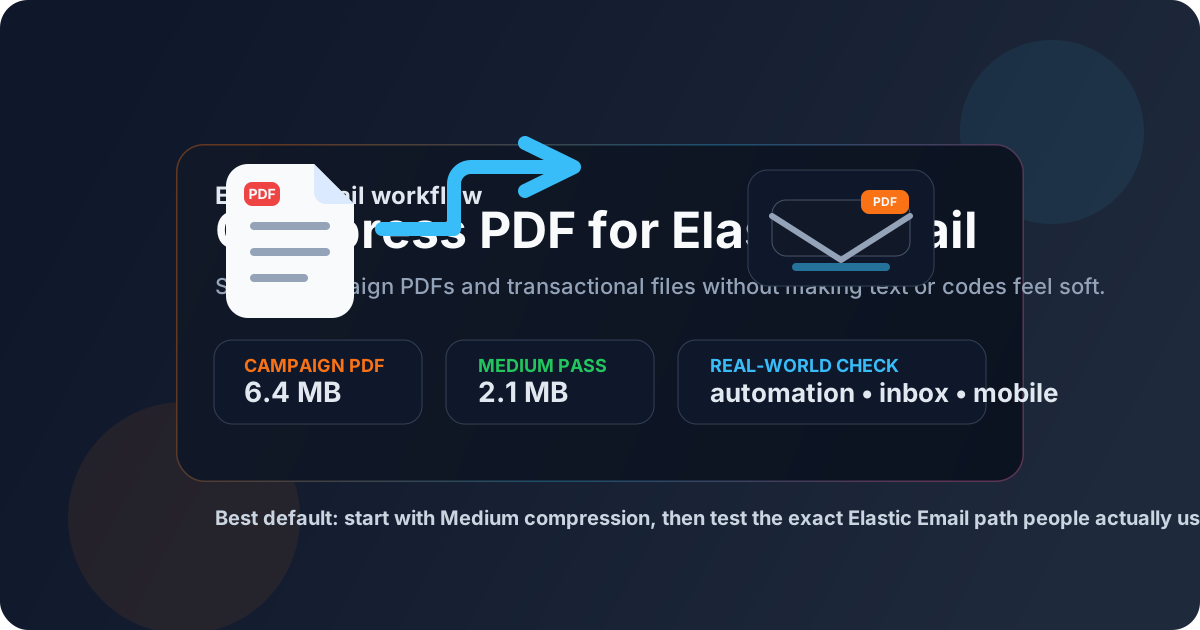
Table of contents
- Quick start: compress an Elastic Email PDF in about 2 minutes
- Why Elastic Email PDFs get heavy so quickly
- Where large PDFs create friction in an Elastic Email workflow
- What file size should you aim for?
- Which compression level should you choose?
- Step-by-step: shrink an Elastic Email PDF with LifetimePDF
- Best strategy for common Elastic Email PDF types
- What if the file is still too big?
- How to keep text, tables, and QR codes readable
- Workflow habits that keep Elastic Email PDFs lighter
- Related LifetimePDF tools and useful internal reading
- FAQ (People Also Ask)
Quick start: compress an Elastic Email PDF in about 2 minutes
If your real goal is simply make this Elastic Email PDF faster to open without making it look worse, this workflow is usually enough:
- Use the exact PDF you plan to send or link, not a bloated draft or internal archive copy.
- Open Compress PDF.
- Choose Medium compression first.
- Download the smaller copy and compare the file size with the original.
- Test that copy in the real Elastic Email path: campaign, automation, invoice email, onboarding message, or SMTP or API workflow.
- Keep the new version only if the busiest page still feels clear on desktop and on a phone.
Why Elastic Email PDFs get heavy so quickly
Elastic Email PDFs often get larger than they need to be because one file ends up doing too many jobs at once. A campaign download still contains print-quality images. A proposal includes internal reference pages that only the team needs. An automated welcome packet keeps every appendix, screenshot, and version note even though the reader only needs a clean first pass.
The text itself is rarely the main problem. File weight usually comes from oversized images, repeated cover pages, broad margins, appendix sections, embedded screenshots, and a single PDF trying to serve both as an internal master and as a customer-facing asset. Compression helps, but it works best when the file is already focused on the reader.
- Invoices and confirmations get heavy when logos, scans, and print-ready backgrounds are exported larger than the recipient needs.
- Lead magnets and download assets bloat when screenshots, diagrams, and decorative pages stay at full production weight.
- Proposals and customer documents become clumsy when internal notes, duplicate sections, or optional appendix pages remain in the send copy.
- Transactional PDFs lose their speed advantage when the file is visually polished but not optimized for fast mobile opens.
Where large PDFs create friction in an Elastic Email workflow
A large PDF does not just add a few seconds of waiting. It slows the exact moments where the message is supposed to feel quick, useful, and low-friction. The most common trouble spots in an Elastic Email workflow are usually:
- campaign follow-ups where readers click expecting a lightweight resource or sales file
- automated welcome or onboarding messages where a PDF should feel fast on mobile, not heavy
- transactional sends where invoices, receipts, statements, or confirmations need to open right away
- sales or account emails where proposals, one-pagers, and agreements should feel polished without dragging
- linked PDF downloads where the file still needs to open cleanly even if it is not attached directly
That is why “the message was sent” is not the same as “the PDF experience is good.” In Elastic Email, the send is only half the job. The other half is whether the file still feels easy to open and trust when it lands.
What file size should you aim for?
There is no single perfect number for every Elastic Email workflow, but these ranges are a strong practical starting point:
| Elastic Email PDF type | Comfortable target | Why that range works |
|---|---|---|
| Invoice, receipt, one-page guide, confirmation | 500KB to 2MB | Fast enough for inbox opens while keeping text, branding, and small details crisp |
| Proposal, short report, brochure, onboarding PDF | 2MB to 4MB | Leaves room for tables, charts, screenshots, or layout polish without making the file feel clumsy |
| Image-heavy catalog, deck, or customer packet | 3MB to 5MB | Still reasonable if the visuals earn the weight and the smallest useful text stays readable |
| Very large bundle | Split it or link it | If one PDF is doing too many jobs, restructuring usually works better than forcing harder compression |
The smarter question is not How tiny can I make this? It is How small can I make it before the least readable but still important detail starts to feel weak?
Which compression level should you choose?
For Elastic Email PDFs, Medium compression is usually the safest first move. It tends to cut enough weight to matter while preserving body text, logos, tables, charts, screenshots, signatures, and QR codes.
- Light compression works when the PDF is already fairly lean and only needs a modest reduction.
- Medium compression is the best default for most campaign files, invoices, download assets, and customer documents.
- Strong compression is better as a fallback after cleanup, not as your first click.
If Medium still leaves the file too heavy, the structure often needs work. Remove appendix pages, trim oversized images, or split the PDF before you push quality harder than necessary.
Step-by-step: shrink an Elastic Email PDF with LifetimePDF
- Start with the final send copy. Use the exact PDF readers will receive or open, not the archive master.
- Open Compress PDF.
- Choose Medium compression first. That is usually the cleanest starting point for Elastic Email assets.
- Download the smaller version. Check whether the size reduction is meaningful.
- Test the real delivery path. Send or open the file from the exact Elastic Email campaign, automation, transactional message, or API flow you really use.
- Open the live file once on desktop and once on mobile. Look at small text, tables, logos, QR codes, signatures, and the page carrying the next action.
- Only then replace the original everywhere. If quality still feels trustworthy, publish the lighter copy. If not, clean up the structure and compress again.
Best practical sequence: compress first, test the real Elastic Email path second, trim pages third, and only then consider stronger compression.
Best strategy for common Elastic Email PDF types
Invoices, receipts, and confirmations
These should open fast and feel unquestionably clear. Small totals, references, logos, and payment details all need to survive compression. For many customer-facing messages, getting the file under 2MB without softening key details is the sweet spot.
Lead magnets and campaign downloads
These often grow heavy because screenshots, diagrams, and decorative layouts stay at high export settings. If the PDF is supposed to feel like a quick win after a click, remove anything that does not help the reader immediately. A lighter guide often converts better simply because it feels easier to access.
Proposals, one-pagers, and customer documents
These need to feel polished and trustworthy. Tables, pricing blocks, signatures, and brand visuals matter more than chasing the absolute smallest file size. Medium compression is the right starting point, but always check the smallest text and the main call-to-action page before replacing the original.
Reports and image-heavy PDFs
These become bulky when charts, screenshots, and exported graphics are left larger than needed. If the file is growing beyond a comfortable range, trim appendix pages, reduce repeated visuals, or split the report into the core version and the deep appendix.
Welcome packets and onboarding bundles
These are often useful but overloaded. If one PDF tries to explain every policy, every next step, and every reference page at once, the first open suffers. A smaller starter PDF plus a separate deeper reference file usually creates a better customer experience than one oversized bundle.
What if the file is still too big?
If you compressed the PDF and it still feels wrong for Elastic Email, the problem may not be the compressor. The file may still carry too much structural bloat for compression alone to solve.
- Split the PDF if one file combines the main customer asset with terms, appendices, archive material, or bonus pages.
- Delete repeated pages such as duplicate covers, old versions, or internal notes.
- Crop wide margins when the layout wastes space without improving readability.
- Keep an archive copy and a send copy if the heavier master still matters internally.
- Link a very large document instead of forcing it into one lightweight attachment when that creates a cleaner reader experience.
How to keep text, tables, and QR codes readable
A smaller PDF is only better if it still works. Before you replace the original file, check the details most likely to break trust:
- small body text, totals, footnotes, and instructions
- pricing tables, comparison blocks, and line items
- logos, screenshots, product thumbnails, and charts
- QR codes, barcodes, confirmation codes, and tracking numbers
- signature areas, approval blocks, and date fields
- the busiest page in the whole PDF, not only the cleanest page
If the smallest useful detail still feels easy to trust at normal laptop zoom and on a phone download, the file is probably compressed enough.
Workflow habits that keep Elastic Email PDFs lighter
- Make a reader copy and a master copy when the same PDF does not need to do both jobs.
- Compress after the final export so you optimize the exact file Elastic Email will deliver.
- Keep campaign and automation assets focused and move archive-only material somewhere else.
- Test the real Elastic Email path after replacing the file instead of judging quality only from the local folder.
- Clean metadata before sending with PDF Metadata Editor if you want the download properties to look more polished.
- Prefer links for very large reference files when that gives readers a cleaner experience than a bulky attachment.
Compression works best as final polish, not as a rescue plan for a PDF that was oversized long before it reached the inbox.
Related LifetimePDF tools and useful internal reading
If Elastic Email is part of your campaign, customer, or transactional workflow, these tools and articles pair well with this guide:
- Compress PDF for the first size-reduction pass.
- Split PDF for large packets or long reports that should become smaller parts.
- Extract Pages when only the core section should be delivered.
- Delete Pages to remove stale appendix pages or duplicate covers.
- Crop PDF to trim wasted margins from print-oriented layouts.
- PDF Metadata Editor for cleaner download properties.
- Compress PDF for SendGrid.
- Compress PDF for Mailgun.
- Compress PDF for Postmark.
- Compress PDF for Braze.
- Lifetime access if PDF cleanup is a recurring part of your delivery workflow.
Bottom line: for most Elastic Email PDFs, start with Medium compression, test the real send path, and trim page weight before you use stronger compression.
FAQ (People Also Ask)
How do I compress a PDF for Elastic Email?
Upload the final PDF to a compressor, start with Medium compression, download the smaller copy, and test the exact Elastic Email send path before replacing the original. Medium is usually the safest first pass because it lowers file size without making text, charts, tables, logos, or QR codes feel unreliable.
What file size should I aim for in Elastic Email?
For many invoices, one-pagers, confirmations, and short download assets, under 2MB is a comfortable target. Longer brochures, proposals, reports, and image-heavy customer documents often work best around 2MB to 5MB as long as the smallest useful text still reads clearly.
Should I attach the PDF or link to it in Elastic Email?
That depends on the workflow, but size matters either way. Attachments should feel quick to download from an inbox, while linked PDFs should still open cleanly on mobile without a long wait. Compression helps both cases when you keep the final reader experience in mind.
Will PDF compression make my charts, logos, or QR codes blurry?
It can if you compress too aggressively. That is why Medium compression is the best place to start. Always check the smallest body text, logos, tables, QR codes, and any page carrying the next action before replacing the original.
Should I split a large PDF instead of compressing it harder for Elastic Email?
Often, yes. If one PDF combines the main customer file with appendix pages, terms, extra screenshots, or archive material, splitting it usually creates a cleaner Elastic Email experience than forcing the whole bundle through aggressive compression.
Published by LifetimePDF - Pay once. Use forever.