Compress PDF for CCH Tagetik: Keep Consolidation, Close, and Compliance PDFs Small Without Losing Review Detail
To compress a PDF for CCH Tagetik, upload the final consolidation support packet, close binder, disclosure appendix, or compliance review PDF to LifetimePDF's Compress PDF tool, start with Medium compression, and keep the smaller copy only if balances, note references, footnotes, comments, and sign-off details still read clearly.
For most CCH Tagetik workflows, under 2MB is a strong target for text-heavy support files, while mixed close binders, disclosure packages, and scan-backed approvals usually work better around 2MB to 5MB after light cleanup.
CCH Tagetik PDFs usually get heavy for a simple reason: review packets keep growing after the numbers are already done. A clean export turns into a binder with screenshots, note support, signed approvals, policy snippets, and old appendix pages that nobody removes. The practical fix is usually balanced compression plus a little structural cleanup, not forcing the harshest setting and hoping the footnotes survive.
Fastest path: save the final CCH Tagetik-ready PDF, run it through LifetimePDF's Compress PDF tool at Medium, then use OCR, page cleanup, or splitting only if the file is still heavier than the next close or compliance step really needs.
Need the short version? Jump to Quick start: compress a CCH Tagetik PDF in about 2 minutes.
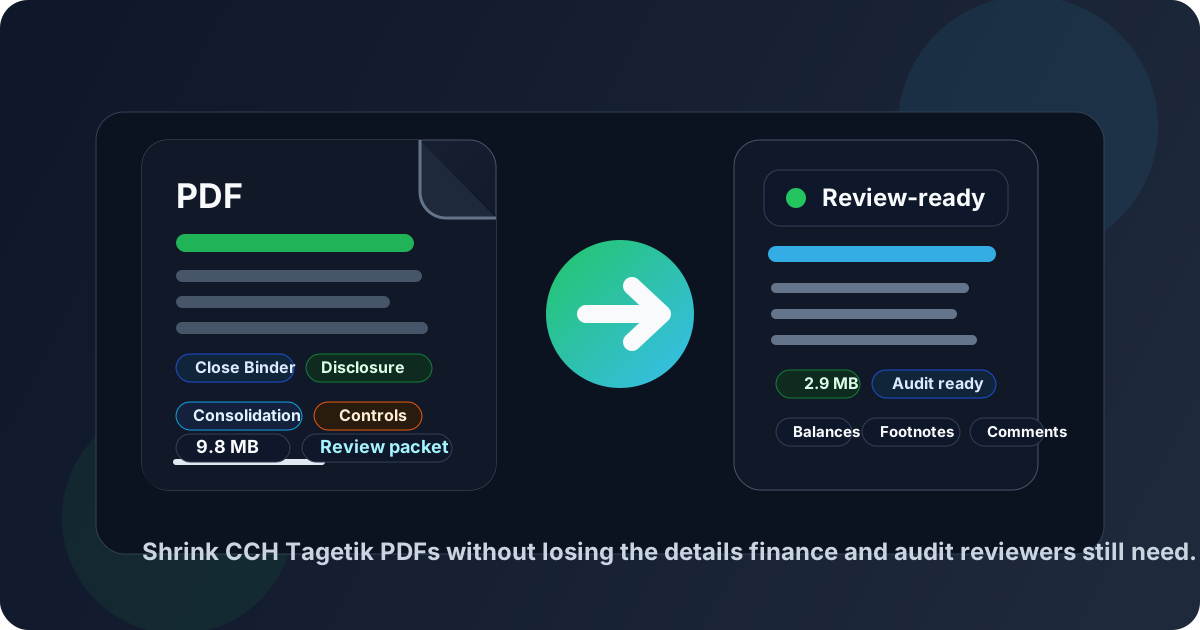
Table of contents
- Quick start: compress a CCH Tagetik PDF in about 2 minutes
- Why CCH Tagetik PDFs get bulky
- What file size should you aim for?
- Which compression level should you choose?
- Step-by-step: shrink a CCH Tagetik PDF with LifetimePDF
- Best approach for common CCH Tagetik document types
- What to clean up before compressing harder
- How to keep review detail readable
- Workflow habits that reduce PDF bloat
- Related LifetimePDF tools and useful reading
- FAQ (People Also Ask)
Quick start: compress a CCH Tagetik PDF in about 2 minutes
If your real goal is simply make this CCH Tagetik PDF smaller so it is easier to review, upload, or archive, this workflow is usually enough:
- Start with the consolidation support packet, close binder, journal backup, disclosure appendix, or compliance review PDF you actually plan to send.
- Open Compress PDF.
- Upload the file and choose Medium compression first.
- Download the smaller result and compare the new size with the original.
- Preview the weak spots: balances, entity names, note references, footnotes, comments, dates, and approval details.
- If the PDF came from a scanner or photographed paperwork, run OCR PDF so the final document is searchable as well as smaller.
- If the packet still feels bulky, split it, extract only the useful pages, or remove duplicate appendices before trying stronger compression.
Why CCH Tagetik PDFs get bulky
CCH Tagetik often sits near the point where support has to become reviewable proof. That means the PDFs tied to it are rarely single clean exports. One packet may combine consolidation schedules, note support, journal explanations, screenshots, close checklists, statutory reporting backup, and scanned sign-offs pulled from several systems. Each part may feel reasonable by itself. The size problem usually appears after a few rounds of exporting, merging, printing, scanning, and attaching backup pages that nobody trims.
Smaller PDFs help because they reduce friction in the part of the process where timing is already tight. They open faster, upload more smoothly, and are easier to revisit when someone needs to confirm a balance, trace a note reference, review a footnote, or answer an audit question later. The goal is not to flatten the support. The goal is to remove wasted image weight while keeping the packet trustworthy.
- Faster review cycles: lighter files are easier to open during close, consolidation, disclosure refreshes, and certification review.
- Less upload drag: useful when multiple support packets need to move quickly in the same reporting window.
- Better archive quality: smaller files are easier to store, resend, and recheck later.
- Less scan bloat: signed approvals, photographed paperwork, and screenshot-heavy support often weigh more than the finance detail itself.
- Smoother audit follow-up: a clean smaller PDF is easier to split, search, compare, and reuse when questions come back later.
What file size should you aim for?
There is no perfect number for every CCH Tagetik workflow, so practical ranges are more useful than chasing the tiniest result possible. You want a file that feels easy to open and review while still looking dependable under close pressure.
| PDF type | Good target | Details you should protect |
|---|---|---|
| Text-heavy consolidation support or journal backup | Under 2MB | Balances, entity labels, account references, dates, and comments |
| Mixed close binder or disclosure support packet | 2MB to 4MB | Tables, footnotes, supporting screenshots, references, and sign-offs |
| Scanned approvals, legacy support, or image-heavy compliance evidence | 3MB to 6MB if needed | Signatures, initials, stamps, small print, and reviewer annotations |
| Oversized archive-style packet with many appendices | Usually better split than compressed harder | Structure, section order, and the pages each reviewer actually needs |
Under 2MB is a strong default when the PDF is short and text-heavy. Once the file includes repeated appendices, scanned sign-offs, wide tables, screenshot-heavy sections, or merged backup from several systems, a slightly larger target is often the smarter choice. The better question is not How small can this get? It is How small can this get while still being easy to review and trust?
Which compression level should you choose?
Most CCH Tagetik PDFs do best when you begin with Medium compression. It usually cuts enough size to make the file easier to share while preserving the details people still need during close, disclosure, and compliance review.
Use Medium compression for most CCH Tagetik workflows
- Consolidation support with tables and commentary
- Journal backup PDFs with references and approval detail
- Close binders that mix text, screenshots, and sign-offs
- Disclosure support packets and review-ready compliance files
Use Low compression when small visual details matter most
Low compression makes sense when the PDF is already near the right size or when the file contains fine visual detail that needs to stay extra sharp. That can be useful for dense disclosure tables, narrow footnotes, polished board-facing pages, or close packets where the smallest note reference matters.
Use stronger compression only after cleanup
High compression can help if the file is still too large for the real handoff path, but it is also where quality problems usually begin. Small balances, footnotes, table text, scan-backed initials, and reference IDs often soften first. That is why stronger compression should usually come after page cleanup, not before it.
Step-by-step: shrink a CCH Tagetik PDF with LifetimePDF
- Start with the final shareable version. Remove obvious duplicate appendices, outdated support pages, or extra archive material before you compress anything.
- Open Compress PDF. Upload the consolidation packet, review binder, disclosure appendix, sign-off PDF, or support schedule.
- Choose Medium compression. That is the safest default for most CCH Tagetik documents.
- Download the smaller copy. Compare the size so you can see whether the reduction was actually meaningful.
- Do one readability pass. Check balances, entity names, dates, footnotes, note references, comments, and approval areas.
- Clean the structure if needed. Use Extract Pages, Delete Pages, or Crop PDF to remove weight that does not help the next reviewer.
- Keep the right version for the real handoff. The archive copy can stay fuller if needed, but the outgoing copy should be focused and easy to open.
A common mistake is trying to solve a structure problem with harsher compression. If the packet is oversized because it contains repeated appendices, duplicate exports, scan-heavy filler, or pages the next reviewer does not need, cleanup usually does more good than another compression pass.
Best approach for common CCH Tagetik document types
Consolidation support and entity packs
These usually need clarity more than dramatic file-size cuts. The risky details are often small: balances, entity names, mapping references, period labels, and comments tied to a specific note or line item. Medium compression is usually enough. If the file is still bulky, remove duplicate support pages or split backup appendices away from the core review copy instead of pushing the whole packet harder.
Journal backup and close review files
These packets often grow because they combine exported schedules, screenshots, sign-off pages, scanned approvals, and commentary from different sources. Compression helps, but the bigger win often comes from deleting duplicate backup, cropping scan borders, and separating summary pages from detail that only archive users need.
Disclosure support and statutory reporting packets
These files depend on readability. Footnotes, narrow tables, cross-references, and inline comments all need to stay easy to follow. If one important reference becomes fuzzy, the file may technically be smaller but practically worse. In these cases, Low or Medium compression plus smart splitting is usually the better move.
Scanned approvals and legacy compliance evidence
These are often the heaviest pages in the set. They also punish aggressive compression fastest because signatures, initials, stamps, and fine print can become soft or uneven. Clean margins, delete blank pages, and run OCR PDF before pushing compression harder.
What to clean up before compressing harder
If Medium compression does not bring the file down far enough, do not jump straight to the harshest setting. CCH Tagetik PDFs usually get smaller faster when you remove unnecessary sections and repeated visual weight first.
Try these fixes before pushing compression harder
- Split the packet: keep the summary or core review file in one PDF and backup detail in another.
- Extract only the pages the next reviewer needs: many recipients do not need the full archive-style binder.
- Delete repeated support pages: duplicate scans, old versions, and repeated screenshots add size fast.
- Crop wasted borders: scanner edges and broad white margins add weight without adding meaning.
- Compare versions: use Compare PDFs if you want to confirm a trimmed copy still contains the important differences and support pages.
If you still need a smaller file after that, then try a stronger compression pass. But do it on the cleaned-up version, not the original oversized packet. That is usually how you get a better result without sacrificing the details that matter.
How to keep review detail readable
In CCH Tagetik-related PDFs, the details that matter are often small. One balance, one note reference, one disclosure footnote, or one sign-off detail can change how a reviewer interprets the entire packet. That is why a quick readability check matters more than squeezing out one more percentage point of file-size reduction.
Check these before you send the compressed file
- Balances, entity names, account descriptions, and period labels
- Footnotes, cross-references, dates, and table captions
- Commentary blocks, journal references, and sign-off notes
- Screenshots, appendix references, and evidence labels
- Signatures, initials, and fine print if scans are included
Workflow habits that reduce PDF bloat
The easiest file to compress is the one that was prepared with the handoff in mind. A few habits make CCH Tagetik PDFs easier to shrink and easier to use later:
- Separate summary from backup detail. Reviewers and archive folders often need different versions.
- Remove duplicate appendices early. Repeated support pages make compression work harder for no real benefit.
- Keep scan quality clean at the source. Straight, well-cropped scans compress better and stay more readable.
- Name files clearly. Clean filenames and metadata make later retrieval easier. Use PDF Metadata Editor if needed.
- Keep a lightweight outgoing version. The archive copy can stay fuller, but the share-ready copy should be fast to open and easy to understand.
These habits matter because compression works best as the last tidy step, not as the rescue plan for a packet that tried to do too many jobs at once.
Related LifetimePDF tools and useful reading
If you work with CCH Tagetik PDFs regularly, these tools usually pair well with compression:
- Compress PDF for the first size-reduction pass
- Split PDF for oversized close binders and multi-section support packets
- Extract Pages for audience-specific subsets
- Delete Pages for duplicate support and unnecessary filler
- Crop PDF for scan edges and wasted margins
- OCR PDF when a cleaned scan also needs searchable text
You may also find these guides useful if you want related coverage around close, consolidation, and reporting workflows:
- Compress PDF for CCH Tagetik: Upload Smaller Consolidation, Close, and Compliance PDFs Faster
- Compress PDF for OneStream
- Compress PDF for Workiva
- Compress PDF for FloQast
- Compress PDF for BlackLine
Bottom line: for most CCH Tagetik PDFs, start with Medium compression, review the smallest useful details once, and trim packet weight before reaching for stronger compression.
FAQ (People Also Ask)
How do I compress a PDF for CCH Tagetik?
Upload the CCH Tagetik-ready PDF to a compressor, start with Medium compression, and keep the smaller copy only if balances, note references, footnotes, comments, and sign-off details still read clearly. Medium compression is usually the safest first pass because it reduces size without making close and compliance review harder.
What file size should I aim for with CCH Tagetik PDFs?
Under 2MB works well for text-heavy consolidation support, journal backup, and focused close documentation. Mixed disclosure binders, scan-backed approvals, and broader compliance packets usually land best around 2MB to 5MB as long as the smallest useful details still read clearly.
Will compression blur footnotes or balances in CCH Tagetik PDFs?
It can if you compress too aggressively. That is why Medium compression is usually the best starting point. Always review balances, note references, footnotes, entity labels, comments, and sign-off details before replacing the original file.
Should I split a large CCH Tagetik support packet instead of compressing it harder?
Often, yes. If one PDF combines the summary, disclosure backup, scans, approvals, and archive detail, splitting it usually works better than forcing stronger compression across the whole packet.
Which LifetimePDF tools pair best with CCH Tagetik workflows?
Compress PDF is the main starting point. Split PDF, Extract Pages, Delete Pages, OCR PDF, Crop PDF, Compare PDFs, and PDF Metadata Editor are especially useful when you want smaller, cleaner support packets without sending more pages than the next reviewer actually needs.