Compress PDF for Azure DevOps: Keep Work Item Attachments, Review Docs, and Sprint PDFs Easy to Share
To compress a PDF for Azure DevOps, upload the file to LifetimePDF's Compress PDF tool, start with Medium, and keep the smaller copy only if screenshots, tables, comments, diagrams, and small text still read clearly.
If the PDF only partly matters to the bug, pull request, sprint review, or approval, extract the needed pages first so teammates download less and find the context faster.
The real goal is not just making a PDF smaller. It is making the attachment easier to move through Azure DevOps without turning review evidence, handoff notes, release approvals, architecture docs, or sprint summaries into fuzzy junk. A slightly larger PDF that stays trustworthy is usually more useful than a tiny file that made the screenshots blurry, the comments unreadable, or the diagram labels impossible to follow.
Fastest path: compress the real attachment on Medium, review the critical details once, then extract or split pages only if the file is still bulkier than the work item actually needs.
Want the quick version? Jump to Quick start: compress a PDF for Azure DevOps in under 2 minutes.
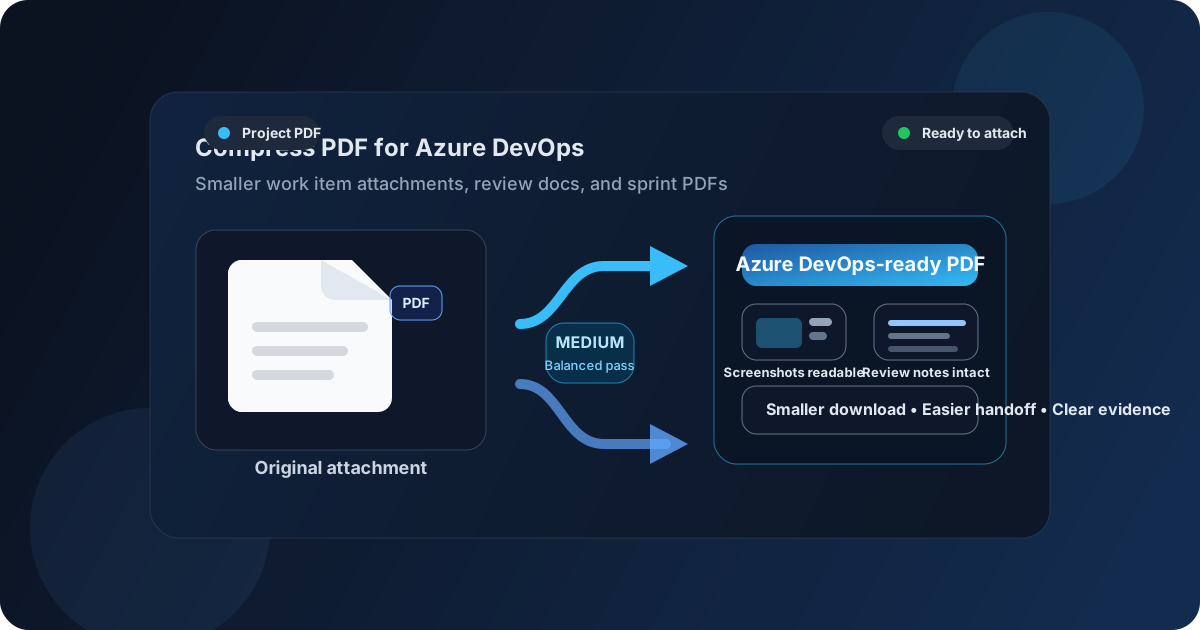
Table of contents
- Quick start: compress a PDF for Azure DevOps in under 2 minutes
- Why smaller PDFs help in Azure DevOps
- What file size should you aim for?
- Which compression level should you choose?
- Step-by-step: shrink an Azure DevOps PDF with LifetimePDF
- Common Azure DevOps PDFs that benefit from compression
- When splitting or extracting pages is smarter than more compression
- Readability checks before attaching the smaller file
- Workflow habits that keep project files cleaner
- Related LifetimePDF tools and internal links
- FAQ (People Also Ask)
Quick start: compress a PDF for Azure DevOps in under 2 minutes
If your goal is simply make this PDF easier to attach and review in Azure DevOps, this workflow is usually enough:
- Open Compress PDF.
- Upload the bug evidence packet, sprint summary, architecture document, wiki export, approval PDF, or pull request review file you actually plan to share.
- Choose Medium compression first.
- Download the smaller copy and compare the new size with the original.
- Open it once and check screenshots, ticket comments, tables, code snippets, labels, signatures, and any detail another person must trust.
- If only part of the file matters, use Extract Pages or Split PDF instead of forcing harsher compression on the whole document.
- If the PDF is a scan, use OCR PDF before sharing it.
Why smaller PDFs help in Azure DevOps
Azure DevOps attachments usually support active work, not long-term cold storage. They show up in bug triage, incident review, pull request discussions, QA evidence, sprint planning, release readiness, vendor approvals, and handoffs between teams. When a PDF is much heavier than it needs to be, every one of those moments gets slower and slightly more annoying.
Compression helps because it reduces raw file weight, but the bigger win is usually better collaboration. Smaller PDFs open faster, download faster, feel less clumsy in shared threads, and are easier to move into Teams, email, SharePoint, or a compliance folder later. That matters even more when teammates are remote, on VPN, on slower home internet, or reviewing the attachment from a laptop during a meeting instead of from a perfect desktop setup.
Why lighter PDFs usually work better
- Faster uploads: useful when you are attaching evidence during bug triage or trying to keep a sprint ticket moving.
- Less review friction: teammates are more likely to open a clean 2MB or 4MB PDF immediately than a bloated file they assume will be annoying.
- Cleaner project history: ordinary work items and review threads stay easier to navigate when every attachment is not oversized.
- Better cross-tool reuse: smaller files are easier to send again in email, chat, documentation, or customer follow-up.
- Smarter handoffs: a focused PDF usually communicates better than a giant all-purpose document with lots of irrelevant pages.
What file size should you aim for?
There is no universal perfect number because a one-page signoff behaves differently from a 30-page bug appendix, a screenshot-heavy validation pack, or a scan-based approval bundle. Still, practical targets help you avoid compressing harder than the workflow really needs.
| PDF type | Good target | What you should protect |
|---|---|---|
| Text-first work item note, approval, or summary | Under 5MB | Headings, comments, tables, page numbers, and small body text |
| Screenshot-heavy evidence pack or review doc | Often 3MB to 8MB | UI labels, timestamps, error messages, and annotations |
| Long sprint report, architecture packet, or appendix bundle | Often better split than forced smaller | Section boundaries, diagrams, references, and context pages |
| Scanned or image-heavy PDF | Depends on cleanup quality | Sharp text, searchable OCR output, signatures, stamps, and orientation |
Under 5MB is a strong default for many everyday Azure DevOps attachments. Once a file is full of screenshots, diagrams, scan pages, or exported evidence, the smarter question becomes How small can this go while still being easy for another human to trust? That usually matters more than hitting an arbitrary tiny target.
Which compression level should you choose?
Most Azure DevOps PDFs do best when you begin with Medium compression. It usually cuts enough weight to improve sharing while keeping screenshots, tables, comments, and labels readable.
Use Medium compression for most workflows
- bug evidence packs with screenshots and short notes
- pull request review docs with comments or diagrams
- sprint recaps, status packets, and planning summaries
- architecture notes, approvals, and wiki exports
Use Low compression when small details matter most
Low compression makes sense when the file is already close to a comfortable size and you want especially sharp diagrams, signatures, dense tables, code screenshots, or tiny labels to stay crisp.
Use stronger compression only after cleanup
High compression can help if the file still feels too heavy for the actual handoff path, but this is also where quality problems usually start. Small text softens first. Then screenshot labels, comments, timestamps, and fine diagram detail start to suffer. That is why stronger compression should usually come after you remove obvious waste.
Step-by-step: shrink an Azure DevOps PDF with LifetimePDF
- Start with the exact attachment you plan to share. Avoid using a giant source packet if only part of it belongs in the work item.
- Open Compress PDF. Upload the evidence PDF, report, export, or approval file.
- Choose Medium compression. That is the safest default for most Azure DevOps workflows.
- Download the smaller copy. Compare the new size so you know whether the reduction was meaningful.
- Do a readability pass. Check screenshots, comments, page numbers, tables, diagrams, signatures, timestamps, and any text a teammate may quote later.
- Trim the structure if needed. Use Extract Pages, Delete Pages, or Crop PDF to remove bulk that does not help the review.
- Attach the version that fits the task. The archival copy can stay bigger if needed; the Azure DevOps copy should be focused and easy to review.
The common mistake is assuming the most complete file is automatically the best file. In active project work, that is often backward. A shorter, cleaner PDF with the right pages usually helps more than a giant all-in-one packet that forced reviewers to hunt for the useful part.
Common Azure DevOps PDFs that benefit from compression
The keyword is broad because the need is broad. People use Azure DevOps for many workflows, and the PDF pain shows up in several repeat patterns:
- Bug evidence packs: screenshots, reproduced steps, logs converted to PDF, and annotated issue summaries.
- Pull request review packets: diagrams, architecture notes, security review docs, and signoff PDFs.
- Sprint summaries and status packs: exported dashboards, milestone recaps, and stakeholder updates.
- QA and UAT documentation: test evidence, approval forms, release checks, and validation screenshots.
- Wiki or documentation exports: pages people need offline, in email, or in approval threads.
- Vendor or compliance attachments: signed documents, policies, checklists, and audit evidence.
Each one benefits from the same mindset: smaller is helpful, but only if the document still feels trustworthy during a real review. A PDF that saves 6MB but hides the exact error message or approval signature is not an upgrade.
Attachment-heavy workflow? If your real problem is oversized review evidence, this companion guide goes deeper into the attachment angle.
When splitting or extracting pages is smarter than more compression
If Medium compression does not bring the file down far enough, the answer is often not to keep crushing it. The better move is to remove weight more intelligently.
Try these fixes before pushing compression harder
- Extract only the relevant section: if the ticket only needs pages 7 to 11, isolate them.
- Split by purpose: a release signoff, evidence appendix, and architecture diagram do not always need to live in one file.
- Delete blank or duplicate pages: exports and scan packets often carry waste that nobody benefits from.
- Crop wasted borders: scanner edges and giant white margins make PDFs heavier without adding useful context.
- OCR scans: if the file is image-based, searchable text often helps more than extra compression.
If you still need a smaller result after that, then try a stronger compression pass. But do it on the cleaned-up version, not the original everything-bundle. That is where the better result usually appears.
Still too big? Remove waste before forcing more compression.
Readability checks before attaching the smaller file
A PDF can be technically smaller and still be worse for the people who need it. Before you attach the compressed version, do one realistic check instead of assuming success because the number went down.
What to check in under a minute
- Screenshots: can someone still read the exact UI labels, timestamps, error text, and callouts?
- Tables: are row labels, totals, and narrow columns still clear?
- Comments and annotations: do review notes still stand out?
- Diagrams: can people still follow arrows, labels, and small boxes without zooming excessively?
- Signatures and approvals: do they still look legitimate and easy to verify?
- Scans: are sideways pages fixed, and does the text still feel readable instead of mushy?
Workflow habits that keep project files cleaner
Good Azure DevOps hygiene is not just about one file. The habits around the file matter too.
Habits that usually help
- Attach task-specific PDFs: do not dump a whole evidence archive into a ticket if two pages are enough.
- Keep a working copy: the version you archive can stay full-size while the shared version is optimized for review.
- Use OCR on scan-heavy documents: searchable text makes future review easier.
- Trim before sharing externally: a cleaned Azure DevOps PDF is easier to reuse in Teams, email, or a customer-facing packet.
- Prefer focused context over giant bundles: smaller files often create better decisions because reviewers are not overwhelmed.
Smaller PDFs are not just a storage trick. They are a collaboration habit. When the document is the right size and the right scope, teams move faster with less friction.
Related LifetimePDF tools and internal links
If you work with Azure DevOps attachments regularly, these tools usually pair well with compression:
- Compress PDF for the first size-reduction pass
- Extract Pages for sharing only the relevant section
- Split PDF for long sprint packs or mixed evidence bundles
- Delete Pages for blank or irrelevant pages
- Crop PDF for scanner borders and wasted margins
- OCR PDF for searchable text in scanned attachments
- Rotate PDF for sideways pages before review
- PDF to Text when text extraction matters more than page appearance
You may also find these related guides useful if you want broader companion coverage around project attachments and software-specific PDF workflows:
- Compress PDF for Azure DevOps: Upload Smaller Work Item Attachments and Project Docs Faster
- Compress PDF for Bitbucket: Upload Smaller Pull Request Attachments and Project Docs Faster
- Compress PDF Without Monthly Fees
- OCR PDF Without Monthly Fees
- PDF to Text Without Monthly Fees
Bottom line: for most Azure DevOps PDFs, start with Medium compression, keep the important screenshots and notes readable, and remove irrelevant pages before you try harsher compression.
FAQ (People Also Ask)
How do I compress a PDF for Azure DevOps?
Upload the PDF to a compressor, start with Medium compression, and keep the smaller copy only if screenshots, tables, comments, and small text still read clearly. If the file is still too large, extract only the relevant pages or split the document instead of crushing the whole PDF harder.
What file size should I aim for in Azure DevOps?
There is no single perfect number, but under 5MB is a strong target for many everyday work item attachments and review documents. For screenshot-heavy packs, scan bundles, or long sprint reports, cleanup and page trimming usually matter more than trying to force every file under a tiny number.
Will compression make screenshots or diagrams blurry?
It can if you compress too aggressively. That is why Medium compression is usually the best first pass. Always review screenshots, chart labels, comments, tables, signatures, and small text before replacing the original file.
When should I split a PDF instead of compressing it harder?
Split or extract pages when only one section matters to the work item, pull request, or approval. A shorter, focused PDF usually works better than an over-compressed all-in-one attachment with a lot of irrelevant pages.
Which LifetimePDF tools pair best with Azure DevOps attachments?
Compress PDF is the main starting point. Extract Pages, Split PDF, Crop PDF, OCR PDF, Delete Pages, Rotate PDF, and PDF to Text are especially useful when you want smaller, cleaner project documents that reviewers can still trust.