Compress PDF for Ahrefs Online: Shrink SEO Reports in Your Browser Without Losing Key Detail
To compress a PDF for Ahrefs online, upload the report to a browser-based compressor, start with Medium compression, and keep the smaller copy only if charts, tables, screenshots, and summary notes still look clear.
For most Ahrefs exports, a final size of under 2MB works nicely for short updates, while larger audit packs and screenshot-heavy client reports often land best around 2MB to 5MB.
This keyword matters because Ahrefs reports are usually already finished enough to share. The last-mile problem is not SEO strategy. It is operational: make the PDF easier to email, upload, open on a phone, add to a project card, or hand to a client without turning the file into mush. An online workflow is ideal for that because it is fast, browser-friendly, and easy to repeat when a report needs one quick cleanup pass before it leaves your desk.
Fastest path: open LifetimePDF's online Compress PDF tool, choose Medium compression first, then split or extract pages only if the report is still larger than you want.
Short on time? Jump to Quick start: compress an Ahrefs PDF online in under 2 minutes.
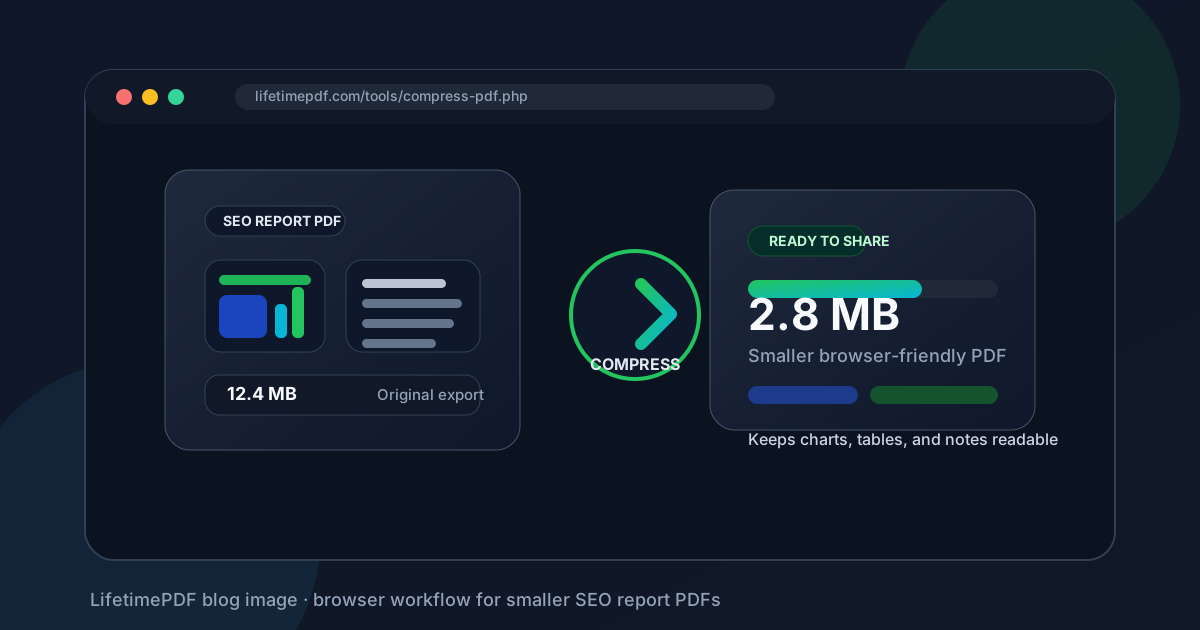
Table of contents
- Quick start: compress an Ahrefs PDF online in under 2 minutes
- Why use an online workflow for Ahrefs PDFs?
- Which Ahrefs PDFs benefit most from online compression?
- What file size should you aim for?
- Which compression level should you choose?
- Step-by-step: use LifetimePDF in your browser
- When to split or extract instead of compress harder
- What to check before you send the compressed file
- Privacy and client-delivery cleanup
- Related LifetimePDF tools and internal links
- FAQ (People Also Ask)
Quick start: compress an Ahrefs PDF online in under 2 minutes
If the goal is simply make this Ahrefs PDF smaller in my browser, this workflow is usually enough:
- Open Compress PDF.
- Upload the report or export built from Ahrefs data.
- Choose Medium compression first.
- Download the smaller PDF.
- Preview the tightest details once: chart labels, issue rows, keyword positions, dates, screenshot callouts, and short notes.
- If the pack is still bulky, use Extract Pages, Split PDF, or Delete Pages before trying heavier compression.
Why use an online workflow for Ahrefs PDFs?
Ahrefs reports are often shared in the same places other work already happens: email, chat, project tools, client portals, shared drives, and phone screens during meetings. That means convenience matters. A browser-based workflow lets you compress the file right where you are, without adding a desktop install or a detour just to solve a fairly ordinary handoff problem.
Online compression is especially useful when the report is already basically done and you only need one final polish step. You are not rebuilding the strategy. You are making the file easier to move around. That can mean a smaller email attachment, a faster upload to a client portal, or a report that opens more comfortably on mobile during a quick review call.
Why the browser-first approach works well here
- Faster last-mile cleanup: shrink the PDF right before sending it.
- Useful on any device: laptop, desktop, or tablet workflows all make sense.
- Less friction for repeat tasks: monthly and weekly reporting often needs the same quick cleanup.
- Better for collaboration: a lighter file is easier for clients and teammates to open on their first try.
- No need to overcomplicate it: if the problem is file size, solve file size directly.
Which Ahrefs PDFs benefit most from online compression?
Not every export needs help, but these report types often gain the most from one browser-based compression pass:
Site audit summaries
These usually mix issue tables, screenshots, counts, and notes. They can get bulky quickly, especially when exported with supporting detail.
Backlink recaps and referring-domain reviews
These reports often include many rows plus commentary. Compression helps, but you still want anchor text, counts, and column labels to stay easy to scan.
Keyword movement updates
Rank-tracking style documents can be deceptively dense. Small columns and date ranges are exactly the kind of details worth checking after compression.
Competitor comparison packs
These often combine charts, screenshots, and summary commentary for a client or internal decision-maker. They usually compress well as long as the visual story still holds up.
Client-ready SEO decks exported to PDF
These are strong candidates because they are meant to be delivered and reopened later. A lighter file creates a smoother client experience as long as the charts, annotations, and next-step notes remain clear.
What file size should you aim for?
There is no single perfect target, but a few working ranges make the decision easier:
| Ahrefs PDF type | Practical target | What matters most |
|---|---|---|
| Quick client update or short audit summary | Under 2MB | Fast upload, easy mobile review, clean email sharing |
| Typical recurring SEO report | 2MB to 5MB | Balanced size without sacrificing readability |
| Screenshot-heavy appendix or evidence pack | Up to 5MB or split into sections | Keep callouts and screenshots readable |
| Oversized mixed-audience report | Compress plus split | Send a cleaner summary instead of one giant all-purpose file |
Which compression level should you choose?
You usually do not need to overthink this. The safest default for Ahrefs-based PDFs is Medium.
- Low compression: best when tiny text matters more than big file-size gains.
- Medium compression: the sweet spot for most audit summaries, backlink recaps, keyword updates, and client packs.
- High compression: use when the file is still heavier than you want and the PDF is more about quick access than pixel-perfect detail.
If the report includes narrow keyword tables, dense backlink rows, or screenshot captions that explain the point, review those first before keeping a more aggressive compression pass.
Step-by-step: use LifetimePDF in your browser
1) Open the compressor
Start with Compress PDF. This is the direct fix when the Ahrefs export is useful but just too heavy to send comfortably.
2) Upload the Ahrefs PDF you actually plan to share
Use the final draft, not a stale earlier version. That sounds obvious, but it saves the annoying situation where you compress the wrong report and still have to redo the step later.
3) Start with medium compression
Medium usually reduces enough size to matter while keeping charts, issue labels, short notes, and key table content intact. It is the best first pass unless you already know the report is highly image-heavy or extremely text-dense.
4) Open the smaller PDF once
Check the places where quality actually matters: chart legends, date ranges, issue counts, keyword rows, backlink columns, screenshot callouts, and recommendation blocks. A quick targeted review is more useful than staring at the whole report page by page.
5) Fix structure before forcing stronger compression
If the file is still bigger than you want, a structural cleanup is often smarter than simply pushing compression harder. Extract the executive summary, split long appendices, remove repeated pages, or crop wasted margins first.
Best workflow: compress once, review once, then trim or split only if the file still feels unnecessarily heavy.
When to split or extract instead of compress harder
Many oversized Ahrefs PDFs are not really compression problems. They are packaging problems. One file tries to serve executives, clients, specialists, and archives all at once. That is usually where the bloat starts.
Split the PDF when
- the main summary and technical appendix serve different readers
- screenshots or raw evidence make the pack much larger than the story requires
- the client only needs the summary section
- one huge file feels awkward to review on mobile or in meetings
Extract pages when
- you only need the executive recap or recommendation pages
- a teammate only needs one issue section
- you want a lighter share copy but still keep the full version for archive
In other words, the smartest way to make an Ahrefs PDF smaller is often to share less PDF.
What to check before you send the compressed file
The final review should be quick, but it should be intentional. Open the compressed copy and inspect the pieces people are most likely to question later.
- chart labels and legends
- keyword position rows
- backlink examples and narrow columns
- issue counts and severity labels
- dates and comparison periods
- screenshot captions or arrows
- short conclusion or recommendation blocks
Privacy and client-delivery cleanup
Ahrefs-based PDFs are often internal, client-facing, or both. That means a cleaner report is not only smaller; it is also easier to hand off confidently.
- Remove unnecessary pages: use Delete Pages before external delivery.
- Crop wasted margins: use Crop PDF if screenshots add excess empty space.
- Clean hidden document properties: use PDF Metadata Editor when you want a tidier client-ready file.
- Compare revised copies: use Compare PDFs if the report changed between rounds and you want a quick confidence check.
- Keep a fuller archive copy: the shared version can be smaller than the internal master.
Want the smaller version plus the cleanup tools around it?
A calmer workflow is usually: compress -> review -> trim if needed -> send the clean share copy.
Related LifetimePDF tools and internal links
Compressing a PDF for Ahrefs online is usually one step in a broader reporting workflow. These tools pair naturally with it:
- Compress PDF - shrink Ahrefs exports before you send them
- Extract Pages - send only the pages the next reader actually needs
- Split PDF - break one oversized report into cleaner sections
- Delete Pages - remove duplicate or stale appendix pages
- Crop PDF - trim dead space around screenshots
- PDF Metadata Editor - clean hidden title and author fields before client delivery
- Compare PDFs - review version changes between report rounds
Suggested internal blog links
- Compress PDF for Ahrefs
- Compress PDF for Ahrefs Without Monthly Fees
- Compress PDF for Ahrefs: Share Smaller SEO Reports Faster
- Compress PDF for Semrush
- How to Reduce PDF File Size for Email
- Compare PDF Versions Online
- Browse all LifetimePDF articles
FAQ (People Also Ask)
How do I compress a PDF for Ahrefs online?
Open Compress PDF in your browser, upload the Ahrefs report, start with medium compression, and preview the smaller file once before sending it.
What file size is best for most Ahrefs reports?
Under 2MB is a strong target for short updates and compact audit summaries. Many broader client packs still work well in the 2MB to 5MB range if the smallest useful details remain clear.
Will compressing an Ahrefs PDF online make the charts or tables blurry?
It can if you push compression too hard. That is why Medium compression is the best first pass for most Ahrefs workflows. Always check small labels, keyword rows, backlink columns, dates, and screenshots before you keep the result.
Should I split a large Ahrefs report instead of compressing it harder?
Often yes. If the PDF includes summary pages plus long appendix sections, splitting it usually creates a better share copy than aggressive compression alone.
Why choose an online workflow for Ahrefs reports?
Because it is quick, browser-friendly, and easy to repeat right before a handoff. For everyday reporting, that convenience is often more valuable than a heavier multi-step workflow.
Ready to shrink your Ahrefs PDF in the browser?
Best workflow: upload the report -> use medium compression -> preview the result -> split or trim only if needed.
Published by LifetimePDF - Pay once. Use forever.