Compress PDF for Acumatica Without Monthly Fees: Shrink Bills, Receipts, and Supporting Documents Without Another Subscription
If you need to compress a PDF for Acumatica without monthly fees, upload the file to LifetimePDF's Compress PDF tool, start with Medium compression, and keep the smaller copy only if vendor names, dates, tax lines, totals, invoice numbers, and PO references still look clear.
For most Acumatica workflows, that is enough to shrink bills, receipts, and supporting PDFs without adding another recurring subscription to routine finance document prep.
Acumatica already ends up carrying plenty of ordinary document weight. Supplier bills, receipt bundles, expense backups, statement pages, project accounting support, and approval attachments all have a habit of becoming one more PDF somebody needs to upload, review, or retrieve later. The real problem usually is not the document itself. It is that the file became heavier than the information inside it, and nobody wants another monthly tool bill just to fix that.
Fastest path: run the Acumatica file through LifetimePDF's Compress PDF tool at Medium, then use OCR, page cleanup, or split tools only if the PDF still carries more weight than the workflow actually needs.
In a hurry? Jump to Quick start: compress an Acumatica PDF in about 2 minutes.
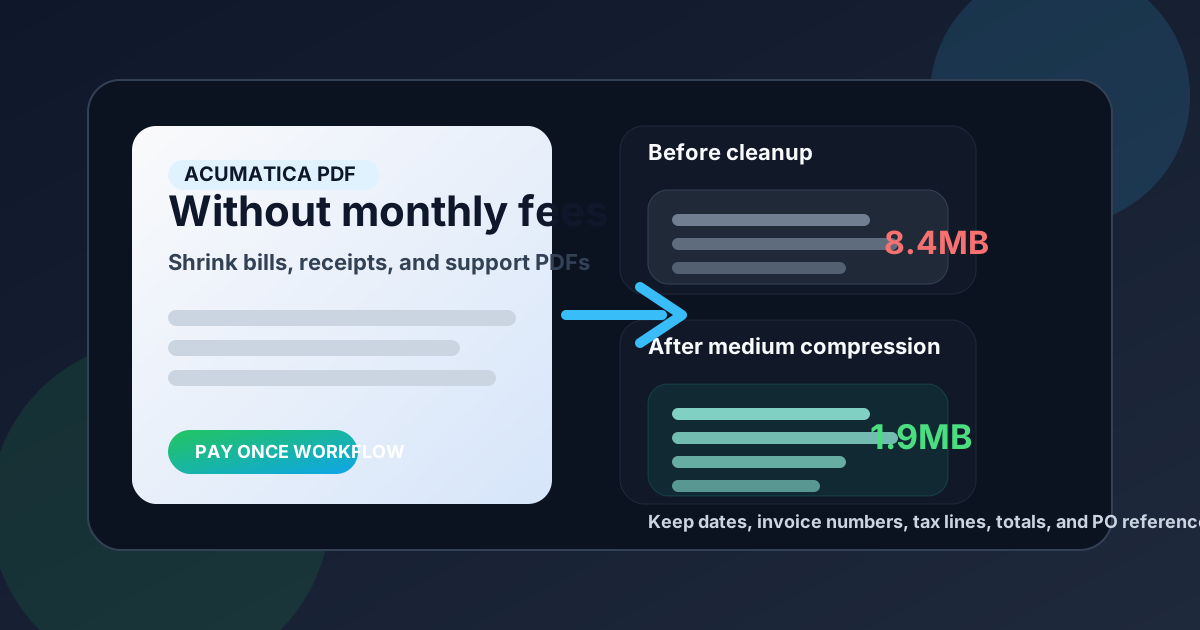
Table of contents
- Quick start: compress an Acumatica PDF in about 2 minutes
- Why "without monthly fees" matters here
- Why smaller PDFs help in Acumatica workflows
- What file size should an Acumatica PDF be?
- Which compression level should you choose?
- Step-by-step: use LifetimePDF to shrink the file
- Best approach for common Acumatica PDFs
- What to do if the PDF is still too large
- How to keep finance details readable
- Workflow habits that reduce PDF bloat
- Related LifetimePDF tools and useful reading
- FAQ (People Also Ask)
Quick start: compress an Acumatica PDF in about 2 minutes
If your real goal is simply make this PDF smaller so it is easier to use in Acumatica, this workflow is usually enough:
- Export or save the final supplier bill, receipt packet, statement page, expense support PDF, project attachment, or approval backup you actually plan to keep.
- Open Compress PDF.
- Upload the file and choose Medium compression first.
- Download the smaller result and compare the new size.
- Preview the weakest details: vendor names, dates, invoice numbers, tax lines, totals, receipt text, project references, and any faint notes.
- If the file is still bulky or scan-heavy, run OCR PDF, crop empty scan borders, delete duplicate pages, or split the packet before trying stronger compression.
Why "without monthly fees" matters here
Acumatica document prep is not a one-off task. It repeats across bills, vendor invoices, receipts, reimbursements, purchase support, project accounting packets, approval routing, and audit follow-up. That is exactly why the pricing angle matters. When the same cleanup step keeps returning, paying monthly just to shrink, OCR, split, crop, and tidy ordinary PDFs starts to feel like software tax rather than useful progress.
A pay-once workflow fits the job better. You want a tool that is available whenever one file is oversized, scan-heavy, or more annoying to upload than it should be. You do not want another subscription debate every time a receipt bundle comes in badly scanned or a project support packet turns into a bloated attachment.
- Recurring work: bills and supporting PDFs keep showing up long after the first month.
- Multiple follow-on tasks: compression often leads to OCR, page extraction, rotation, cropping, or splitting.
- Better cost fit: a pay-once document workflow matches repetitive back-office work better than another ongoing bill.
- Less friction for the team: when the tool is easy to reach for, people are more likely to clean the file before it becomes somebody else's problem.
Why smaller PDFs help in Acumatica workflows
Acumatica files often arrive from several directions at once. AP attaches a supplier bill. An employee adds receipt support. Someone exports a statement page. Another person saves approval evidence from email. By the time everything becomes one PDF, the file can be far heavier than the proof it contains.
Smaller PDFs are easier to upload, faster to open, and less frustrating to revisit during routine review. That matters when the real job is checking vendor names, dates, invoice numbers, tax lines, totals, project codes, or PO references rather than waiting on a sluggish file. Good compression is not about crushing the document until it looks cheap. It is about removing avoidable weight while keeping the record clear enough to trust.
Why compression usually helps
- Faster uploads: useful when attachments need to move through AP, expense, project, or finance workflows without unnecessary delay.
- Smoother review: lighter PDFs are easier to open on desktop, laptop, or mobile when somebody just needs to verify one detail.
- Cleaner storage: smaller files are easier to archive, resend, and retrieve later.
- Less scan bloat: office scans and phone captures often carry extra background, shadows, and image weight that add nothing useful.
- Better follow-up options: leaner PDFs are easier to OCR, split, crop, delete pages from, or convert after review.
If the PDF is mostly text, tables, totals, and standard support pages, it usually should not feel huge. When it does, the extra weight is often coming from repeated exports, scan waste, screenshots, duplicate pages, or one all-purpose packet trying to serve every possible reader.
What file size should an Acumatica PDF be?
There is no single perfect number for every Acumatica workflow, so practical ranges are more useful than chasing one magic limit. You want a file that uploads comfortably, opens quickly, and still looks reliable when someone checks the details that matter.
| Document type | Practical target | Why it works |
|---|---|---|
| Text-heavy bill, invoice, or clean support PDF | < 1MB to 2MB | Usually enough for files that should stay easy to upload and review |
| Receipt packet, approval backup, or mixed finance bundle | 1MB-3MB | Leaves room for several pages without making the packet awkward to reopen |
| Scanned statement pages, expense support, or image-heavy paperwork | 2MB-5MB | Gives scan-heavy pages enough room while still keeping the file manageable |
| Over 5MB | Usually needs cleanup | At that point, trimming packet waste often works better than compressing harder |
Which compression level should you choose?
Most people should not start with the strongest option. That is the fastest route to fuzzy invoice numbers, softer tax lines, and a file that technically became smaller but is now harder to trust. For Acumatica documents, Medium is usually the right first move.
| Compression level | Best use | Main trade-off |
|---|---|---|
| Low | Already-clean PDFs, exported bills, and text-heavy support files | Preserves quality best but may not reduce size enough |
| Medium | Most bills, receipt bundles, approval backups, and mixed support PDFs | Best balance of smaller size and readable detail |
| High | Only when the file is still too large after smarter cleanup | Highest risk of hurting tiny text, faint scans, and narrow tables |
Medium works well because most Acumatica documents are not creative assets. They are proof documents. If compression makes the proof harder to read, you lost the real purpose of the file.
Step-by-step: use LifetimePDF to shrink the file
- Save the final version first. Use the exact bill backup, receipt packet, expense support PDF, or project document you plan to keep, not a rough draft with pages you already know nobody needs.
- Open Compress PDF.
- Upload the file. This can be a supplier bill, receipt bundle, statement page, reimbursement PDF, project attachment, or approval document.
- Choose Medium compression. That is the safest default in most bookkeeping and finance situations.
- Download the smaller copy. Compare the new file size before you move on.
- Open the result once. Check vendor names, dates, invoice numbers, totals, tax lines, receipt text, and any project, customer, or PO references.
- Only do more if needed. If the PDF is still too heavy, clean it instead of immediately forcing stronger compression.
Useful combo: compress first, then run OCR PDF if the file came from a scanner or phone camera and the text is not selectable.
Best approach for common Acumatica PDFs
Supplier bills and invoices
These are often straightforward to compress because they are mostly text and table structure. Low or Medium is usually enough. What matters most is keeping vendor names, invoice numbers, dates, tax lines, subtotals, and final totals readable. A slightly larger bill backup that remains easy to review is better than a tiny one that makes somebody zoom in to confirm the numbers.
Receipts and expense support
Receipt packets can get messy fast because they often mix thermal-paper text, screenshots, mobile captures, and rescans in one file. Start with Medium compression. If the smallest receipt text already looks weak, protect readability and focus on trimming background or duplicate pages instead of pushing to High immediately.
Approval backups and supporting packets
These files often become oversized because they mix the main document with reference pages that were only included just in case. If the packet is bulky, compress once, then use Extract Pages or Split PDF so the core proof stays light and the appendix lives separately.
Project accounting support and scanned paperwork
These tend to carry the most waste because scanning adds borders, shadows, and large images that are bigger than the actual information. Compression helps, but cleanup usually helps more. Crop the dead space, rotate awkward pages, and run OCR if the text is not searchable before you decide whether another compression pass is worth it.
What to do if the PDF is still too large
If Medium compression still leaves the file larger than you want, the next move is usually structural cleanup, not panic. Most oversized Acumatica PDFs have extra weight that can be removed without hurting the useful content.
- Crop empty scan borders: office scans and mobile captures often include wasted space.
- Delete duplicate pages: repeated bill copies, blank backsides, and accidental rescans are common.
- Split oversized packets: use Split PDF when one file contains separate chunks that do not need to travel together.
- Extract only the needed pages: use Extract Pages when the workflow only needs one section or one proof set.
- Run OCR on image-based scans: searchable scans are easier to review and often easier to reuse later.
- Re-export from the cleanest source available: if the original document can be recreated cleanly, that often beats repairing a bad copy forever.
How to keep finance details readable
This is the review step people skip when they are rushing, and it is the one that matters most. Before you upload or archive the smaller file, check the pieces someone else may need to verify later.
- Vendor legal name and remit-to details
- Invoice number, PO reference, or project code
- Document date, posting date, or service period
- Subtotal, tax amount, currency, and final total
- Line items, comments, or approval notes in smaller text
- Any handwritten, stamped, or faint scanned text
If the weakest part of the document is still readable, you are usually in good shape. If those details turned muddy, go back one step. A slightly larger file is still the better file when it keeps the proof intact.
Workflow habits that reduce PDF bloat
The easiest way to avoid oversized Acumatica PDFs is not heroic compression. It is better habits before the file gets messy.
- Export once from the cleanest source available.
- Avoid screenshotting PDFs unless there is no better option.
- Keep only the pages the next reviewer actually needs.
- Separate core proof from appendix material when they serve different readers.
- Use OCR on scanned finance files before they disappear into storage.
- Compress before the oversized attachment becomes a repeated annoyance.
Small habits matter because document friction compounds. One oversized upload is an annoyance. A workflow full of oversized uploads becomes a time tax.
Related LifetimePDF tools and useful reading
Useful tools
Related reading
Best fit
This workflow is a strong fit if you regularly clean supplier bills, receipt packets, expense backups, approval attachments, and supporting PDFs in Acumatica and want a pay-once way to keep recurring document prep under control.
Want the simple version? Use LifetimePDF to compress the file first, check readability once, then keep the smaller copy only if the proof details still look trustworthy.
FAQ (People Also Ask)
How do I compress a PDF for Acumatica without monthly fees?
Use a pay-once PDF tool like LifetimePDF, upload the Acumatica-ready file, start with Medium compression, and review the smaller result before you use it. If the PDF is still bulky, clean scan waste, trim duplicate pages, or split the packet instead of repeatedly over-compressing the whole file.
What file size should I aim for before using a PDF in Acumatica?
Under 2MB is a strong target for text-heavy bills, invoices, and standard support PDFs. Scan-heavy receipt packets, statement pages, and mixed finance bundles often work better around 2MB to 5MB as long as dates, tax lines, totals, and small text still look clear.
Will compression make invoice numbers, tax lines, or totals blurry?
It can if you compress too aggressively. That is why Medium compression is usually the safest first pass. Always review invoice numbers, vendor names, dates, tax lines, totals, receipt text, and project or PO references before keeping the smaller file.
Should I run OCR on scanned Acumatica PDFs before storing them?
Usually yes if the file came from a scanner or phone camera and the text is not selectable. OCR makes finance PDFs easier to search, review, and reuse later during approvals, vendor follow-up, bookkeeping cleanup, and audit checks.
Why look for an Acumatica PDF workflow without monthly fees?
Because shrinking bills, receipts, and supporting PDFs is recurring operational work, but most teams do not want another subscription just to compress, OCR, split, crop, and clean routine finance documents. A pay-once workflow fits that repeated document prep better.