Bookmark PDF Online Without Monthly Fees: Add Clickable PDF Navigation in Your Browser Without Another Subscription
Yes — you can bookmark a PDF online without monthly fees by uploading the finished file to LifetimePDF's Bookmark PDF tool, adding a clean outline in your browser, and saving the updated PDF with clickable navigation built in.
The best workflow is to lock the page order first, bookmark the destinations readers actually revisit, and test the saved outline once before the file goes to clients, coworkers, reviewers, or signers.
This search usually comes from a very practical moment. The PDF itself is basically done. The problem is that it is tedious to move through. A proposal needs a faster jump to pricing. A handbook needs a better path to troubleshooting. An exhibit packet needs clear section markers. A board report needs less scrolling and less explaining. In that moment, people want browser convenience and a cost structure that makes sense for recurring document work.
Fastest path: finalize the packet, open the browser-based bookmark tool, add the big destinations first, keep labels obvious, then click through the saved outline once.
Want the short version? Jump to Quick start: bookmark a PDF online in about 5 minutes.
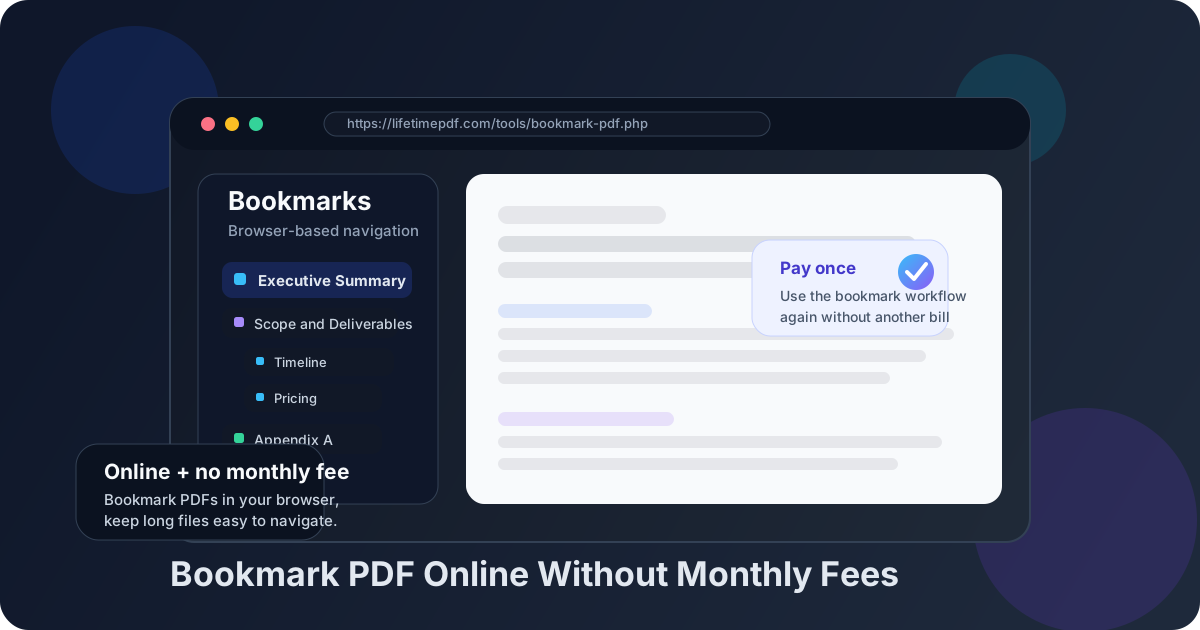
Table of contents
- Quick start: bookmark a PDF online in about 5 minutes
- Why this online + no monthly fee workflow matters
- When online PDF bookmarking is the right fit
- Step-by-step: bookmark PDF online without monthly fees
- What to bookmark first in reports, proposals, manuals, and exhibit packets
- What to do before you add bookmarks
- Common mistakes that make bookmark outlines less useful
- Related LifetimePDF tools and reading
- FAQ (People Also Ask)
Quick start: bookmark a PDF online in about 5 minutes
If the PDF is already close to final, this order usually gives the cleanest result:
- Open Bookmark PDF.
- Upload the finished file instead of a draft that still needs page moves.
- Add bookmarks for the title page and the major destinations first.
- If the file is long, create child bookmarks only where the extra structure genuinely helps.
- Save the updated PDF and click through the main bookmark list once before you share, archive, or send it for review.
Why this online + no monthly fee workflow matters
The online part matters because people usually need speed and convenience. They do not want to install another desktop tool, move to a different computer, or slow a review process down just to make a PDF easier to use. Browser-based bookmarking fits the reality of everyday document work: open the file, add the navigation, save the updated copy, and move on.
The without monthly fees part matters because bookmarking is not a one-off novelty. Teams keep producing proposal packets. Compliance groups keep passing around long reports. Legal teams keep assembling exhibits. Operations groups keep maintaining manuals and SOPs. When the same kind of task keeps returning, a pay-once workflow makes much more sense than adding another recurring bill just to keep PDFs navigable.
- Faster turnaround: you can fix navigation right in the browser when the file is almost ready to go.
- Better for recurring work: bookmarks come up over and over in real document systems.
- Cleaner handoffs: clients, coworkers, reviewers, and approvers get a file they can actually move through.
- Less friction: when the workflow is simple and already available, people are more likely to add useful navigation before sending the PDF.
Useful mindset: bookmarks are not decoration. They are navigation that helps long PDFs feel intentional instead of improvised.
When online PDF bookmarking is the right fit
Online bookmarking works especially well when the content is already settled but the navigation is weak. That is common with proposal decks, client packets, board reports, handbooks, training guides, policy manuals, exhibit sets, and appendix-heavy PDFs.
| Document type | Why online bookmarks help | Good places to start |
|---|---|---|
| Reports | Readers jump between summary, findings, appendix sections, and recommendations | Executive summary, chapters, conclusion, appendix |
| Proposals | Clients revisit scope, deliverables, pricing, and terms rather than reading straight through every time | Overview, deliverables, pricing, timeline, terms |
| Manuals and SOPs | Users need task-based navigation instead of endless scrolling | Getting started, key tasks, troubleshooting, reference |
| Exhibit or review packets | Reviewers need fast jumps between filings, exhibits, declarations, and appendices | Main filing, exhibit list, each exhibit, appendix sections |
It is less about the file being long in an abstract sense and more about how the file gets used. If people keep jumping back to the same places, bookmarks usually help. If the PDF is short and naturally read top to bottom once, the extra outline may not add much.
Step-by-step: bookmark PDF online without monthly fees
Here is the workflow that usually creates the most useful result without overcomplicating the document.
1. Start with the real final file
If the page order is still changing, the outline can become misleading fast. Finish the merge, the page cleanup, the appendix order, or the packet assembly first. Bookmarks work best on the version people will actually receive.
2. Open the bookmark tool in your browser
Go to Bookmark PDF and upload the finished document. This keeps the task simple: no extra install, no detour into different software, and no subscription-shaped barrier between the file and the fix.
3. Add the major destinations first
Start with the landmarks readers are most likely to revisit: cover page, executive summary, scope, pricing, chapters, exhibits, appendices, signature page, or troubleshooting section. Once those anchors exist, you can decide whether the PDF truly needs second-level detail.
4. Use labels that read like navigation
Good bookmark names are short and obvious. Executive Summary, Pricing, Appendix B, and Exhibit 4 are useful. Vague labels like Important Pages, Later Section, or Stuff to Review are not. The bookmark sidebar should make sense at a glance.
5. Add hierarchy only where it reduces clutter
A long manual may benefit from parent bookmarks with child entries beneath them. A short proposal usually does not. If the outline starts looking like a spreadsheet of tiny labels, simplify it. Fewer better bookmarks usually beat dozens of noisy ones.
6. Save and test the updated PDF once
Download the bookmarked file and click through the main entries. This quick pass catches shifted pages, duplicated names, or a section that changed after a late edit. It takes less time than sending a polished-looking PDF with broken navigation.
Want the shortest reliable workflow? Finalize the page order, add the main bookmarks, and test the outline once on the saved copy.
What to bookmark first in reports, proposals, manuals, and exhibit packets
The best outline depends on how people will use the PDF after it leaves you.
Reports and strategy decks
Start with the executive summary, major chapters, conclusions, and appendix. If the report is data-heavy, bookmark the charts, recommendations, or sections that get revisited during meetings.
Sales proposals and client packets
Readers usually jump back to scope, deliverables, pricing, timeline, and terms. That means the bookmark structure should mirror how decision-makers review the file, not how the internal team built it.
Manuals, SOPs, and training guides
These benefit from task-first navigation. Getting started, Daily workflow, Troubleshooting, and Reference are often more useful than a dense outline that mirrors every subheading in the document. If the file is long, combining bookmarks with PDF Page Numbers makes it even easier to reference.
Exhibits, appendices, and review bundles
Use names that match the packet itself. If the index says Exhibit C - Rate Sheet, the bookmark should say the same thing. That consistency matters because reviewers may be cross-checking the sidebar against a filing index, a memo, or an email thread.
What to do before you add bookmarks
Bookmarking is usually a near-the-end step. If the file is still structurally messy, fix that first.
- Merge first: if the document combines multiple PDFs, use Merge PDF before building the outline.
- Reorder or delete pages first: use Organize PDF so the bookmark targets reflect the actual final page order.
- OCR scans first: if the PDF is image-only or hard to search, use OCR PDF before you start labeling sections.
- Extract only the useful section first: if the packet is too large or has irrelevant pages, use Extract Pages before building navigation for content nobody needs.
In other words, bookmarks belong on the version people will actually use. That keeps the navigation aligned with reality and saves you from rebuilding the outline later.
Common mistakes that make bookmark outlines less useful
- Bookmarking too early: later page moves can make a good outline instantly misleading.
- Adding too many tiny entries: a crowded sidebar slows readers down instead of helping them.
- Using vague labels: bookmarks should describe destinations clearly, not mirror your internal drafting shorthand.
- Ignoring hierarchy: long documents often read better when related sections sit under a sensible parent bookmark.
- Skipping the final click-through: one quick test catches most real-world problems before the PDF goes anywhere important.
Most bookmark problems are editorial, not technical. Better labels, fewer entries, and smarter placement usually solve more than another round of tweaking ever will.
Related LifetimePDF tools and reading
If you are improving PDF navigation, these tools and guides fit naturally around the same workflow:
- Bookmark PDF - add and save the navigation outline inside the PDF.
- Organize PDF - reorder, delete, or review pages before bookmarks are finalized.
- Merge PDF - assemble one final packet before you build the outline.
- OCR PDF - make scanned documents easier to search and structure.
- PDF Page Numbers - make long bookmarked files easier to reference.
Related reading on LifetimePDF:
- Bookmark PDF Online
- Bookmark PDF Online Free
- Bookmark PDF Without Monthly Fees
- How to Add Bookmarks to PDF Online
- How to Add a Table of Contents to a PDF
Ready to make a long PDF easier to navigate? Finalize the packet, add the main bookmarks once, then save a file people can move through quickly without another subscription in the loop.
Best workflow: finalize the page order → add the main bookmarks → test the outline once → share the PDF.
Published by LifetimePDF - Pay once. Use forever.
FAQ (People Also Ask)
How do I bookmark a PDF online without monthly fees?
Open an online PDF bookmark tool, upload the finished file, add bookmarks for the sections readers need most, save the updated PDF, and click through the outline once. A pay-once workflow fits especially well because bookmarking is recurring document maintenance.
What should I bookmark first in a long PDF?
Start with the title page, summary, major chapters, pricing section, exhibits, appendices, or other destinations people are most likely to revisit. Add smaller subsection bookmarks only when they genuinely improve scanning.
Should I organize the pages before adding bookmarks?
Usually yes. Once the page order is final, the bookmark structure can match the real document and stay useful instead of pointing to outdated locations after later edits.
Can I bookmark a scanned PDF online?
Yes. You can add bookmarks manually to a scanned PDF, and it often helps to run OCR first so headings, section breaks, and search behavior become easier to work with.
Why does the no monthly fee part matter for PDF bookmarks?
Because bookmark editing comes up repeatedly across reports, proposals, manuals, exhibit packets, and handbooks. A pay-once workflow fits that recurring work better than paying another monthly fee just to keep long files navigable.