Translate PDF to Urdu: OCR Scans First, Review Right-to-Left Layout and Nastaliq Rendering, and Export a Clean Final PDF
To translate a PDF to Urdu, upload a text-based PDF to LifetimePDF's Translate PDF tool, choose Urdu, then review right-to-left flow, names, dates, numbers, headings, table labels, and Urdu font rendering before you export or rebuild the final file.
If the PDF is scanned, run OCR first; that one step usually matters more than anything else for clean Urdu output.
Most people searching for this do not need literary-perfect Urdu on the first pass. They need a document they can understand, review, share, or turn into a cleaner final version without getting trapped by image-only scans, broken ligatures, or awkward mixed Urdu-English lines. The biggest gains usually come from three practical choices: start with real text instead of page images, review right-to-left behavior before you forward the file, and rebuild the final PDF only when presentation quality actually matters.
Fastest practical path: translate readable PDFs directly, OCR scanned files first, then do a short review for names, dates, amounts, headings, font rendering, and mixed Urdu-English lines before sending the final file.
In a hurry? Jump to the quick answer and workflow.
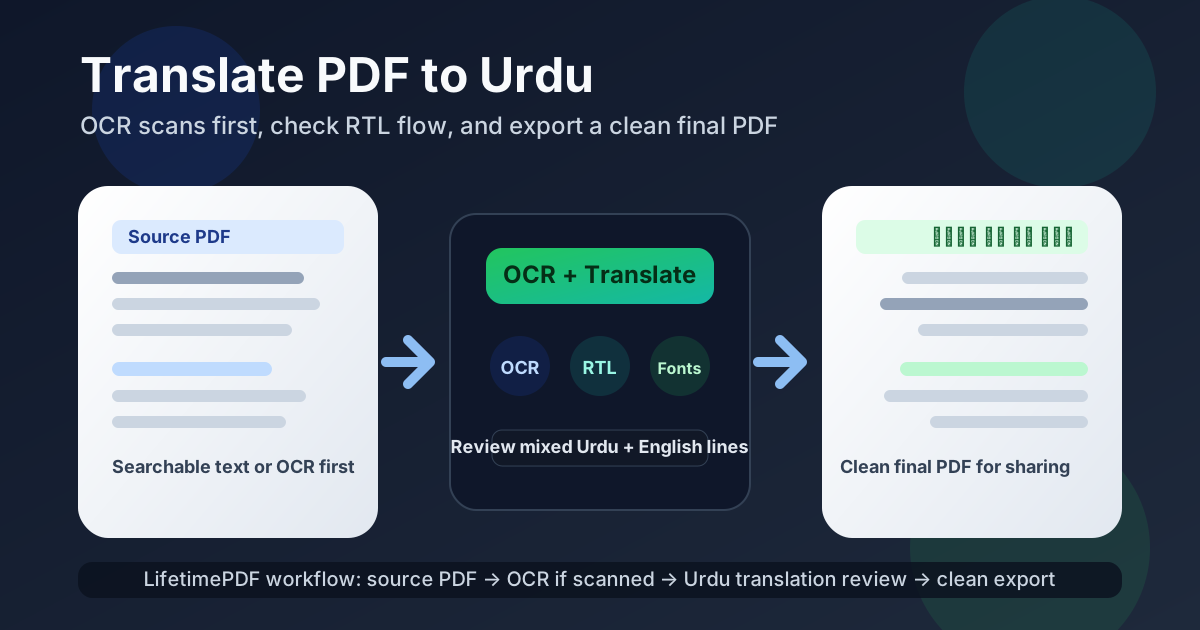
Table of contents
- Quick answer: the cleanest way to translate PDF to Urdu
- When direct PDF translation works well
- Why Urdu needs a careful review pass
- Scanned PDFs: why OCR comes first
- A practical Urdu PDF workflow from start to finish
- When to rebuild the final Urdu PDF instead of sending raw output
- Common mistakes that make Urdu PDF translations look careless
- Where this workflow is especially useful
- FAQ
Quick answer: the cleanest way to translate PDF to Urdu
The shortest reliable workflow is simple:
- Check whether the PDF already has selectable text.
- If it does, open Translate PDF and choose Urdu.
- If it does not, run OCR PDF first.
- Review headings, names, dates, amounts, table labels, right-to-left flow, and mixed Urdu-English lines.
- Check how the output renders in your chosen font, especially if the document will be shared, printed, or archived.
- If layout quality matters, rebuild the final file with Text to PDF or Word to PDF.
When direct PDF translation works well
Direct translation works best when the PDF is already text-based and structurally calm. Manuals, contracts, invoices, internal reports, onboarding documents, policy files, support material, and school or community handouts often translate reasonably well on the first pass if the original PDF has a clean text layer.
In those cases, the translation step itself is usually not the real problem. The bigger question is whether the Urdu version is clear enough for the person who has to use it. Internal review, supplier communication, document comprehension, customer support prep, and family or community sharing are all strong use cases for a fast browser workflow.
- Good fit: readable PDFs with paragraphs, headings, lists, and straightforward tables.
- Still workable with review: invoices, forms, product docs, and legal summaries where wording matters.
- Usually needs cleanup: scans, brochures, dense tables, multi-column layouts, and documents with stamps, handwriting, or low-quality exports.
Have a clean source PDF already? Start with translation first and only add more steps if the result still needs work.
Why Urdu needs a careful review pass
This is where generic "translate PDF" advice often becomes too shallow to help. An Urdu PDF can look broadly understandable after a quick machine pass, but a file can still feel rough if the right-to-left order breaks, the font handles ligatures badly, or English words and numbers sit awkwardly inside Urdu lines. The document may remain readable while still not feeling trustworthy enough to forward.
Right-to-left flow deserves a real visual check
Urdu readability depends on direction, not just vocabulary. A line can contain the right words and still feel wrong if bullets, labels, numbers, or punctuation are sitting in the wrong visual order. That matters most in headings, forms, tables, customer-facing instructions, and short action lines.
Nastaliq and general font rendering can change whether the document feels polished
You do not need to obsess over typography for every internal draft, but you should pay attention to how the final file renders. If letters collide badly, ligatures break, or line spacing feels cramped, the document can look careless even when the translation itself is understandable. That is especially true for printable guides, notices, education material, and anything external.
Mixed Urdu-English lines and number-heavy sections need deliberate review
Product names, URLs, email addresses, invoice IDs, dates, and measurements often appear inside Urdu sentences. Those mixed lines are where many translated PDFs start to look messy. If you only have time for one review pass, spend it on names, dates, totals, tables, legal wording, and any line that mixes scripts or numerals.
Scanned PDFs: why OCR comes first
If the PDF is really a stack of images, the translation tool has much less to work with. That is why OCR should happen first, not as an afterthought. OCR turns the visible page content into searchable text, and that text becomes the foundation of the Urdu translation.
When people say translating a PDF "did not work," the source file is often the real problem. The tool was given blurry scans, photographed pages, faded print, stamps, handwritten notes, or uneven text capture. Urdu output cannot be cleaner than the source material feeding it.
Use OCR first when:
- You cannot highlight any words in the PDF.
- Search does not find obvious visible text.
- The document came from a scanner, phone camera, screenshot, or photocopy workflow.
- The pages contain low contrast, stamps, handwriting, or uneven alignment.
If that sounds like your document, start with OCR PDF, confirm the extracted text is usable, and only then move to translation. That single decision saves more cleanup than almost anything else.
A practical Urdu PDF workflow from start to finish
1) Check whether the PDF is text-based or scanned
Try to highlight a sentence or search for a visible word. If those tests work, translate directly. If not, OCR first.
2) Translate only the pages you actually need
If you only need a chapter, a contract section, invoice pages, or a few support pages, do not force yourself to process the whole file every time. Smaller inputs are easier to review and usually faster to clean up afterward.
3) Choose Urdu and run the first pass
Use Translate PDF and choose Urdu deliberately. Then read the result with a reviewer mindset rather than assuming the first output is final.
4) Review the high-risk details
Start with the lines that carry real consequences:
- document titles and section headings
- names, addresses, and company references
- dates, totals, currencies, units, and measurements
- product labels, feature names, and interface wording
- table headings, field labels, and short instructions
- mixed Urdu-English lines, URLs, and number-heavy sentences
5) Rebuild the final Urdu PDF only if needed
If the translated content is mainly for understanding, the text result may already be enough. If the output needs to be client-ready, print-ready, or cleaner for formal sharing, move it into Text to PDF or Word to PDF and create a polished final version.
Practical sequence: OCR if needed, translate, review the risky lines, then rebuild only when presentation matters.
When to rebuild the final Urdu PDF instead of sending raw output
Sometimes the translated content is accurate enough, but the PDF still looks patched together. That is common when the original layout was complicated or when right-to-left Urdu text sits awkwardly inside a page design that was built for another language.
Rebuild the final PDF when:
- the document is going to a customer, partner, parent, school, or external reviewer
- line breaks make headings or bullet points feel sloppy
- tables or labels become hard to read after translation
- the output needs cleaner right-to-left presentation or better font rendering
- you need a version worth storing, printing, or forwarding widely
That is where a simple text or word-based rebuild pays off. You keep the translated meaning, improve the presentation, and avoid sending something that technically works but feels unfinished.
Common mistakes that make Urdu PDF translations look careless
Skipping OCR on scans
This is the classic mistake. If the file is image-based, translation quality drops before the process even really begins.
Ignoring right-to-left order because the words are mostly understandable
A document can look mostly correct while still feeling awkward to read. That is especially obvious in short lines, headings, labels, and lists where layout problems are immediately visible.
Not checking font rendering or broken ligatures before export
Some Urdu output looks acceptable in a quick preview but loses polish when downloaded, printed, or opened elsewhere. A short visual check can prevent an otherwise useful document from looking rushed.
Sending a translated draft that still needs visual cleanup
The translation may be understandable, but if headings break awkwardly, columns collapse, or table labels become cramped, the document still feels rough. A quick rebuild step is often the difference between "usable" and "ready."
Where this workflow is especially useful
Translating a PDF to Urdu is especially helpful when you need fast comprehension or a clean shareable version of documents like:
- contracts and policy summaries
- invoices, shipping paperwork, and supplier documents
- product manuals and support instructions
- internal SOPs, onboarding guides, and training notes
- school, community, and family-facing information packs
- customer communication drafts and partner-facing materials
In all of those cases, the same rule applies: the first output gets you speed, and the review plus rebuild steps give you confidence.
Ready to make an Urdu version of your file? Start with the translator, then protect the final PDF if it contains sensitive material.
FAQ
How do I translate a PDF to Urdu?
Upload a text-based PDF to a translation tool, choose Urdu, review right-to-left flow, names, dates, numbers, and font rendering, then export or rebuild the final file. If the PDF is scanned, OCR it first so the translation works from readable text instead of page images.
Can I translate a scanned PDF to Urdu?
Yes. OCR the PDF first so the text becomes searchable and readable, then translate that text into Urdu. Skipping OCR is one of the biggest reasons scanned translations turn messy.
Why should I review right-to-left layout and font rendering?
Because small direction and rendering issues can make a document feel rough even when the overall meaning is understandable. Those details matter a lot in headings, labels, forms, tables, and customer-facing text.
Will a translated Urdu PDF keep the original formatting?
Sometimes partly, but not perfectly. Text-heavy pages usually hold up better than brochures, forms, tables, and multi-column layouts. If presentation matters, rebuild the final file after translation.
What should I check before sharing an Urdu PDF externally?
Recheck names, dates, amounts, product terms, table headings, field labels, legal wording, and any line that mixes Urdu with English words or numbers. Then protect the finished file if it contains private or commercially sensitive material.